This Machine Kills Fascists. This family brings Americans together.
Woodstock was an August event.
-Circles and Arrows and a Paragraph on the Back About Arlo Guthrie (2006)
This involves stories about other people, which I hesitate to write, since the stories are their stories, they happened to them, not me. But they aren’t going to tell them, and they had an effect on my Arlo experience last Sunday afternoon, so I’ll tell them in a general and inaccurate way.
Of course, it all starts with Woody Guthrie, the Father. Not only the father of Arlo, but of his brother Joad, who road with us as we practically hydroplaned through a driving rain, to Marin Civic Center.
I met Joad many years ago- I think that is the correct spelling; he was named after the character in the Steinbeck novel, Grapes of Wrath, as a tribute to an era when Woody Guthrie travelled the country with a guitar, singing what Arlo and his sister count as the 3,500 songs he wrote, and which guitar he played them on had pasted or painted on its battered body the message “This Machine Kills Fascists”.
That the message “This Machine Kills Fascists” is one that might get the attention of the carnivorous and ambiguous and ever-present secret government surveillance of email and wire-tapping to which President George W Bush admitted last month, is an irony of history to which Arlo himself alluded in his performance, especially if an email keyword search re-scrambled the sentence, which is likely.
Yes, we picked up Joad in the East Bay, and drove out to Marin. I had met Joad Son of Woody in the eighties, at our bookstore. He lived in Bernal at the time, according to Marlene, who was driving us to see Arlo.
He walked in one day, Joad that is, back in 1985, and I had to catch my breath, since the son looked precisely like the father. You’d swear you were looking at Woody Guthrie, except not in the Dorothea Lange black-and-white sense, but in full color. A skinny waif of a dude with a guitar, and a lantern jaw, curly uncomb-able hair, and a sharp, lonesome look in his eye from hard travelling.
Joad didn’t look well today. He’d suffered a heart attack, had gained weight, his face filled out to an oval, and his curly mop had, like that of his brother Arlo, turned stone white. I sensed his depression, and kept quiet.
The duress of ill-health, the pressure to appear in public with the famous brother, in the context of the more famous father- (how much more famous can one be than the writer of the True National Anthem, “This Land is Your Land”? )
All that pressure must have worn on Joad. He expressed to Marlene that maybe he wouldn’t meet with Arlo this time. The whole thing, she said, made him shy, and, she said, more eccentric than usual.
Joad Guthrie would come into the bookstore with his songbook, during the Reagan era, twenty years ago. The book was called “Sing Out, Super Powers”.
The songs, if I remember correctly, were songs promoting the ideal of peace between the gigantic nuclear states, and I think he sold copies for a few dollars. They were meant to be played and passed around. They were photocopied lyric sheets, stapled together.
It was a quixotic effort, and well-intentioned and sincere. I remember marveling at the legacy of Woody, passed right down to his identical son, standing there before me.
Joad was strange and spacey and could be disarmingly honest. Once, at a café, he was with a really cute date. She was a dental assistant, so Joad introduced me, and pointed out I had a pretty serious case of gum disease. Point of interest.
How odd, I thought.
All these years had passed. Marlene, the driver, the organizer, was old friends with Joadie, as she called him. She used to visit him all the time and go to movies and they were quite close. She gained a considerable knowledge of the current generation of the Guthries.
Marlene is a true child of the sixties. An activist in the nuclear freeze movement, a veteran of arrests at nuclear sites in Nevada and other places. An earth artist, a sculptor, a poet. She’s a tiny woman, with shining red hair and blue eyes.
Holy Woodstock, Batman, I think when I look at her.
Marlene, now driving through the massive rain, on a weekend in the Bay Area when the Lord must have been smokin’ something, since we saw all the weather groups: rain, snow, sleet, hail, thunder, bolts of lightning, going from one side of the sky to the other.
Marlene was at Woodstock, during the Three Days of Peace and Music. And so, of course, was Arlo.
And so was weather: We know that the three days of peace and music turned into three days of mud. It rained and rained.
Marlene told me she went to Woodstock, lived in New York, it was right down the road, and got early word about the festival. She went with her roommate. They got seats right in front.
In the front, right by the stage at Woodstock.
That would be perfect Flower Child bona fides but the roommate, once there, wanted to leave. I can’t remember why. I’ll have to ask Marlene to write all the facts down. Marlene begged to stay. It was going to be so great. I guess the festival hadn’t begun, with a disorganized start.
So the two of them headed back toward the road to hitchhike back to New York.
But they got from the stage at the bottom of the field all the way back to the road at the crest of the hillside, and by now it was jammed. There was no way out. Marlene stayed, now at the BACK of Woodstock, far, far, away from the stage.
She stayed, and fell asleep on the ground, and she awoke the next morning, face down in the pouring rain, squished down in the cold puddles, with her red hair literally pasted into the mud.
Arlo Guthrie was there at Woodstock. His is one of the standout performances. Arlo’s famous unabashed drawl is an ornament of the Woodstock album. 1969, August. Changed the world. “Comin’ into Los Angeles, don’t touch my bags if you please, Mr. Customs Man.”
I used to take my portable record player outside in the yard on a really long cord, with speakers, with maybe thirty feet of speaker wire, so the left speaker was way over there, and the right one way over there, and turn it up real loud, outside, in our yard, and play the Woodstock three- record set and think, hey- I’m at Woodstock!
I was about thirteen years old. In Ohio. Far from anything resembling Woodstock. A few years before anything remotely like getting stoned. A sad and wistful lad. A little confused, perhaps. A little disoriented by the New Thing. Hippies vs, the cops. In patches and torn jeans, we were studied, bedraggled worshipers of Neil Young.
A teacher once sized us up, we were all hanging out in flannel shirts untucked and open and straggly hair and raggedy jeans and she said: “You look like a bunch of derelicts.” Mission accomplished!
If you were caught in Ohio with as much as one seed of marijuana, your life was basically over. That’s what I heard.
And so, when celebrities smoked pot and got stoned and ridiculed Nixon and the stupid war, we kids were awestruck. And it was extra potent, if they were really clever, like Abbie Hoffman, and really kind of innocent, like Arlo.
This Machine Kills Fascists. Activists everywhere may have been emboldened by the likes of Woody, and Arlo, and Pete Seeger and Ronnie Gilbert, who faced a wave of McCarthyism, which here again follows Americans about like a rabid dog on a long chain.
Anyway, we were on the way to see Arlo in 2006, with and Joad and I in the back seat, and Marlene and former activist named Bea, who is now in her eighties.
Are you ever a former activist? I’ll have to ask.
Bea is delightful, and more energetic than I am. Politically she is a Lefty, that’s for sure. I guess we represented some kind of cross section of the Woodstock nation, the four of us, ages 49 – 80. Along with the other 800 white people that were in attendance.
We were taking Joad to see his brother. Of course, it’s really nobody’s business if Joadie Guthrie was unwell, and yet, the fact resonated with the famous tragic falling apart of Woody.
I doubt if Woody Guthrie is ever mentioned without America’s regret that he suffered from Huntington’s chorea, until he couldn’t write, couldn’t sing, couldn’t function, and died. And here was Joad, not well, impassive, quiet. And the Dorothea Lange thing again, the tragedy inscribed on a face. That Guthrie look.
We got to the place, Marin Civic Center, and found our seats. Joad checked the box office for family comps. Marlene glinted at me and in an aside, said, “Joad has a seat in front- but he wants to sit with us!” We were back in row fifteen. Not bad.
Marlene wanted those front row seats bad, but demurred. Joad found this amusing for some reason. Joad, who had barely said a word, now laughed quietly to himself for one half of a second.
It’s probable he could have gotten her in for free, but it was her initiative to make things happen, proving that others might not meet the ideal. And I remembered Marlene’s Woodstock experience, wanting to be in front of any event. I just looked at them both.
How odd this was: that’s the only time I saw Joad, shy son of Woody, laugh.
The entire event was difficult for him, said Marlene. Once during the performance, Arlo Guthrie mentioned that his brother was in attendance, and Marlene said she sensed him tense up. He can’t stand that attention, and I don’t blame him. I shouldn’t even be writing this. But I am anyway. For the same reasons. Public interest. Folk celebrity. Brush with fame. It’s interesting. It’s sort of historic. It happened.
“But he loves you,” said Marlene, gently coaching Joad for a backstage meeting. Marlene, the super Flower Child, really wanted to meet Arlo. It seemed unlikely that Joad was going to have any of it: the attention, the fame, the sorrow, the depression, was ultimately just too much.
Anyway, at three pm sharp the lights went down and there was Arlo Guthrie onstage at the microphone. He said, “You gotta understand, it 3:00!” underlining his punctuality.
Arlo is kind of a strapping dude, really, with white hair tied back, jeans, vest, and guitar. A decidedly mischievous look in his eye, a bit elfen, really, which, with his dour look, and coke-bottle lenses in his glasses, add to the dry wit of his presentation. This Guthrie brother looked healthy, happy, surrounded by his family, his band. It was nice to see him.
Every once in a while, Arlo would stop playing, dropped everything to tell a long story. He told us the one about Alice and the restaurant, of course. He told us what it was like to be followed by the FBI for forty years. Being followed by the FBI got kind of old, and it really got kind of silly. Arlo said, “You don’t understand- I never got to be as dangerous as I had hoped!”
He said the real turn around came when the guys in suits pretended to surveil him, and then pretty much said, “Just kidding!” But that took forty years.
Speaking of surveillance, he quipped, “My how things have changed.”
It was only one month ago that the Attorney General of the United States divulged in a letter to Congress that yes, the Bush Administration had other domestic spying programs, not covered by the public hearing on President Bush’s illegal wiretapping of Americans.
This Machine Kills Fascists. With Arlo, it’s the sense of irony and the drawling humor, connects with the father’s talking blues, and Dylan’s too, and one thinks of Mark Twain, of course, and yes, Joad Son of Woody’s personal plea to the superpowers.
As an encore Arlo played “This Land is Your Land, This Land is My Land” -which felt so wonderful to sing. I wish it were our national anthem, to sing on this strange road we’re on.
So, after the performance, Marlene wanted to meet Arlo, who was out at the lobby signing CDs, of course. But Joad was gone. He was already outside with Bea in the pouring rain, and the ushers wouldn’t allow them back inside.
I saw Bea, eighty years old, mouthing and gesticulating through the glass-paned door. Marlene went over and explained, “That’s Arlo’s brother!” And, like me, the ushers seemed to marvel at meeting a relation to Arlo and the great Woody.
So Joad approached Arlo, who announced “Hey- It’s my brother!” Arlo stepped around the little table to give him a hug, and the stupid guy next to me pulled out a digital camera and click! A blinding flash, took a picture of Arlo and Joad Guthrie. The total stranger- like me- without asking, steals this picture, and I could sense one-millionth of why Joad wished to escape.
Marlene said, ”Let’s give them some space,” so we wandered back and leaned against the wall in the lobby, while the Guthries exchanged current emails and promised to write.
This Machine Kills Fascists. This family binds Americans together: it’s so normal to be afraid, to be apart, to think alike, to walk the prophet’s road.
We walked out and the sky had cleared, the hills were green, the air bracing and we marveled at the beauty of the evening. Marlene mentioned a song by Woody Guthrie which she had included in a handmade anthology, and said, “I hope that’s alright, Joad. Did you ever hear that one?”
And Joadie Guthrie looked straight ahead and said no, he never heard that particular song of Woody’s before.
3/14/2006
Here’s another:
When the sun came shining And the wheat fields waving and the dust clouds rolling As the fog was lifting a voice was chanting This land was made for you and me
As I went walking I saw a sign there And on the sign it said “No trespassing” But on the other side it didn’t say nothing That side was made for you and me.”
For those inspired by the memory of Pete Seeger I have to tell that when I worked at a used book store, Phoenix Books, a frequent customer over the years one day devised a very wonderful surprise for me- Carmen, a neighbor in Noe Valley, was quite close to the Guthries- Arlo and kinfolk I’m et al, who gather annually for a Guthrie/fest to celebrate Woody Guthrie’s birthday.
Pete Seeger was staying at Carmen’s in Noe Valley. And we at her local used bookstore sold not only books, but music too, and played American Roots Music all day long; the owner used to routinely hand me a check to go over to Down Home Music and buy all the latest reissues of Cajun and Bluegrass and Stringband Old Timey and New Orleans Trad Jazz- we’d play that music constantly. So as a surprise to me Carmen actually sneaked Pete Seeger in the door when I was shelving books in back.
She had to have told him to sneak up on me because there’s no way he would have wandered back there himself.
I’m laughing as I write this!
I looked up from shelving and saw this very familiar tall skinny man, with grizzled beard and a cap, just standing a few feet away. It was Pete Seeger.
So of course I hurried away. I didn’t want to blow his cover or disturb him!
I went to my coworker and whispered “I think that’s PETE SEEGER!”
Carmen was standing at a distance smiling- there she is in the photo you see- and introduced us.
Mr Seeger came to the counter and just regaled us with stories, as he would with any audience, large or small.
Now I’m crying as I write this. Get it together, dude!
He had in his little backpack a galley version of an anthology of songs and stories that had not yet been released. He showed us his life’s work in book form.
So I asked whether “The Lion Sleeps Tonight” was in there. Stupid, I know!
He opened to that page and we had to sing:
oweemawip oweemawip oweemawip
oweemawip oweemawip oweemawip
it was so funny!- you tube that song if you don’t know it. We always heard it when we were young.
Mr Seeger told us that he had just walked to the great, high fire lookout ‘way atop Mt Tamalpais, a place steeped in memory, where he could look down through the clouds and fog at the wonder of it all, the eternal beauty of the San Francisco Bay Area.
He was around 90 years old, I suppose. He had a lot of energy!
I remember thinking, this is just like meeting Walt Whitman- one of the greatest people of the entire century. And he was so real and unadorned and easy to be with and authoritative too. He sounded just like himself in his live recordings: cultivated, yet simple and clear, soft spoken, and slightly didactic. Always ready to entertain and inform. The very essence of the scholarly folk tradition of the 1950s and sixties.
And I thought, this is one person that stood up to the whole US government. When the government was insane and repressive, blacklisting the communists and “subversives” (when was it not?) he stood fast -he was steadfast. That skinny whisp of an individual held his ground.
They tried to destroy him and people like him. They tried, and failed.
He is Ike the suffragettes and the writers and Thoreau and Freedom Riders and labor activists and AIDS activists and many more we have to remember now.
Sing out, Pete Seeger. You wrote the book. We can turn the page.
So that was the surprise for me at our little bookstore one day.
We need to think about Pete and Woody now, the songbook and the true national anthem: this land IS your land! This land IS my land. And the people that come here – it’s their land too. It was made for you and me.
“We will not be moved.” Or will we?
How does that old song go- the one about organizing? And saving the river.
There’s the fog. Can’t see the mountain from here. But listen to this:
“When the sun came shining, and I was strolling,
And the wheat fields waving and the dust clouds rolling,
below, from Noe Valley Voice, October, 2009, photo and caption:
This Land Is Your Land: Folksinger Pete Seeger and friend Carmen Mendieta spent a relaxing Indian summer afternoon in Noe Valley on Sept. 17. After stopping by Noe Valley Music and Savor Restaurant, they visited Phoenix Books, where they found enthusiastic company and fascinating literature. Photo by Pamela Gerard.
Decades ago Phoenix Books and Records used to display rare LPs behind the counter and a man who looked quite like George Harrison came in one day back in the eighties and whispered to me that he worked at Abbey Road and pointed at an early Beatles record and shook his head. He told me ”he was there.” He did not want to draw attention in the busy store or tell me more. He was just stunned to see that record. I never figured out who I met, though I often thought about it. I
He was Norman Smith, the Beatles first recording engineer. He sounded just like them too! A quiet, laconic British gent. Like Liverpool. Very George. He was the recording engineer on all the early records. It was as if he was telling me a secret. He was very humble and soft spoken. And obviously moved to see that record.
I’m almost positive that “Beatles For Sale” (1964) was the record that the early Beatles recording engineer spotted at our record store- which is great, because it’s the record my sister got for Christmas that year in its alternate US release as “Beatles ‘65” so was our first and only Beatle album. It has George Harrison’s homage to Carl Perkins, “Honey Don’t” and Lennon’s “No Reply”. “I’ll Follow the Sun”- So perhaps the first Beatles record becomes your favorite Beatles record.
It seems likely that the record expert at the bookstore saw that this early Lp was not released in the US and so was worthy of display behind the counter.
Nice Christmas present, lads.
My sister got “Beatles ‘65” for Christmas from our cool uncle who must have picked it up just before, since it was released in November. It was our first listen to rock and roll at home.
It’s weird to explain 50 years later to a new generation of listeners why a Beatles record would mean so much-but it does.
This early record sounds unlike any other Beatle album. Harrison’s guitar is prominent- and one tune even leads with extended feedback. There’s a bit of rockabilly and the ballads are very unadorned with a live, roomy sound to them. And Beatles’ strangely modal music- Who writes like that?
It features that insane Latin tinge piano accompaniment to John Lennon’s cover of “Rock and Roll Music” that we learn was played by George Martin. And listen to Ringo come in late to “I Feel Fine” with the cymbals. Still totally thrilling!
Musician Bruce Sherman passed away on Aug. 9, 2009. Many know him as the kind gentleman who played the accordion and concertina at Phoenix Books on weekend evenings. Others will remember earlier years when Bruce frequented the old Meat Market Coffeehouse, and more recently Martha’s, where they would have enjoyed his earnest manner, wry sense of humor, his graciousness and courtesy.Bruce will be missed by many people in many communities. A fourth-generation San Franciscan whose happiest years were spent in Noe Valley, he was devoted to local history and lore. Bruce loved to regale all comers with tales of the past. His German-speaking grandparents lived at 30th and Church. Bruce said English was a second language in the household in what was then a German neighborhood.
Bruce was born on April 18, 1943. He was proud to share his birthday with the annual commemoration of the Great San Francisco Earthquake and Fire of 1906. Every year at 5 a.m., Mr. Sherman would be at Lotta’s Fountain for the ringing of the bell at the moment of the quake. He laughed that one year he did feel a little temblor–not the Big One, of course.
Though Bruce was born in San Francisco in the neighborhood near Lake Merced, his family moved to San Carlos down the Peninsula when he was 5. His mother joked that Bruce never quite got over leaving San Francisco, and when he eventually found his way back to the city, he came to stay for good.
Bruce served in the Army Signal Corps, stationed in Germany in the early 1960s. He and a fellow soldier there became buskers–spontaneous street musicians–to pass the time. His love of music developed into an avocation which he shared with others for the rest of his life. He was part of a major movement in American roots music in which every source of live or recorded music, from every part of the world, became part of the American songbag.
As a self-made folk scholar, Bruce collected songs from recordings and from the performances of others for decades. By the end of his life, he had a songster’s mastery of many forms of Anglo/Irish/French dance tunes, which even included the archaic English morris dance. A natural teacher, he presented his tunes with introductions and background stories.
His primary vocation was as a craftsman, however. He became skilled at cabinetry and design, using innovative techniques of framing glass and wood. Upon his return to San Francisco, Bruce had become acquainted with the prominent artist/sculptor Ruth Asawa and her husband, architect Albert Lanier, residents of Noe Valley. “They took Bruce under their wing,” Bruce’s mother explained to this writer.
Through them, Bruce found work at Hoffer Glass Company south of Market. Bruce’s window-framing work was sculptural, in that it involved many-faceted shapes, with deceptively simple-looking hexagonal or octagonal features. A culmination of this work was his scale-model of R. Buckminster Fuller’s geodesic dome. Bruce met Fuller at Ruth Asawa’s, and the meeting was a high point of his life.
There is lasting evidence of Bruce Sherman’s personal history, at the de Young Museum in Golden Gate Park. There, one will find his name on a plaque at the permanent exhibit of Ruth Asawa’s sculpture, an acknowledgment of his contribution to one of her pieces. A rare honor, he told his friends–and yet, in his own characteristic way, a quiet understatement of his own unique talent.
Bruce Sherman’s deepest interest seemed to be in the history of San Francisco. He was devoted to its many causes, and was an avid appreciator of its technical glories–especially the cable cars and ferry lines, the steam-driven railroads, and the city’s unique maritime history. He had a special expertise in San Francisco maps, going back to the earliest days. Accurate maps were a key to the world of the city in every era, he said, and he appreciated them as a true art form.
Most recently Bruce devoted his time to perfecting his musical craft. He performed on button accordion and concertina weekly at the Hyde Street Pier, aboard the historic ship Balclutha, and played a variety of instruments in a variety of ensembles, sometimes at the Cafe Trieste in North Beach, or in sessions at other cafes around the city, and finally at Phoenix Books where he seemed most at home. The unexpected pleasure of live music, without fuss (or amplification), was Bruce’s ideal. People responded with a smile, assuming that the next time they’d stop by, he’d be there.
Bruce Sherman would always end the evening with this lovely Irish tune:
Bruce Sherman (who died from unrelenting sadness and a huge huge heart) in one of his many visits to Phoenix Books or Red Hill to serenade employees and customers with sea shanties, old Irish jigs and lullabyes and many other tunes long forgotten but renewed in his presence. He’d worked as a designer with Buckminister Fuller and took me on a tour of hidden works in San Francisco once. Much of the work is no longer visible due to condo construction blocking eccentric little gaps and allies that brought light into unexpected places. James K was a close friend and sent me this during the August of the Pandemic in 2020 when we could all use a little serenading. But the skies had become remarkably clear from everyone staying out of their cars and being far more tender with themselves and others….
James Koehneke:
I saw a fiddler at 1/2 Moon Bay today that really reminded me of him. If I squinted my eyes it would’ve been him for a minute. I remember how gracious Carl Nolte was when I contacted him to memorialize Bruce. Native Son. Bruce would kill me if he knew I preserved his performance at Phoenix- and Sarah Rainer (bless her) transferred the cassette to disc to save it “permanently.” His brother asked me to sort his books and one day I spotted the tape I had made and had “surrendered” to Bruce ( he was furious at me! 😄) and put it in my pocket. No one would have known what it was. It just was labeled “Bruce” in felt tip pen. I need to contact his brother in Sonoma and his niece. It’s time. His niece adored him so I need to hand over the Secret Tape, finally. They don’t know it exists. I have discs from Sarah still. I posted it all as a step toward preserving it. I was pleasantly confused and happy to see this today!
This Machine Kills Fascists. This family brings Americans together.
Woodstock was an August event.
-Circles and Arrows and a Paragraph on the Back About Arlo Guthrie (2006)
This involves stories about other people, which I hesitate to write, since the stories are their stories, they happened to them, not me. But they aren’t going to tell them, and they had an effect on my Arlo experience last Sunday afternoon, so I’ll tell them in a general and inaccurate way.
Of course, it all starts with Woody Guthrie, the Father. Not only the father of Arlo, but of his brother Joad, who rode with us as we practically hydroplaned through a driving rain, to Marin Civic Center.
I met Joad many years ago- I think that is the correct spelling; he was named after the character in the Steinbeck novel, Grapes of Wrath, as a tribute to an era when Woody Guthrie travelled the country with a guitar, singing what Arlo and his sister count as the 3,500 songs he wrote, and which guitar he played them on had pasted or painted on its battered body the message “This Machine Kills Fascists”.
That the message “This Machine Kills Fascists” is one that might get the attention of the carnivorous and ambiguous and ever-present secret government surveillance of email and wire-tapping to which President George W Bush admitted last month, is an irony of history to which Arlo himself alluded in his performance, especially if an email keyword search re-scrambled the sentence, which is likely.
Yes, we picked up Joad in the East Bay, and drove out to Marin. I had met Joad Son of Woody in the eighties, at our bookstore. He lived in Bernal at the time, according to Marlene, who was driving us to see Arlo.
He walked in one day, Joad that is, back in 1985, and I had to catch my breath, since the son looked precisely like the father. You’d swear you were looking at Woody Guthrie, except not in the Dorothea Lange black-and-white sense, but in full color. A skinny waif of a dude with a guitar, and a lantern jaw, curly uncomb-able hair, and a sharp, lonesome look in his eye from hard travelling.
Joad didn’t look well today. He’d suffered a heart attack, had gained weight, his face filled out to an oval, and his curly mop had, like that of his brother Arlo, turned stone white. I sensed his depression, and kept quiet.
The duress of ill-health, the pressure to appear in public with the famous brother, in the context of the more famous father- (how much more famous can one be than the writer of the True National Anthem, “This Land is Your Land”? )
All that pressure must have worn on Joad. He expressed to Marlene that maybe he wouldn’t meet with Arlo this time. The whole thing, she said, made him shy, and, she said, more eccentric than usual.
Joad Guthrie would come into the bookstore with his songbook, during the Reagan era, twenty years ago. The book was called “Sing Out, Super Powers”.
The songs, if I remember correctly, were songs promoting the ideal of peace between the gigantic nuclear states, and I think he sold copies for a few dollars. They were meant to be played and passed around. They were photocopied lyric sheets, stapled together.
It was a quixotic effort, and well-intentioned and sincere. I remember marveling at the legacy of Woody, passed right down to his identical son, standing there before me.
Joad was strange and spacey and could be disarmingly honest. Once, at a café, he was with a really cute date. She was a dental assistant, so Joad introduced me, and pointed out I had a pretty serious case of gum disease. Point of interest.
How odd, I thought.
All these years had passed. Marlene, the driver, the organizer, was old friends with Joadie, as she called him. She used to visit him all the time and go to movies and they were quite close. She gained a considerable knowledge of the current generation of the Guthries.
Marlene is a true child of the sixties. An activist in the nuclear freeze movement, a veteran of arrests at nuclear sites in Nevada and other places. An earth artist, a sculptor, a poet. She’s a tiny woman, with shining red hair and blue eyes.
Holy Woodstock, Batman, I think when I look at her.
Marlene, now driving through the massive rain, on a weekend in the Bay Area when the Lord must have been smokin’ something, since we saw all the weather groups: rain, snow, sleet, hail, thunder, bolts of lightning, going from one side of the sky to the other.
Marlene was at Woodstock, during the Three Days of Peace and Music.
And so, of course, was Arlo.
And so was weather: We know that the three days of peace and music turned into three days of mud. It rained and rained.
Marlene told me she went to Woodstock, lived in New York, it was right down the road, and got early word about the festival. She went with her roommate. They got seats right in front.
In the front, right by the stage at Woodstock.
That would be perfect Flower Child bona fides but the roommate, once there, wanted to leave. I can’t remember why. I’ll have to ask Marlene to write all the facts down. Marlene begged to stay. It was going to be so great. I guess the festival hadn’t begun, with a disorganized start.
So the two of them headed back toward the road to hitchhike back to New York.
But they got from the stage at the bottom of the field all the way back to the road at the crest of the hillside, and by now it was jammed. There was no way out. Marlene stayed, now at the BACK of Woodstock, far, far, away from the stage.
She stayed, and fell asleep on the ground, and she awoke the next morning, face down in the pouring rain, squished down in the cold puddles, with her red hair literally pasted into the mud.
Arlo Guthrie was there at Woodstock. His is one of the standout performances. Arlo’s famous unabashed drawl is an ornament of the Woodstock album. 1969, August. Changed the world. “Comin’ into Los Angeles, don’t touch my bags if you please, Mr. Customs Man.”
I used to take my portable record player outside in the yard on a really long cord, with speakers, with maybe thirty feet of speaker wire, so the left speaker was way over there, and the right one way over there, and turn it up real loud, outside, in our yard, and play the Woodstock three- record set and think, hey- I’m at Woodstock!
I was about thirteen years old. In Ohio. Far from anything resembling Woodstock. A few years before anything remotely like getting stoned. A sad and wistful lad. A little confused, perhaps. A little disoriented by the New Thing. Hippies vs, the cops. In patches and torn jeans, we were studied, bedraggled worshipers of Neil Young.
A teacher once sized us up, we were all hanging out in flannel shirts untucked and open and straggly hair and raggedy jeans and she said: “You look like a bunch of derelicts.” Mission accomplished!
If you were caught in Ohio with as much as one seed of marijuana, your life was basically over. That’s what I heard.
And so, when celebrities smoked pot and got stoned and ridiculed Nixon and the stupid war, we kids were awestruck. And it was extra potent, if they were really clever, like Abbie Hoffman, and really kind of innocent, like Arlo.
This Machine Kills Fascists. Activists everywhere may have been emboldened by the likes of Woody, and Arlo, and Pete Seeger and Ronnie Gilbert, who faced a wave of McCarthyism, which here again follows Americans about like a rabid dog on a long chain.
Anyway, we were on the way to see Arlo in 2006, with Joad and I in the back seat, and Marlene up front with a former activist named Bea, who is now in her eighties.
Are you ever a former activist? I’ll have to ask.
Bea is delightful, and more energetic than I am. Politically she is a Lefty, that’s for sure. I guess we represented some kind of cross section of the Woodstock nation, the four of us, ages 49 – 80. Along with the other 800 white people that were in attendance.
We were taking Joad to see his brother. Of course, it’s really nobody’s business if Joadie Guthrie was unwell, and yet, the fact resonated with the famous tragic falling apart of Woody.
I doubt if Woody Guthrie is ever mentioned without America’s regret that he suffered from Huntington’s chorea, until he couldn’t write, couldn’t sing, couldn’t function, and died. And here was Joad, not well, impassive, quiet. And the Dorothea Lange thing again, the tragedy inscribed on a face. That Guthrie look.
We got to the place, Marin Civic Center, and found our seats. Joad checked the box office for family comps. Marlene glinted at me and in an aside, said, “Joad has a seat in front- but he wants to sit with us!” We were back in row fifteen. Not bad.
Marlene wanted those front row seats bad, but demurred. Joad found this amusing for some reason. Joad, who had barely said a word, now laughed quietly to himself for one half of a second.
It’s probable he could have gotten her in for free, but it was her initiative to make things happen, proving that others might not meet the ideal. And I remembered Marlene’s Woodstock experience, wanting to be in front of any event. I just looked at them both.
How odd this was: that’s the only time I saw Joad, shy son of Woody, laugh.
The entire event was difficult for him, said Marlene.
Once during the performance, Arlo Guthrie mentioned that his brother was in attendance, and Marlene said she sensed him tense up. He can’t stand that attention, and I don’t blame him. I shouldn’t even be writing this. But I am anyway. For the same reasons. Public interest. Folk celebrity. Brush with fame. It’s interesting. It’s sort of historic. It happened.
“But he loves you,” said Marlene, gently coaching Joad for a backstage meeting. Marlene, the super Flower Child, really wanted to meet Arlo. It seemed unlikely that Joad was going to have any of it: the attention, the fame, the sorrow, the depression, was ultimately just too much.
Anyway, at three pm sharp the lights went down and there was Arlo Guthrie onstage at the microphone. He said, “You gotta understand, it 3:00!” underlining his punctuality.
Arlo is kind of a strapping dude, really, with white hair tied back, jeans, vest, and guitar. A decidedly mischievous look in his eye, a bit elfen, really, which, with his dour look, and coke-bottle lenses in his glasses, add to the dry wit of his presentation. This Guthrie brother looked healthy, happy, surrounded by his family, his band. It was nice to see him.
Every once in a while, Arlo would stop playing, dropped everything to tell a long story. He told us the one about Alice and the restaurant, of course. He told us what it was like to be followed by the FBI for forty years. Being followed by the FBI got kind of old, and it really got kind of silly. Arlo said, “You don’t understand- I never got to be as dangerous as I had hoped!”
He said the real turn around came when the guys in suits pretended to surveil him, and then pretty much said, “Just kidding!” But that took forty years.
Speaking of surveillance, he quipped, “My how things have changed.”
It was only one month ago that the Attorney General of the United States divulged in a letter to Congress that yes, the Bush Administration had other domestic spying programs, not covered by the public hearing on President Bush’s illegal wiretapping of Americans.
This Machine Kills Fascists. With Arlo, it’s the sense of irony and the drawling humor, connects with the father’s talking blues, and Dylan’s too, and one thinks of Mark Twain, of course, and yes, Joad Son of Woody’s personal plea to the superpowers.
As an encore Arlo played “This Land is Your Land, This Land is My Land” -which felt so wonderful to sing. I wish it were our national anthem, to sing on this strange road we’re on.
So, after the performance, Marlene wanted to meet Arlo, who was out at the lobby signing CDs, of course. But Joad was gone. He was already outside with Bea in the pouring rain, and the ushers wouldn’t allow them back inside.
I saw Bea, eighty years old, mouthing and gesticulating through the glass-paned door. Marlene went over and explained, “That’s Arlo’s brother!” And, like me, the ushers seemed to marvel at meeting a relation to Arlo and the great Woody.
So Joad approached Arlo, who announced “Hey- It’s my brother!” Arlo stepped around the little table to give him a hug, and the stupid guy next to me pulled out a digital camera and click! A blinding flash, took a picture of Arlo and Joad Guthrie. The total stranger- like me- without asking, steals this picture, and I could sense one-millionth of why Joad wished to escape.
Marlene said, ”Let’s give them some space,” so we wandered back and leaned against the wall in the lobby, while the Guthries exchanged current emails and promised to write.
This Machine Kills Fascists. This family binds Americans together: it’s so normal to be afraid, to be apart, to think alike, to walk the prophet’s road.
We walked out and the sky had cleared, the hills were green, the air bracing and we marveled at the beauty of the evening. Marlene mentioned a song by Woody Guthrie which she had included in a handmade anthology, and said, “I hope that’s alright, Joad. Did you ever hear that one?”
And Joadie Guthrie looked straight ahead and said no, he never heard that particular song of Woody’s before.
3/14/2006
Here’s another:
When the sun came shining And the wheat fields waving and the dust clouds rolling As the fog was lifting a voice was chanting This land was made for you and me
As I went walking I saw a sign there And on the sign it said “No trespassing” But on the other side it didn’t say nothing That side was made for you and me.”
(That’s the lost verse, not often sung. Thanks, Arlo.)
For those inspired by the memory of Pete Seeger I have to tell that when I worked at a used book store, Phoenix Books, a frequent customer over the years one day devised a very wonderful surprise for me- Carmen, a neighbor in Noe Valley, was quite close to the Guthries- Arlo and kinfolk I’m et al, who gather annually for a Guthrie/fest to celebrate Woody Guthrie’s birthday.
Pete Seeger was staying at Carmen’s in Noe Valley. And we at her local used bookstore sold not only books, but music too, and played American Roots Music all day long; the owner used to routinely hand me a check to go over to Down Home Music and buy all the latest reissues of Cajun and Bluegrass and Stringband Old Timey and New Orleans Trad Jazz- we’d play that music constantly. So as a surprise to me Carmen actually sneaked Pete Seeger in the door when I was shelving books in back.
She had to have told him to sneak up on me because there’s no way he would have wandered back there himself.
I’m laughing as I write this!
I looked up from shelving and saw this very familiar tall skinny man, with grizzled beard and a cap, just standing a few feet away. It was Pete Seeger.
So of course I hurried away. I didn’t want to blow his cover or disturb him!
I went to my coworker and whispered “I think that’s PETE SEEGER!”
Carmen was standing at a distance smiling- there she is in the photo you see- and introduced us.
Mr Seeger came to the counter and just regaled us with stories, as he would with any audience, large or small.
Now I’m crying as I write this. Get it together, dude!
He had in his little backpack a galley version of an anthology of songs and stories that had not yet been released. He showed us his life’s work in book form.
So I asked whether “The Lion Sleeps Tonight” was in there. Stupid, I know!
He opened to that page and we had to sing:
oweemawip oweemawip oweemawip
oweemawip oweemawip oweemawip
it was so funny!- you tube that song if you don’t know it. We always heard it when we were young.
Mr Seeger told us that he had just walked to the great, high fire lookout ‘way atop Mt Tamalpais, a place steeped in memory, where he could look down through the clouds and fog at the wonder of it all, the eternal beauty of the San Francisco Bay Area.
He was around 90 years old, I suppose. He had a lot of energy!
I remember thinking, this is just like meeting Walt Whitman- one of the greatest people of the entire century. And he was so real and unadorned and easy to be with and authoritative too. He sounded just like himself in his live recordings: cultivated, yet simple and clear, soft spoken, and slightly didactic. Always ready to entertain and inform. The very essence of the scholarly folk tradition of the 1950s and sixties.
And I thought, this is one person that stood up to the whole US government. When the government was insane and repressive, blacklisting the communists and “subversives” (when was it not?) he stood fast -he was steadfast. That skinny whisp of an individual held his ground.
They tried to destroy him and people like him. They tried, and failed.
He is Ike the suffragettes and the writers and Thoreau and Freedom Riders and labor activists and AIDS activists and many more we have to remember now.
Sing out, Pete Seeger. You wrote the book. We can turn the page.
So that was the surprise for me at our little bookstore one day.
We need to think about Pete and Woody now, the songbook and the true national anthem: this land IS your land! This land IS my land. And the people that come here – it’s their land too. It was made for you and me.
“We will not be moved.” Or will we?
How does that old song go- the one about organizing? And saving the river.
There’s the fog. Can’t see the mountain from here. But listen to this:
“When the sun came shining, and I was strolling,
And the wheat fields waving and the dust clouds rolling,
Decades ago Phoenix Books and Records used to display rare LPs behind the counter and a man who looked quite like George Harrison came in one day back in the eighties and whispered to me that he worked at Abbey Road and pointed at an early Beatles record and shook his head. He told me ”he was there.” He did not want to draw attention in the busy store or tell me more. He was just stunned to see that record. I never figured out who I met, though I often thought about it. I
He was Norman Smith, the Beatles first recording engineer. He sounded just like them too! A quiet, laconic British gent. Like Liverpool. Very George. He was the recording engineer on all the early records. It was as if he was telling me a secret. He was very humble and soft spoken. And obviously moved to see that record.
I’m almost positive that “Beatles For Sale” (1964) was the record that the early Beatles recording engineer spotted at our record store- which is great, because it’s the record my sister got for Christmas that year in its alternate US release as “Beatles ‘65” so was our first and only Beatle album. It has George Harrison’s homage to Carl Perkins, “Honey Don’t” and Lennon’s “No Reply”. “I’ll Follow the Sun”- So perhaps the first Beatles record becomes your favorite Beatles record.
It seems likely that the record expert at the bookstore saw that this early Lp was not released in the US and so was worthy of display behind the counter.
Nice Christmas present, lads.
My sister got “Beatles ‘65” for Christmas from our cool uncle who must have picked it up just before, since it was released in November. It was our first listen to rock and roll at home.
It’s weird to explain 50 years later to a new generation of listeners why a Beatles record would mean so much-but it does.
This early record sounds unlike any other Beatle album. Harrison’s guitar is prominent- and one tune even leads with extended feedback. There’s a bit of rockabilly and the ballads are very unadorned with a live, roomy sound to them. And Beatles’ strangely modal music- Who writes like that?
It features that insane Latin tinge piano accompaniment to John Lennon’s cover of “Rock and Roll Music” that we learn was played by George Martin. And listen to Ringo come in late to “I Feel Fine” with the cymbals. Still totally thrilling!
Musician Bruce Sherman passed away on Aug. 9, 2009. Many know him as the kind gentleman who played the accordion and concertina at Phoenix Books on weekend evenings. Others will remember earlier years when Bruce frequented the old Meat Market Coffeehouse, and more recently Martha’s, where they would have enjoyed his earnest manner, wry sense of humor, his graciousness and courtesy.Bruce will be missed by many people in many communities. A fourth-generation San Franciscan whose happiest years were spent in Noe Valley, he was devoted to local history and lore. Bruce loved to regale all comers with tales of the past. His German-speaking grandparents lived at 30th and Church. Bruce said English was a second language in the household in what was then a German neighborhood.
Bruce was born on April 18, 1943. He was proud to share his birthday with the annual commemoration of the Great San Francisco Earthquake and Fire of 1906. Every year at 5 a.m., Mr. Sherman would be at Lotta’s Fountain for the ringing of the bell at the moment of the quake. He laughed that one year he did feel a little temblor–not the Big One, of course.
Though Bruce was born in San Francisco in the neighborhood near Lake Merced, his family moved to San Carlos down the Peninsula when he was 5. His mother joked that Bruce never quite got over leaving San Francisco, and when he eventually found his way back to the city, he came to stay for good.
Bruce served in the Army Signal Corps, stationed in Germany in the early 1960s. He and a fellow soldier there became buskers–spontaneous street musicians–to pass the time. His love of music developed into an avocation which he shared with others for the rest of his life. He was part of a major movement in American roots music in which every source of live or recorded music, from every part of the world, became part of the American songbag.
As a self-made folk scholar, Bruce collected songs from recordings and from the performances of others for decades. By the end of his life, he had a songster’s mastery of many forms of Anglo/Irish/French dance tunes, which even included the archaic English morris dance. A natural teacher, he presented his tunes with introductions and background stories.
His primary vocation was as a craftsman, however. He became skilled at cabinetry and design, using innovative techniques of framing glass and wood. Upon his return to San Francisco, Bruce had become acquainted with the prominent artist/sculptor Ruth Asawa and her husband, architect Albert Lanier, residents of Noe Valley. “They took Bruce under their wing,” Bruce’s mother explained to this writer.
Through them, Bruce found work at Hoffer Glass Company south of Market. Bruce’s window-framing work was sculptural, in that it involved many-faceted shapes, with deceptively simple-looking hexagonal or octagonal features. A culmination of this work was his scale-model of R. Buckminster Fuller’s geodesic dome. Bruce met Fuller at Ruth Asawa’s, and the meeting was a high point of his life.
There is lasting evidence of Bruce Sherman’s personal history, at the de Young Museum in Golden Gate Park. There, one will find his name on a plaque at the permanent exhibit of Ruth Asawa’s sculpture, an acknowledgment of his contribution to one of her pieces. A rare honor, he told his friends–and yet, in his own characteristic way, a quiet understatement of his own unique talent.
Bruce Sherman’s deepest interest seemed to be in the history of San Francisco. He was devoted to its many causes, and was an avid appreciator of its technical glories–especially the cable cars and ferry lines, the steam-driven railroads, and the city’s unique maritime history. He had a special expertise in San Francisco maps, going back to the earliest days. Accurate maps were a key to the world of the city in every era, he said, and he appreciated them as a true art form.
Most recently Bruce devoted his time to perfecting his musical craft. He performed on button accordion and concertina weekly at the Hyde Street Pier, aboard the historic ship Balclutha, and played a variety of instruments in a variety of ensembles, sometimes at the Cafe Trieste in North Beach, or in sessions at other cafes around the city, and finally at Phoenix Books where he seemed most at home. The unexpected pleasure of live music, without fuss (or amplification), was Bruce’s ideal. People responded with a smile, assuming that the next time they’d stop by, he’d be there.
Bruce Sherman would always end the evening with this lovely Irish tune:
The Woodstock broadcast ”Woodstock as it Happened” on WXPN was so unexpectedly powerful.
Fifty years ago: the Three Days of Peace and Music!
…to relive memories of a time when music radio and recorded sound had a much, much different impact and influence than today, unexpectedly profound. It was so much fun to hear it all.
That’s how most of us heard Woodstock originally, six long playing records broadcast and simulcast with film.
Did it matter that this weekend the hundred hours of music and announcements were broadcast in real time?
Yes.
Back when all-night FM radio was a form of free expression, music could take you somewhere. It could evolve over hours.
The 1960s was the original mixed tape! The mother of all playlists, in its first abstract expressive form.
FM DJs would say: Tonight we are going to play the whole side without interruption.
And AM radio in the sixties was an amazing mix: of Motown and British Invasion and pop tunes and Aretha Franklin and pre/psychedelia. Inagaddadavida, baby.
Culturally available, a mass audience, but a shared experience.
Of course, the counterculture of the sixties actually WAS the culture and was forever bumping hard against tragedy all the time. Assassination, war, real government conspiracies, Kent State.
Music and radio smashed racial boundaries and so did the war and so did the peace movement.
The Hippies were pretty conservative, especially along gender lines, so that was weird.
But the counterculture fed the poor and invented free clinics and CoEvolution Quarterly bid you to bake your own bread and plant a raised bed and frame your own yurt and go out to the country and be part of the solution.
There was Alan Watts introducing us to Zen and Firesign Theatre to the weird psyche of USA and Woody Guthrie and Pete Seeger holding the government to account.
Thank God for the Million Women’s March of 2016- that’s an indication of the Woodstock promise of an earlier time. The one million became five or ten million, world wide. And may save us yet from the totalitarianism which has loomed since 1947.
And this President today? A complete establishment square. The Man. An object of complete loathing. Gimme an F. Gimme a U. Gimme a C. Gimme a K. What’s that spell?
In this particular context the “conservative movement” is an absolute horror. It has no guts, no body, no soul, no music. It’s the Dark Shadows of our Puritan past. A forever rerun of inauthenticity.
But at Woodstock there was a fantastic, perfect example of authenticity in the performance of American music.
For example, The Band.
I didn’t even know they were at Woodstock! They lived there, but who knew?
Why wasn’t The Band in the movie, I wonder.
I know why the Dead was cut- but I completely enjoyed their set. And I loved the congruence between the Dead and Janis and Jefferson Airplane and CSN- I completely get it.
The Dead Jefferson Creedence Crosby Janis Santana Tuna Revival – the West Coast- crushed it at Woodstock!
I miss my friend Master Sgt. Johnny Trudeau, the Vietnam War veteran. He would’ve loved this. Woodstock meant more to him, a veteran of foreign wars, than to us kids safe at home. I hope he’s ok wherever he is.
Back from Vietnam, and years later, Army Ranger Johnny collected all that music vinyl from the Woodstock years and from his time growing up in San Francisco. It was giving him something back that nothing else could.
From the Haight to Vietnam and Woodstock and back. What we thought as psychedelia, he saw as sanity.
Myself, I’m in my own sixties, and last night fell asleep to “Woodstock Live as it Happened”, broadcast on WMPX Philadelphia. I think I dozed off at the end of Johnny Winter after midnight-of all performances, certainly the least soporific.
I awakened to hear Neil Young’s “Mr Soul” backed by a spare guitar chord that tolled like a bell. The Holy Grail of Woodstock has to be that one.
Turn the record over man. Let’s hear side two. And three.
Send me no knick-knacks from your trip no magnets, matchbooks, mugs or money clip no cap, no t-shirt, no bandanna- I can’t use it no complicated thingamajig that you know I’d probably lose it no toy, no trinket, nor somethin’ that you won Nothin’ that you picked up on a day that you had fun none of the funny men with heads that wibble wobble no jewelry-like things or a bangle or a bauble no clam shell hula skirt cocoanut head maidens no souvenir thing good for collectin’ or a-tradin’ no bumper sticker or frisbee with the name of a place upon it no doohickey doo-dads- I tell you I don’t want it! ( I don’t even need a ballpoint with a naked lady on it!) I don’t need an object carved out of a piece of native wood I don’t need anything authentic even if it’s “good” I need no postcards, pins or pendants- none of that will do I don’t want a refrigerator magnet I just want YOU!
Please type or copy/ paste the desired title ( w/o number, just title) into the search box and it will take you there.
Once there, there are live links by title, so easier navigating between texts.
There is a book of California sketches, a book of seasonal pieces and five poetry chapbooks. The way they’re organized is noted at bottom.
1. California: A Book of Beginnings: in ten short essays.
2. Ghost Walking with Richard Brautigan: San Francisco during lockdown.
3. A Year of Poems/ Evening Poems
4. The Imperfect Tree Survives the Ax (political poems)
5. Steamer Day (San Francisco history poems and rough drafts)
6. Pumpkinalia / & On Christmas Road (Four Christmas meditations)
7. Poems I Invite You (early efforts and photocopies)
8. The Fact of Breath/ CoEvolutionary Covid (archetypal essays on the Pandemic)
9. “Emperor Norton, Robin Williams and the Bicycles of the Afterlife”- a San Francisco Halloween Poem
10. Circles and Arrows and a Paragraph on the Back About Arlo Guthrie/ Pete Seeger/ & Bruce Sherman, Bookstore Balladeer; I met a Beatle
11. Red States Revelations: The Gospel of Larry. Meek and mildly offensive, so I’m sorry.
12. Garden of Stones: An Essay on Monuments and Murals
13. A Norwalk Ohio Memory/ Ballad of a Wolf-faced Eel, an anecdote for Uncle Obie
14. My Bridge: An Ohio Journey- With Thoreau
15. A Springtime Story for the Lincolns: a meditation
16. My Debate/ Pieces From the Crate: poems during wartime
17. The Little Book of Guns
18. Nickelodeon: A Niles Canyon notebook, San Francisco sites.
19. The Immaculate Kitchen/ and Everyday Life in the Ancient World: two spiritual bookends
20. On the announcement of the death of J.D. Salinger: a letter
21. The Day I met George Plimpton: a notebook on freedom of the Press
22. My Supreme Courtyard/ Heaven is in Your Pocket: Two Poems (by request)
23. Send Me No Magnets: a poem of Summer for your refrigerator
24. Hospice: a notebook. Poems and paragraphs. (May be combined with the notebook entitled “I’ll Take The Stairs” about death and art in modern society.)
25. My Meditation Shack: a novella awaiting a title an ending and a plot.
26. A Beatles Christmas: a poem for my sister Kate. (with help from OAK)
27. Dear Jelly Roll
28. The City From Space
29. Premier Menuet; Vexations! Satie; Summer: Bix Beiderbecke and Music in the Air
30. You, Ocean
31. The Tree is You
32. Hunter’s Point Notebook 1
33. “Suspicious Disappearance”: Molly’s sleuthing a family mystery
34. The Great San Francisco Earthquake (and Fire) Blues
35. Acts of Oblivion
36. Old San Francisco Bay: Hunters Point Shipyard Notebook 2
37. Peninsula Nature
38. Ocular notebook
40. Jesse Benton Fremont at Black Point- a photo essay (California Beginning.
41. Summer: Bix Beiderbecke and Music in the Air
43. Ida’s Mad Fandango
43. Afghanistan
44. Mission
46. Bipartisan Buzzsaw
47. The Radical Cheesehead Demolition and Religious Freedom/ The Great Awakening
49. I’ll Take the Stairs/ A Spirit Photo/ Jeffersonian/Just My Imagination, Gore Vidal/ Joan Mitchell
50. In Memory of… (Presidential)
51. Hands of Time: A Book of Coincidences
52. A Little Song of Thanksgiving: Maslow’s Pyramid
53. On Christmas Road: Four Little Books
54. Beatles Xmas Poem
55. What the F Clarence
56. Trees
57. 911 Letter to G W Bush
58. Beatles Xmas Poem
59. Who Moved My Cheese?
60. The Antonin Scalia Memorial Pool
61. What the F Clarence
62. May Poem
63. Ingrid’s Family Recipes
64. Ingrid’s Elm.
65. My Woo Woo Journey continues…(excerpts from “Hands of Time”).
66. Remembering David Crosby. (Could add to California history.)
67. Glide Path (Memorial Day meditation)
68. Turning the Other Cheek a postscript to Man Without Country collection of pieces
70. Attack of the Murder Robots- a political romance
71. Automatic Poem
72. Arraignment/ Two Republicans Lincoln/ Trump/Name It-Claim It/ I Know You Are But What Am I
J6 live coverage review
Recent Pieces 2023:
-Anti fascist USA
-Hurled Sink 1
-Apt Comparison
-Hero’s Journey
-Horror to the Right of Me
-Christmas Movies
-Altar
-Speaking of Abortion: Save the Whales!
The Proceedings: Trump on Trial
Good Dog
——Note on Organization:
If I were to collect most of the pieces in this Table of Contents I would create prose volumes and four poetry chapbooks. Many pieces fit together topically.
Book 1 California:A Book of Beginnings would also include photo essays 1. Old San Francisco Bay; 2. Hunters Point; 3. Jesse Benton Fremont at Black Point; 4. Peninsula Nature; 6. “I Get It, It’s Morning”; 7. Embarcadero to Mission Creek; “Ghostwalking with Richard Brautigan” 8. Mission; These are really part of my “California Beginnings” book of essays.
Book 2 “My Book of Seasons” would contain four Christmas pieces “On Christmas Road” plus “Beatles Xmas poem; Summer, one piece on Bix Beiderbecke; my autumn pieces include my Thoreau essay “My Bridge”; Redwood Rhapsody and Pumpkinalia as well as my autumn Woodstock essays, “Circles and Arrows” and the Pete Seeger/ Bruce Sherman memories and “I met a Beatle” and Halloween poem “Robin Williams and Emperor Norton and the Bicycles of the Afterlife”; the John Fahey monograph (a handmade book at Kay’s) and Spring includes “Spring Story For the Lincolns; etc
Book 3. Versions of Death, an Itinerary to include Hospice writings, Covid Year, The Royal Vault (“I’ll Take the Stairs”; Friendly Ghosts and a Book of Coincidences.
Political Pieces ( I considered not including as they are so ponderous and perishable but they include Man Without A Country/ Afghanistan/ Arraignment etc. I’ll enumerate this note later.)
Poetry comprised of 5 little chapbook collections: “Year of Poems”; “Evening Poems”; “The Imperfect Tree”; “Steamer Day.” plus Scrawls : early attempts.
Here’s a piece about “discovering” California. It’s only one beginning of many. From my notebooks.
***
A Monterey Discovery (1602: Three ships, two hundred men, and their commander, Vizcaino, whose plans specifically included the attainment of personal fortune in pearl fisheries along the California coast, the discovery of which Spain would subsidize in return for a survey of a region crucial to the fortunes of Spanish galleons enroute to the Philippines and Japan.)
***
The elements are simple: green grass near the granite pillar, the border marked by a little white fence. Leafy trees and shrubbery fill what appears to be a gully at the foot of the Presidio hill.
One wouldn’t consider this generic spot “californian” but for the nearness of Monterey Bay, and the interest of its rocky shoreline as it curves past Cannery Row to the Point of Pines, beyond which the blue waters take on the granite color of the Pacific Ocean.
Yet this is the Discovery Site, the spot at which the explorer and entrepreneur Sebastian Vizcaino reconnoitered beneath a great oak tree, in 1602. His ship at anchor in what was in inlet, he surveyed by eye, recommending the harbor to future explorers, recommendations which were realized by Father Serra in 1770, when Empire Spain finally put forth the effort to develop the missions and trade routes of Alta California.
It’s not much larger than a parking space, the little corner of discovery.
The little hollow behind the fence reminds one of a vase of flowers with too many stems, overgrown and green. And, between the little hollow and this curbside, a small patch of mown grass. Though the foot-traffic of joggers and tourist passers-by is pleasant enough, the traffic of SUVs and compact cars beyond the curb is ceaseless. One crosses with the light, to visit the Discovery Site.
In some sense there is nothing to see here. One looks vacantly into the middle distance for some moments, listening to the traffic shushing by before it dawns that here indeed was the inlet where ships could approach and anchor, and boats might land. Yes, the gully is the natural drainage of the area right down to the bay itself a few hundred feet away. The great oak, the Discovery oak, the Vizcaino oak, is long gone, but today’s tree-covered ravine represents what was once a broad inlet near which ships were anchored. Now it is filled, cut off from the bay in order to build Lighthouse Drive, but beneath, it still runs to the sea.
Yes: above me is the broad hillside with its dramatic vista over Monterey Bay, where once existed a small, ancient cannon emplacement, the Castillo. And there, a few hundred yards away, is the curve of the bay itself. Right at the landing site it begins, trending eastward with its salient features of beach, Custom House, old wharf. Along and around its curves, east and north, the shore runs up to Santa Cruz, in the far bluish distance. That is the blue bowl of Monterey Bay. And to the west, Pt Pinos, the Pacific, Mission Carmel.
An estuary of fresh water is just a shot away, where now ducks serenely glide. Right here, a place for ships to land, refuel, repair. And
It’s a natural half-way point along the endless coast, which, for mariners, ran all the way from the Asian ports; they followed the linear coastlines of the continents, using the currents to their advantage. They did not cross the seas, but followed the land.
Vizcaino was among the earliest European explorers to leave a contemporaneous record, to recommend further exploration.
“It is all that can be desired for commodiousness and as a station for ships making the voyage to the Philippines,” wrote Vizcaino of his of what is now Monterey.
“In addition to being so well-situated in point of latitude…for the protection and security of ships coming from the Philippines.. the harbor is very secure against all winds. The land is thickly peopled by Indians and is very fertile,” he noted.
The Manila galleons of the fifteen hundreds were death ships, but for a harbor with wood and fresh water, re-provisioning and rest. Tragic fragments of China silk, porcelain shards were brought to the Spanish explorers when they’d land, handed over by the local inhabitants; instant archeology from a galleon wreck, the reminder of the likely fate of a larger percentage of every crew.
Monterey was a necessity, and its discovery was an expedient. That it represented the founding of California was only in retrospect: Who knew?
A complex exploration and vague cartographic history precedes us here. But it is the mariner Vizcaino, beneath his oak tree, which links Monterey to the beginning of its Spanish era.
Nearly two centuries passed for the huge oak tree, before the Spanish return.
***
The Vizcaino Oak is the mythic Plymouth Rock of California’s Spanish founding era, a founding relic that represents similar history of colonization, conflict, decay development.
Remnants of the tree by which the 1602 explorers moored do exist and are modestly displayed perhaps not as relics of the past, but as objects of curiosity, easily overlooked in two glass cases: one at the old Mission Carmel, and the other at the Royal Presidio Chapel, here at Monterey, not a mile from the discovery site where it once grew. The equivalent of small smudged type-written photocopies tells the story of the oak to those with the patience to linger. History itself becomes its own shorthand as one jumps back via 3×5 cards to 1770, when Serra, too, stood beneath this oak, one limb of which is mounted by the church door.
Visitors to the chapels founded by Serra find the Vizcaino oak fragments only by accident. I stood before a display case for long minutes at the Mission Carmel, wondering if that worm- eaten hunk of wood was indeed a fragment of the Oak. I had read that the entire oak was saved, and it was on view behind the first presidio chapel of Monterey, not far from the Quality Inn with the indoor pool where I was staying.
When I approached the chapel, I walked around past the redwood trees to the rear and found only roses. Fragrant roses bloomed all about the garden there, and within the old chapel the choir practiced, and night fell, and the stained glass windows began to brighten. But no Discovery Tree.
It is of a piece with the history. For the explorers who followed Vizcaino over a century later were unable to find Monterey Bay or that tree. Portola, who led the mission expedition along with Junipero Serra, walked to San Francisco’s empty dunes and back, not knowing they’d passed it ‘way back there on the first march north.
Though on previous marches the Monterey Bay had not been recognized by these latter explorers, on a return reconnaissance they “got it”.
Of Monterey Bay they reported… “We now recognize it without any question… both as to it’s underlying reality and it’s superficial landmarks,” and “quite near, the ravine of little pools, the live oaks, especially the large one, whose branches bathe the waters of the sea sea at high tide, under which the Mass was said… by Sebast. Vizcaino.”
There at the Discovery site the great oak once stood for its span of three centuries, near today’s little white fence and historical marker.
I look back in time through an old photo of the site taken in 1890 or so, according to its caption. At that time the site was a much more open valley to the sea, bordered by a predecessor-fence which overlooked the disarray of branches of the Vizcaino oak in the photo.
On the white rail fence of that time is painted the words “Smoke Horse Shoe Tag Cigars.”
An eyewitness and creator of California history, Gen. Mariano Vallejo, who grew up in Monterey in the nineteenth century, was aware of the historic tree at the Discovery site. Controversy arose as to its authenticity- if a tree can be said to be authentic, which leads one to think that the tree wasn’t a big deal over the latter two centuries, just part of the landscape.
But Vallejo knew it as THE tree, and the story goes that eventually, when the land was to be improved, and the tree cut down and thrown into the bay waters, boats were sent to fetch it back.
So the Tree was “discovered” yet again- in the unlikely waters near Santa Cruz, and hauled back to Monterey.
“…Our arrival was greeted by the joyful sound of the bells suspended from the branches of the oak tree…”So wrote Fr Junipero Serra, on June 3, 1770.
“Kneeling down with all the men before the [makeshift] altar, I intoned the hymn… Then we made our way to a gigantic cross which was all in readiness and lying on the ground. With everyone lending a hand we set it in an upright position… I sang prayers for its blessing. We set it in the ground…” Then “raising aloft the standard of the King of Heaven, we unfurled the flag of our Catholic Monarch likewise. As we raised each of them, we shouted at the top of our voices: ‘Long live the Faith! Long live the King!”
This account certainly conveys the weight and heft of the ceremony at hand, as though by history’s eternal eyewitness- although the iconography of anguish is left unexpressed.
On a sunny morning in May, I spent an hour, thinking of these things, sitting in a pew a few feet from a fragment of the oak- now behind glass, worm-eaten but venerable.
There is a Mass at noontime there at Royal Presidio Chapel, which itself is a true founding site of Monterey. I am only an observer, but my observation was that there was a moment of reflection in the light of a modern time, and that Monterey was blessed to be lost and found again, and lost, successively. The empire has moved on.
(Mural of Vizcaino oak, near the original site, with care for historical accuracy, by artist Stephanie Rozzo, 2015.)
California beginnings- there are so many. From a travel journal.
Monterey, an Evening Walk with- and without -history.
An artist makes a bold line; such is the course of this bay, inevitable and remarkable as Vizcaíno the explorer saw in the year 1602: a broad, perfect, convex curve of water which can only be appreciated from the vantage point of the Discovery Site. Indeed, it is beautiful from my park bench by the shore.
It’s a study of blue with many little boats that pose with masts leaning slightly, moored and balanced and poised throughout the bay. It’s a simple scene to behold, even the first explorers claimed it was just a circle of calm water, that you’ll know it when you see it. Just head from the rocky point east from the Pacific when you see the pine trees, Punto del Pinos, and look for the beach.
The 1602 explorers’ report is unabashed tourism, a veritable postcard to the King, wish you were here. The latter day visitors didn’t recognize it at first, and so sailed right by. Is this it? Is this Monterey? Are we there yet?
Of course I found it right away, though I nearly missed my exit, which in modern times means you’re stuck on Highway 68, driving in concentric circles to get back to your destiny/ destination.
But finally there it is, Monterey’s defining arch, Fisherman’s Wharf on a sunny first day of fall, on a beautiful afternoon. I parked at a little beach nearby called San Carlos and got out of the car to stretch. I found out later that I had rediscovered the discovery site, for here a ship first landed. Here California’s Spanish era begins, and so its (recorded) history begins.
Monterey has a significant role in the creation of California, though it is part of a continuum, of course, like a skipping stone on the calm surface of the bay before me. Not just the stone counts for something, but the ripples, too. It was the capital, the focal point of strategic access for the Euro-incursion led by Spain beginning in 1542.
I looked for beginnings, even for misleading ones, in books and historic sites, leaving to serendipity and to Rough Guides history’s latest revision.
From the wharf, I doubled back to scan the layout and stopped at a food mart to get some bearings. The food mart was right next door to the RLS house, where Robert Louis Stevenson stayed in the 1880’s near the center of old Monterey, just up the hill from the bay. I found a motel right there with a beautiful indoor pool and a hot tub, here in the year two thousand- something. Then I ventured out to find history.
I reconnoitered on a sunny afternoon, but took my walks by night. I had Monterey mostly to myself.
What Monterey isn’t: It’s what it is not, that got me thinking as I looked from my bench across the silver blue green grey bands of Monterey Bay, with its ribbons of kelp and dolphins that leap in astonishing unexpected arcs.
What it isn’t: It’s not a factory job or the crush of rush hour traffic. It’s not scurvy on a Spanish Death ship; not “gold fever” or endless prosperity, nor military prowess or religious fervor.
It’s not the hammering nails of the Southern Pacific, or the Big Four that ran California in its gilded age of growth. It’s not the good-natured merchant/nation builder Thomas Larkin with his house in the middle of town, nor the dusty-robed Father Serra who founded the old Mission, and whose bones rest in peace near the opulent golf course just over the hill.
All these left Monterey behind, it seems, a rather sleepy town of old adobes and modern low-storied structures. The notable absence of high rises makes it easy to imagine Monterey’s former incarnations one by one.
Here you walk a historic map, up a tilted mesa; up one walks a gentle slope, ten blocks to the 1790s church and its Presidio above town.
At the foot of the hill, the bay. You can hear the barking seals all over town, especially at night.
I saw most of the historic sites after sunset, encountering Monterey’s treasured old adobes, one by one. Each little site is illuminated by a low street lamp and marked by a cream-colored sign with the family name and approximate date.
It is an 1830s version of Monterey I walked through, pre-Gold Rush era, in its small square adobes with red tiled roofs, its relaxed layout, clustered on the Calle Principal.
Old Monterey was a community the language of which was Spanish, and it was destined to be the Califonios’ capital, even after the American takeover in 1847. Much of the old atmosphere is still accessible to the imagination today. A history walk with the tourist map I found remarkably rewarding.
John C Fremont, Willian Tecumseh Sherman, Robert Louis Stevenson, these are the presences one can picture ambling about. It’s not that long ago.
And a whole raft of painters: impressionists, plein air people, painters of romantic moonlit nocturnes. Painters -and writers.
One forgets what is real on an evening walk. Does the old barracks still exist? The old Whaling Station? If I knocked on Gen. Sherman’s little wood door in his little stone house of a warm evening, I was afraid he’d answer.
In modern times the downtown’s streets of shops culminate in a landscaped section of hotels near the wharf and the shore that was once “Cannery Row”.
My night walk takes me past the scattered adobes, their low walls of stone and mud-brick, back down to the old Customs House where US and Spanish and Mexican and indigenous cultures once converged- still do.
Here at Monterey, a potential antidote to scurvy and disease and despair of the long voyages of the Manila Galleons, the Spanish ships on transworld trading missions which had only begun 50 years before its inception, in the 1560s.
For fifty years the ships had taken the currents from Japan along the rugged California coast, haunted by the forbidding sight of Cape Mendocino: no place to land, to refuel to recover, on the long voyage to established ports in Mexico. These were commercial ventures, not the kingly missions of the Church- though the Pope, in a political quid pro quo, blessed the venture of Spain and Portugal, starting the first gold rush to the New World.
Forces in motion? Not here at night with the barking harbor seals and the marauding raccoons around the stilts of the wharf over dark water.
This is a scene of stasis.
Next to me, on the next park bench over, a woman toyed with her cell phone which emitted beeps and fanfares, while I looked straight ahead, thinking of history, looking at the shimmering water and kelp.
And when I get up, I can walk along Lighthouse Avenue in the moonlight, retracing the route to the sea.
(My own introduction to the great California poet Jeffers was through a beautiful reissue of “The Double Ax”.
These are poems of tragic grandeur and dissent, evolved from the elements of the California landscape in isolation.
Magnetic, shocking, violent, the great poems are texts of opposition to modern war; they seek sanity in the detachment of the remote ancient cliffs and surf. In a search for beginnings we find ourselves on the road to Big Sur where a couple of artists dropped out of modern life to create art that is timeless.)
***
A Visit to Jeffers’ Tor House and Big Sur; CA Rough Drafts
It was the classical education, perfect for a poet, and an homage to the literary father.
But it was the wife who was the driving force, the insistent muse, the artist.
One cannot visit Tor House without wondering about- and at- Una Jeffers.
Tor House with its tower by the sea is made of stone rolled by Robinson Jeffers by hand up the beaches of Carmel, but the effect is feminine. They achieved a balance here. The stone house was built by a mason with the help of the poet, but the overlooking tower the Jeffers accomplished themselves. The stone house with its yard, the miniature estate on a town lot by the sea, makes one think of fairy tales, Jungian psychology, and the ancient cauldron, the mortal and pestle, of medieval Europe. The folklore was the rage of Una Jeffers, her pursuit of the poetry of history. Tor House is a Tolkien- looking affair, and would look handsome with a roof of thatch, if that were practical.
The nearness of the sea, the constant damp made me sniff the mold, and I worried about the collection of first editions of Jeffers poetry kept in a locked bookcase in a pantry. I said nothing, but longed to examine them, the volumes of the nineteen-twenties and thirties themselves were works of art, with Art Deco lettering on their spines, and a Rockwell Kent sort of feel to the presentation. A bit musty in the stone house, heavy with wood, panelled and dark, with floorboards that creaked when the poet, in a tiny upstairs loft directly above the living room, paced- meaning his writing was done for the day.
The place is somewhat shiplike of course, tiny as a rather luxurious cabin would be, with window to the Pacific, in the back yard. The Pacific Ocean IS the back yard. But luxury is not the word for this rustic haunt of Una’s.
It’s a stone house inspired by Una Jeffers’ fascination of the Irish towers of centuries ago. She collected impressions of these in trips to Ireland, and must have dragged the poet from one to the other.
From tower to tower they went across Ireland, and we tourists to Jeffers’ Tor House smiled at Una’s faded map, folded and framed on a wall in the living room, with its countless dots scattered about the country, marking each to’r they visited, at her insistence. There are scores of them.
This is a remote land, the California coast, and it must have satisfied their euro-centric desires for castellated Scotland or Ireland-
The plan of the newlyweds delayed, a journey prevented by the First World War and the birth of their first child. Fate brought them instead to the Big Sur region, at the relatively safe distance of Carmel, and with proximity to an actual town, that is Monterey.
They now had a house with stone tower by the sea and devoted themselves to artistic pursuits.
At night the Jeffers read aloud, and this is utterly believable, that they would drink wine, light candles in the stone house without electricity, and read old novels and folktales nightly.
It makes sense that Jeffers would limit the wine to one glass- a gigantic snifter- as an aid to poetry, and knock it over by dawn, momentarily waking the household. I’m grateful to know this salutary glimpse of the private lives of poets, and find it not ironic, but intimate.
Una collected strange music, some from the old mission, and played piano and organ, and much of what she collected one could classify as primitive, that is, prime- ative: that which comes first.
They were night people, obviously.
The life of the Jeffers was well conceived, and this is a credit to Una. The house by the sea, the need for solitude, the conception of art as how one lives each day, that has to be Una.
One gets the impression that the Poet was actually the quiet one. It is said that Jeffers rarely spoke, but listened to guests at their little gatherings at Tor House, and was not quick to laugh. But Una brought people in, and there was a bit of artistic hobnobbing now and then, which documents the Jeffers’ lives in Carmel.
Una was the story-gatherer and folklorist. She stopped the neighbors, those remote denizens of the Big Sur coast, that broken shoreline towering over cliffs, which they first saw in rainstorms and fog as enchanted, forbidding, downright spooky and beautiful…
Ina brought the stories out. Who lived in that shack overlooking the canyon? What murders, ghost stories, native folklore, in the local gossip?
Their travels in the near region were horse-drawn, and wheels of the surrey got stuck in the streetcar tracks on the road to Monterey. According to best friend and biographer, Edith Greenan, the source of many of these insights and intimacies, Una drove. Her biographer found the rough carriage ride terrifying, but tells us
“Una was unconcerned. She chattered away, pointing out fascinating old adobe houses. There was one little streetcar track in Monterey. My fear was great that Una would get the wheels of the buggy caught in the track. I no sooner thought of this than it happened. Undisturbed, Una sat up straighter than ever, completely disregarding the fact that she had done anything awkward. She refused to admit by the turn of a hair that a mild catastrophe had occurred. Miraculously she extricated us. The wrenched wheel revolved like a disgruntled egg beater, making a hideous sound. Of course people turned and laughed at our ridiculous progress up the street. Robin sat beside Una, not saying a word. He didn’t mention the accident and I didn’t dare to.”
Edith writes, “As we drove up the steep grade to Carmel, Una stopped to let the horses rest and to point out the Monterey Bay behind us- a perfect blue crescent, one of the most beautiful bays in the world.”
If the Jeffers had a rough ride to Monterey, then certainly the road to Big Sur must have been somewhat harrowing in the early days of the last century- I found it so on the modern highway as I negotiated hairpin turns in the fog, a thousand feet below, the crashing surf, and oncoming traffic appearing out of nowhere in a steady stream around the bend on this rise of Highway 1 as it heads into a cloud of invisibility for a few moments and then reappears out of the jagged edge of fog.
The cliff edge is sheer and rises above us at a near-vertical, and plunges to the foot of the Pacific at roughly the same angle. If the angles of the cliff were the hands of a clock, the hour hand would be pointing at two, the minute hand at 40 minutes past the hour, meaning it’s time for massive falling rocks from ‘way above. There is nothing but air between them and me, in a rolling, tumbling plunge downward.
In the nineteen-teens, the Jeffers went along this way by horse and buggy, but eventually the old country road snakes inland and ever upward, for no bridge spanned the seaside canyons, and a modern road was still decades away. Even looking at a map of the old road in my guidebook makes me queasy. It isn’t paved, and the guidebooks give stern warnings about four-wheel drive vehicles and extreme caution.
They drove the treacherous coast in a rainstorm and loved it. The haunting beauty of the coast does make one cling to life a bit more tightly , if not with the stern passion of poets.
On their first trip Una began to collect impressions which appear in the Jeffers poems. The folklore of Big Sur she found steeped in tragedy, and matched her mood for the morose old balladry of death and betrayal. The locals must have fed her stories, some true, about the legends of the place, and if its earliest inhabitants.
The balladry of the Elizabethans, with its shocking action, violence, and trenchant ironies, which push hard against a modern idea of sanity, fits with the remote setting of Big Sur as the world modernized and prepared for World War One. The Jeffers found their life on the coast to be a statement on the politics of the times, as well as a source of poetic inspiration. The dangerous world was the subject of lives, no matter where one lived.
The life on the edge, as we would call it today, has its dangers. The Jeffers revelled in the stories of Big Sur, the western feel: the woman killed by a stallion; of what happened at the abandoned shack at Point Sur; of small local epics of murder and mystery.
I sense they found in these, as much as lurid detail, the origins of Poetry itself. They read ancient poetry, and were experts- both were trained scholars, and must have pulled in such elements as the oldest traditions brought them by candlelight of an evening. They absorbed, as well, Earth knowledge of geology and sea coast, that provokes thoughts of beginnings, and man’s place in a scheme marked in terms of millions of years.
They were philosophically on a collision course with modernity and they knew it.
Jeffers rejected the precious and hopeless trends of modern poetry.
And he wrote poems in collaboration with the foggy, ancient coast which eventually were banned as unpatriotic. A vision of World War Two Jeffers saw as an incestuous tragedy of mankind’s longing for destruction. World leaders he saw as sellouts, as promoting unconscious drives, as placing the interests of men so far from their true place in nature. And all this is inevitable, this rapine. At the end, the rocks, the sea, and the old earth, inhabited by ancient birds, the vultures, the hawks, again ruling the roost. To be a poet wast to commune with rocks.
Robinson Jeffers’ verses. gripping and untranscendent, depict the sea coast, the planet’s horizon, its sun going down in a haze to the sea, which the Jeffers saw nightly through their bedroom window. They must have looked at each other and said, we’ll die here! With the sun going over our wall, and a minstrel in our gallery above our hearth. With our poems, and ancient keepsakes, our memories of dinner over the fire. With the spooky organ music of the old missions, and the oldest poetry safe in our cave by our various altars in the moonlight.
No doubt these two night creatures saw stars when the fog factory was down, and some nights along the coast of Carmel must have been bright with moonlight though drained of color. A somewhat dangerous walk in the dark by the ocean. One would stumble and laugh and catch one’s companion and chat and perhaps build a fire.
-Artists, they really are kind of crazy, aren’t they?
(In 1772, explorer Juan Bautista de Anza proposed an expedition to Alta California and on January 8, 1774, with 3 padres, 20 soldiers, 11 servants, 35 mules, 65 cattle, and 140 horses, Anza set forth from Tubac Presidio, south of present-day Tucson, Arizona. In 1776, Anza ended his 1500 mile journey at Mountain Lake, in present day San Francisco).
***
Mountain Lake is near a street filled with rushing traffic, but is tucked behind the row of houses, and trees line the walks, insulating the traffic sounds.
The late afternoon birds were active around the margins and in the overhanging branches, the lake itself was placid beyond its protective fence. There were joggers at this after/work hour. Most smiled as they went by, which was an unusual perk for the pedestrian- most San Franciscans look dead level ahead and beyond, and never exchange a glance if it can be avoided. Here kids played along the rocks at one end of the little lake, and I sat for a few minutes at a bench near the stands of tall grass that grow at the water’s edge.
Mountain Lake is the only natural lake in the vast Golden Gate Recreational Area, and here, it is said, Anza and his men halted in their careful reconnaissance of the SF peninsula, at the end of the journey north in the 1770s.
I was startled by the sea. I didn’t expect to see the Pacific from out on 15th Avenue, as the beach is ‘way out at 48th, but the north-most tip of the peninsula makes its round a half mile from where I stood, and I didn’t doubt that the seasoned explorers noticed the lay of the topography in an arc from the west to the north, that is, from the Pacific Ocean to Mountain Lake, with a nearby river of fresh water and the nearby commanding lookout over the entrance to the bay. No trees, so the open hills provided a clearer view in all directions, I would guess.
Though not barren, the pleasant woodland we know today was more typically a sandy ocean/prairie grassland in the early centuries of recorded history. Although it must have had a bleak beauty, with sun and fog, there was a potential for re-supply by sea, and a footing for a fortress out of the wind, within a few miles; all boded well for future settlement.
Anza’s report stated they had pretty much everything they needed right here, and not far, they planted a cross to mark the site they chose for a Presidio.
The land explorations are amazing for their duration- Anza had journeyed from Tucson-twice- and books tell us he knew what he was doing. He supplied his troops with the best equipment, and brought a strong, experienced little force with him here to the lake.
I read the park signs, and appreciated the beautification project. Flowers and native plant species and fresh diggings and plantings. Anyone can volunteer to weed it and it’s obvious that people do.
The sun was dropping into twilight as I took the nearby Lobos Creek path, by the prairie environment the naturalists are creating, it is quite lovely, especially as the daylight fades, and the light changes in the various grasses and pale flowers. Gone are the bright and vivid garden flowers of spring; this little walk has the tans and browns and grays of grass and thistle. It’s quite nice.
I couldn’t see Lobos Creek, the fresh water source that encouraged the explorers; hidden in foliage, it moseys along the treelined ravine on its way west to the ocean at Land’s End.
It’s was there long before our arrival, and unnoticed it will remain, long after we’re gone.
California beginnings, one of many. from the early notebooks.
The Mudflats of Yerba Buena.
Walk along the mudflat along Yerba Buena at night in the 1840’s. You could be walking a barely filled space, a track of boards and sand and trash, a length of “street” would suddenly disappear into a hole, and so would you, a short swift drop into the cold bay waters. Fifty six drowned that way- at least.
That is our explanade, our promenade, our embarcadero, in the time of arrival.
Now, sadly, I walk at night, on the concrete, far out into the former bay.
I actually miss the mud I heard so much about, and the trash, the piled up loads of ships, and the greasy lantern light in the dark out by the Plaza, a dignified term for the little ramp by the post office, with the drunks falling out, and the wind whipping the first sparks that might set the whole town aflame.
The bay is too shallow for all but a rowboat or a filthy plank, and the ships are all gone, but the dark waters still reflect a little greasy light at night, a reflecting glow, off into stillness of those drowned islands in the night: Goat, Wood, Alcatraz, to utter darkness of the endless bay beyond.
There was plenty of darkness in the nights of whale oil time, plenty of murder and mayhem punctuated by the occasional public hangings, duels and assasinations.
Out in Happy Valley, Market Street’s workers’ district, there were no lights, but fires, and noise and brawls, and working people and shanties and boilers. The crude medieval industries of early San Francisco: fish smells and foundries, smithies and boat repair, so at night: Darkness, aforementioned fire, shouts and nails and knives and more trash to trip over. Danger everywhere in a quiet stroll.
Beached ships and boats in the mud and at night it would be hard to find the water’s edge. Rats run on a plank to your saloon ship. And no way home, even if you had one, which you do not.
City of the homeless, all the way back to its beginnings.
And darkness also owned the various peaks- that was wilderness up there. Who is ever going to go up there?- with the cruel wind blowing walls of sand in your face, making a mockery of your efforts at civilization.
But there you see: banked on the vertical hillsides, the famed illuminated tents and sails of Yerba Buena.
Other than that one cannot see a goddamn thing.
The nearest cemetery is less than seven modern blocks away on a hill of sand next to a dune of sand with sand still blowing in your face, sand to sand, and your market district is a pueblo, nothing more.
So when and if they haul your corpse out off the baymud, there you’d be, in your impermanent resting place. In the center of a Spanish town made of dirt, with a plank road out those three miles to the Mission of the Crying Lady of the Sorrows by the Laguna of Tears and a creek and a marsh- and where is solid land, again?- and another cemetery of the first inhabitants, your neighbors, they too lie in ground that grows nothing, in ten thousand year old Sierra sands longing for the sea to wash it all away here in 1846.
“Dear Mother, we have just arrived. We saw a grizzly bear chained to a tree. The land abounds in opportunity, I have no doubt I shall succeed at last.”
It’s a gorgeous September morning. Fall is imminent, with all its unexpected drama of falling leaves and explosions of color. In Northern California, the best weather can be had in mid-September, in the shifting Indian Summer that brings warm sunshine, heat and perfect evenings. You’re panning for gold and it comes in September.
The vacation is over for most Americans, so the tourism thins in mid-September. I go north up Highway 101 with a private, sneaky kind of pleasure, knowing I’ll have the gold hills, the mottled forest drive, the enormous vistas mostly to myself. I stake my claim and tell no one. I can stay in small towns like Ukiah or Willets if I get tired of driving, and find a cool motel room and kick back. And in the morning, I’ll go to the redwoods.
If one drives north from San Francisco, one can visit the redwoods, and this is the best time of year. They are our crowning achievement, though we had nothing to do with their creation. They belong to us, and they fill us with pride of place and wonder. There is nothing like them on earth. These are our redwoods, called coast redwood, sequoia sempervirens: forever living.
They stand like towers of austere beauty all along the north coast, though just a bit inland, where they can gather enough calm and fog to make them happy for a thousand years or two.
A thousand years?- More. Fifty million years would comprise the timeline of the former world in which these giants dwelled supreme, dominating the entire continent. The redwoods were everywhere in the primeval landscape- They ruled in peace.
Impervious to fire, immune to disease, knowing no significant threat whatsoever, they sprouted upward, utopian, three hundred feet high, creating a canopy that filtered the sun into natural groves of shade and darkness, making them the perfect friend of the tiniest forest dwellers.
Spiders spin delicate webs in the corrugated bark; bats nest within their trunk hollows, while dinosaurs walked by in ages past. My personal favorite inhabitant is the big raven, whose scratchy old caw echoes throughout the place, a sound like rubbing an old gourd with a stick- a sound I know was heard just the same eons ago. The same peace, the same place.
The raven and the redwood seem to have a special rapport, its caw echoes so evocatively, so mysteriously, in the groves. It echoes around the secluded place and is the sound of its memory. I know this raven knows all the stories, and still reports the latest news in the grove.
If you go to the redwoods, to a place like Richardson Grove, you may as well just bring yourself and leave your camera behind. It will only distract you.
Here the trees stand like staves, in giant ranks all around you, so tall you can’t get them in a picture. And the sun bathes the place in shafts of quiet and light. It can’t be photographed. You’ll just have to memorize it. Scores of two thousand year old trees, their eminence, their peace, all around you on a September morning. Try to allow it all to effect your psyche, so that later you may remember, and so you can daydream about it when you need to.
Funny, that among these trees you find yourself face to face with their feet, so you gaze into the patterns of bark. We’re small, they’re tall. That’s just the way it is. The redwood bark has a sculpted quality, as though loving hands passed down, leaving furrows with each fingerprint, pleased with its finality.
I find myself looking for my favorite bark. Some are golden, some a lighter gray, like ash, and these look museum quality to me. There are primeval, dark trees too, with blackened bark from fires a generation ago, or a century; from the stunted trunk a giant candelabra formation rises like a wooden torch held aloft- a new tree or two, or more, held suspended by the former trunk of the old, the structure of which endures to support the whole.
Some bark looks virile, I must admit. And some are haggard. I scout the oldest trees, which have a stone-like austerity.
Once, after riding the old logging Skunk Train through the forest, I asked a resident what she liked best about the redwoods, and her answer has to do with the bark. She said the bark of redwood has the powdery red particles, for which the redwood is named, and when rains come, all that red washes down the streets- but reflects gold when the sun breaks through. “The streets turn to gold,” she said. Good answer, I thought.
Standing at the base of the greatest tree ever, the foot of which is so like an elephant’s- you just can’t believe it: it’s living, and it stands, and, massive, thirty feet around, in diameter, flat at ground level, it grips the earth with its very treelike knuckles, but beneath the surface the root system is very shallow. The tree just begins, shoots straight up as high as you can see, without pretense.
It is an irony that the great redwood is most vulnerable at its base. Human footsteps too near may impact the ground around the roots, compacting the soil, making it hard for the roots to breathe, We unwittingly harm these trees when we draw near them. I know I harm these trees. They are delicate, sensitive. I am certain they know not only my car exhaust, but my human breath, and must somehow be aware of my presence, perhaps even of my thoughts.
But look up, traveler. That’s what we are here for. The whole deal with the giant redwoods is their enormous height. You stand at the foot and look up in vain to find the crown, which is lost among the foliage, it’s needley green complexity ‘way up there, four hundred feet above. Up, up, up- well over a football field straight up, as one writer points out to the earthbound among us.
And beyond is the bright blue sky, and there the topmost branch, in an aura of golden green, glories in triumph, meeting the sun, lording over the landscape, greeting the elements of the natural world from an absolutely unique outpost. You go there. You imagine the prospect and you go, imaginatively. This gentle giant of a tree beckons you to think about the view from up there. And a whole chorus of trees equally tall stands all around you. Every treetop crowns the atmosphere, as it has for centuries and centuries, going back in time.
Brave loggers felled the big trees. And sometimes nature brought them down, through washouts. But glacial epochs had much to do with the near extinction of coast redwood everywhere but here. Here on this September morning, where I stand among them.
In our time, we use the fallen as a timeline, counting the tree trunk’s rings back through human history. Particularly famous attractions we note with a pin: the date of the Declaration of Independence (a living thing happening!) – there is a ring for that; back to Magna Charta,a deeper ring; the Roman Empire; the birth of Jesus, still more concentric rings, into the tree’s core. The tree’s rings register even earlier events- In terms of the chainsaw, it is an unwilling disclosure on the part of the tree, nonetheless translated to laptop, and now to thee.
The tree rings give one an idea of just what California was up to at the time, growing this very tree, among other things. When Romans were building and losing their distant empire, there was quiet in this grove, when this particular tree was young.
Once in the redwoods up in this place called Prairie Creek, I saw a little herd of elk standing in the gravelly riverbed. Fascinated, I went back to the spot at dusk and watched the elk rise up like spirits from their resting place, awaken into movement, and slowly, methodically, gather to move into the foggy upper reaches of the redwood forest. In the daylight I was somewhat shocked, for they were looking back at me: I was the object, not them. But here I stood unnoticed at dusk by the riverside in the gloom.
And then the elk gave forth an awe- inspiring bugle call as though through those long ancient mountain horns of Tibet, and it screeched out it’s shrill breath and echoed throughout the region. I felt it in the core of myself, in the ground of my being, and it scared me, the sound was so very primeval.
This language predates Man. And the call then was returned from the fastness of the hills, sonorous, shrill, this crazy elk call of nightfall.
And the elk will go in peace to some unknown place and observe Night as it has existed for eons. I’d heard something that has to do with the beginnings of what I think of as Time, and the fallen redwood tells of similar things.
Once, near the Avenue of the Giants, I took a path away from the sunlit trail and found myself in a really creepy old growth of trees. Ferns everywhere, black old patriarchal/ matriarchal redwood trees, thousands of years old, frowning down at me; old hunks of forest impenetrable all about, and darkness and crows squawking, and I realized I was getting too close to the edge of my Time Period. I wasn’t far from the path, but this was plenty primeval for me. I think of this place only when I am safe in bed, under warm covers.
You can see ghost redwoods, too. The children of the old tree stand in a circle, for they grew as sprouts from its center. Sometimes the middle tree dies, finally, after many centuries, and may fall, and over time be swept aside, decay, leaving the empty space around which the young trees stand, now grown and towering above you in the grove.
The position of giant trees, which stand around the central empty space, infers the history going back to a time one can’t see. Perhaps a fallen trunk is a thousand years old: it supports life today, and promotes life as it decays. That is nothing new. But once the tree was a mere sapling.
I brought such a coast redwood sapling back with me. It was one inch tall. Perhaps it too will live to be two thousand years old. If it grows we will plant it and that will be a memory tree to someone who lived and is now gone. As I write this, I wonder how ancient that very thought is, that the spirit of someone you lost would live on in an eternal tree like a redwood.
Who knows, there might be an ancient piece of redwood in your deck, or more likely shingles, furniture, sequoia sempervirens, part of your house. It was plentiful at one time. Seemed endless, that time.
There is the sunlit majesty, and there is the darkest edge at which one ponders the beginnings of Man. And there is daily life in September in the dawn of a century. The dawn redwood knows all of this, I’m certain.
So drive back home through the Avenue of the Giants, seemingly endless regiments of three hundred foot trees passing by. Do the math on their cumulative age and then give up: there are too many years involved in forest time.
And when I asked the redwoods about time they replied, “What time? There is no such thing. How old am I? I am new today, though I stand for 1500 years, I am new today!”
I drive, piano music on in my comfortable rental car, and soon I’ll be out of this ancient place and back in San Francisco, having a latte.
One night I had a dream. I loved the redwoods so much I dreamt the perfect redwood tree! It stood tall against the sky alone, enormously tall – incredible. It was pure and bright, the bark slightly luminous, made of dream stuff, and the redwood stood out against the brilliant night sky of my dream. And by the tree stood a little house. Secure. And by the house and the tall redwood tree, a familiar path. Familiar. And that was all. I woke up overjoyed, for I had found it. The eternal tree, sequoia sempervirens, ever-living, that I could go to at any time. It was in my mind, my psyche. It’s there forever. I am right there now. And you can go there too.
james koehneke
San Francisco
September 10, 2003. (Written as a kind mental postcard to Californians who died on Flight 93, at Shanksville, Pennsylvania, on September 11, 2001.)
The following little poem is the second Primeval Poem, after one called “Moon Party.” August 2001.
They were both “instant poems”- I just wrote whatever was there to write.
This one has an image which was actually a precognition of the World Trade Center on 9/11, which occurred little more than one week after the writing of this: it’s the inscrutable line about the air turning to sand.
I thought, I can’t write that. But then later I knew exactly what this was about.
These first draft poems have their own drawbacks, mawkish perhaps, but a nice movement toward life as well.
I’m thinking of kids going to school and hoping that everyone stays safe.
Two pages from an old notebook;
Primeval Poem #2
Ferry Bldg, Bridge, afternoon
Out on the pier I saw a little boy chasing seagulls. He did the baby dinosaur dance for his ancient cousins.
They squawked their appreciation hopped to one side or up to the pier or beat the air gaily with one wing.
The green water smiled its flat square smile, cool to its deep deep bottom.
The bridge continued its yoga stretch and relaxed.
Then, because it’s the modern world and I’d seen it so many times
the boy did his warrior dance in slow motion, the air turned to grains of sand, and I began to cry.
Each star came out to watch, waited patiently as God filled in its brightness, and then, set free, the air shown with gold.
The green water was thirsty for that nice gold color, I noticed.
The bridge held back the night sky for one more minute; one last ship, a giant, red and black pulled out to sea every wrinkle.
We have to be very still now. No one move.
Solemnly a gull hops to one side though, And up on a pier and lifts its wing.
beneath the parking lot on the crown of the ridge,
ocean at your feet
traffic roaring by:
…
(a california discovery poem from the box the bedroom floor every draft is a rough draft.)
A Historic Discovery
250 years ago the Portola expedition “discovered” San Francisco Bay, on this ridge in San Bruno, not far from Shari’s Cafe and Pies, where we discovered really good rhubarb pie.
This is the view they would’ve had, although here the bay is hidden by trees.
Ah California!
…
the view across the valley to San Bruno Mountain (when the fog lifts)
the cafe where we get pie
strawberry rhubarb pie!
On Sweeney Ridge
on Skyline, you’ll find their site
beneath the parking lot on the crown of the ridge,
ocean at your feet
traffic roaring by:
…
(a california discovery where all drafts are rough drafts.)
Bridge at the Gate
Here again, a bridge
geographically important in the sense of dreams
At its south tower
a waterfall over stones
and there, across marbled water
a vast brilliant pane of blue
the span in its simplest form,
an arc penciled in
not yet complete
the water barely covered our feet pacific ocean not yet filled in and
the bridge aloft above us like a sleek metallic bird in air span to span;
Rock History: a Brief Survey of the Geologic History of San Francisco
***
“seismic gift”
ground has shifted.
Things might not be where you left them.
stuff toppled off shelves or at ominous tipping points
roots exposed
Rivers
changing course
or running backwards
That quiet place with the cool shade’s gone
Long view open to landscape light
It’s ok
Home has shifted in relation
Always there
Geology exposed
Outcropping to read
time capsule
you and I
Pipes have cracked water leaks
Rivulet promise garden
A building razed opens a walk
High above the strand below
One walker
our walk together
dogs still playing with the sea
Heart moon still there!
Roads sliding sideways
New alignments
Possible
You have to clean up this!
Throw out that
Never knew we had this
Damaged goods now
This is still good
My beloved still thankgod
Some look for meaning
Others get to work
***
Rock History: a Brief Survey of the Geologic History of San Francisco
San Francisco is dominated by its natural features, and famous for the tectonic drama of its earthquakes and fault lines. Yet its geologic history is, for many, still a puzzle. The explanation of its topography is still not widely understood, though geologists have made great advances in piecing together the story of Northern California’s creation and evolution.
From them we learn that the uniqueness for which Northern California is known has a geologic foundation, metaphorically speaking, for as the distinguished geologist and author Mary Hill wrote, Northern California was “pasted” on to the continent eons ago.
When geologists look at the rocks in San Francisco they see a chaos that comes from somewhere else, a melange that, until recently, utterly defied explanation. The region was never completely native soil; the fault lines undermined the sense of permanence and coherence that pervades the United States throughout the rest of the continent.
The geologic history of San Francisco is a constant presence, which, through dramatic landscape, connects the city’s inhabitants with the events that formed the western edge of the continent; it set the pattern for San Francisco’s metaphors of migration and creativity.
San Francisco topography: drastic hills, upon which multimillion dollar homes perch precariously, and twisted roads through colorful neighborhoods to views overlooking San Francisco Bay.
Beyond are the Marin Headlands, ancient, severe, connected to the city by what is still a most modern suspension bridge, at the Golden Gate.
From San Francisco’s central promontory, Twin Peaks, one can see in all directions an astounding view of low mountains to the north; to the west and southward, the rugged but regular shoreline of the Pacific Ocean.
Eastward, one looks down nearly a thousand feet and across an expanse dominated by the city below: seven square miles, with its abrupt hills and flatlands at sea level; and beyond, the huge, peaceful bay estuary with low-lying East Bay hills in the distance.
The beauty of San Francisco defies analysis, yet a unity underlies its mystique; it makes sense, in some undefinable way.
Looking down from Twin Peaks one sees a wonder, or an oddity, of the world. Part of the mystery is not logical, but geological. Geology, the study of rocks, and lithology, which attempts to explain sediments and formations, have everything to do with the creation of San Francisco and with its romantic allure.
Clues to the creation have long been known, but explaining the origin of rocks of San Francisco and the nearby Coast Range presented a challenge to geologists for nearly a century. Geologist Deborah Harden, author of a standard textbook on the subject, describes “the bewilderment of early geologists who encountered the rocks of the California Coast Ranges…the rules of classical geology were not sufficient for geologists to explain the origin of the rocks they saw…a baffling mixture of different rock types, jumbled together with enormous complexity.”
Eathquakes were known, of course, but the theory of plate tectonics was not. Though the topography of the Northern California Coast Range is an obvious geologic unity in its basic northwest configuration, following the Pacific coast, parallel to the peninsula on which lies San Francisco, the relations of all these natural forms was never understood until the theory of plate tectonics was advanced and effectively demonstrated in the 1970’s.
Plate tectonics deals with the solid structures, the fractured masses, which, combined, form the earth’s surface. The concept of crustal plates in motion was associated with a discovery that had to do with the spreading ocean floor: mid-ocean ranges, their sediments and volcanic rock were accumulated and displaced, and eventually driven into deep trenches beneath the continent’s margin, a process known as subduction.
These concepts underlie the theory, and explain the intriguing contiguity of the continents. Continents appear to be fractured fragments of one original whole, known as Pangaea, and the actuality of ocean floor spreading proved to be a force driving them apart over multi-millennia.
California may sometimes be imaginatively pictured on the western edge of this great Paleozoic supercontinent more than 235 million years ago, this from Richard P. Hilton, in tracing the geologic background of prehistoric California for a book on the state’s dinosaur past. Hilton explains that the very oldest rocks, of mineral limestone content and thus of marine origin, were found in the Klamath Mountains of the northernmost part of the state.
It is surmised from this ancient evidence, that California began as isolated, distant islands, which gradually migrated to the continent’s coast- which was then what we know as central Nevada. That is the starting point of our geologic history, ever driven by plate tectonics, the earth’s device for creating the ocean floor and continental crust.
The volcanic, ocean-spreading phenomena of mid-ocean, forces the matter of ocean plate into ridges, and islands like the Klamath feature noted above, and troughs, and deep trenches at the continent’s edge.
Forced by the spreading ocean floor in a dynamic called subduction, plate under plate, smashing rocks were jammed, uplifted, their stratified contents in horizontal levels now upended to the vertical to create the mountains of the Sierra Nevada.
So also did compression at the edge crumple and uplift the Coast Ranges, where San Francisco is situated, somewhat like a broken link in the mountains’ chain.
Thus the western edge of the continent was formed. Yet San Francisco’s geologic hills, plied by little cable cars, were still thirty million years away.
Research into San Francisco’s geologic history seems to fall into two categories: the age of rocks, and the forces that brought them into existence as landforms. The rocks are old; the forces that brought San Francisco into being are fairly recent occurrences, geologically speaking.
Geologists Hill writes, “It was not until about three million years ago- just yesterday in geologic time- that the Sierra Nevada began to rise as a great fault block.” Much is still unknown, but the rocks that make up the hills of San Francisco offer substantial clues as to age and origin.
The processes described above, of subduction and accretion of landmass, have delivered enormous blocks out of the substance of the distant sea floor to form our various neighborhoods.
Much of the ingredient rock that makes up the city is thought to be 100 million years old, that is, of the Mesozoic Era, the age of dinosaurs.
Subducted sediments were shoved beneath the continental plate, up to twenty miles below the earth’s surface, for one hundred million years of compression, heat, grinding, crushing metamorphosis, to form the characteristic rock melange of San Francisco. The basic rocks that make up the city are referred to by geologists as the Franciscan Assembly. It underlies the central block of the city and much of the Marin Headlands, as well.
The melange includes sea floor and sediments, sandstone and shale, all a kind of metamorphic mud, which was uplifted a million years ago as land. Known as greywacke, it is the hard rock of Telegraph Hill and Alcatraz. (Ted Konigsmark’s “Geologic Trips: San Francisco and the Bay Area.”)
Franciscan assemblage also includes basalt and chert. Basalt is synonymous with ocean floor, a volcanic, that is, igneous dark rock that emerges in cold ocean as stone pillows upon contact with cool sea water.
Clyde Wahrhaftig, a pioneering San Franciscan geologist, tells us that the enormous edifice of Twin Peaks is basalt, as well as a substance called chert. The basalt is probably associated with the mid-ocean spreading zone, as well as with volcanic eruptions on the sea floor’s moving crust.
Radiolarian chert is a component of much landform in the Bay Area. Chert is prehistoric, skeletal matter of microscopic marine life, which rained down on the ocean floor over millennia, and so provides scientists with clues as to a rock formation’s origin and age. Though the skeletal matter is tiny it compounds over time into large rock masses, with a characteristic, layered intricacy.
The fact that the Twin Peaks edifice is made of such ingredients as once made up the ocean floor 100 million years ago is astonishing, especially when one considers that the chert’s silica probably descended to the ocean floor near the equator. The College of Marin’s website “To See A World Project” describes the origin south of the equator; thus it migrated northward along with basalt to emerge as components of Twin Peaks and Marin Headlands.
Chert and basalt are associated with of the tectonic Farallon Plate, which traveled hundreds of miles to the San Francisco subduction zone. The whole process is s matter of 140 million years, from sedimentation to uplift, so that in standing on Twin Peaks, one stands upon a piece of Jurassic ocean crust, to look down on San Francisco.
San Francisco is also founded upon serpentine, another ingredient of the chaos/melange. The Golden Gate Bridge is anchored near serpentine, and the large outcropping which overlooks the Cliff House and ocean is serpentine.
Serpentine is California’s state rock and has an exotic origin far below the earth’s crust. It is a version of peridotite, of which the earth’s mantle is made. (John McPhee, Assembling California). This deep stuff runs in a band from Fort Point to Hunters Point; it underlies Potrero Hill and the foundations of the Mint near Church and Market.(Wahrhaftig) Far from the earth’s mantle now, it is everywhere seen in a diagonal band across the entire city.
Greywacke seafloor sediments; basalt lava and chert from the deep sea; serpentine from the earth’s mantle, and metamorphic rock from subduction zones; hundred million year old rocks make up the enduring landscapes of San Francisco.
The final element is dune sand, much of it from the ancient Sierra, associated with the most recent Ice Age, when the coast, due to the glaciers’ retention of large amounts of the earth’s water, was out beyond the Farallons, twenty thousand years ago.
The geologic story of San Francisco is a modern experience. For all the great age of its rocks, the landform is relatively recent. The accretion of land to the continent’s end, and the processes of plate- smashing and subduction that gave birth to the West Coast, were mostly subterranean phenomena, until perhaps two million years ago, when uplift occurred sufficient to create a landmass which tectonically evolved toward the SF peninsula formation. (Arthur D. Howard. Geology of Middle California)
Hauled northward by the San Andreas Fault over 28 million years, various migrating landforms finally parked in the vicinity: Point Reyes, and the Santa Cruz Mountain formation, driving along before it part of the San Francisco peninsula. A great river cut through the Golden Gate on its way to the sea beyond the Farallons. And starting about ten thousand years ago, the San Francisco Bay, once a forested valley, began to fill, flooded by the rising ocean waters as the ice age glaciers began to melt.
Research has revealed the probable age of the rocks and their provenance as migrants to the coast, but still to explain are the curious hills of San Francisco.
That Twin Peaks stands above the city is probably a case of what geologists call vertical displacement, due to forces of compression along a thrusting strike/slip fault. Blocks may fracture, and be upended. San Bruno Mountain, in South San Francisco, is such an uptilted block.
Once upended, the forces of erosion take over. Everywhere, rigid rock remains; the soft shales and sediments erode off; this accounts for the flat regions of the city. Thus we have prominent hills, with steep eroded sides, and stretches of flatland, and wind-blown Holocene sand.
A final piece of the San Francisco puzzle remains, provided by geologist Ted Konigsmark. The city’s geologic map is banded by parallel blocks, basalt, greywacke, serpentine, and metamorphic rocks: each a distinct layer of ancient rock, one terrain piled on another, in a sequence of time.
“Stacked like pancakes” on a tilted plate, these rock layers were thrust into the subduction zone at a steep angle. Then, presumably through uplift and erosion, the parallel pancake edges, now upended, were eventually exposed as the street levels of the modern city- and so, north to south along the cable car line, one travels through time.
Looked at from a distance, the low bay, the flooded peak of Angel Island-a “drowned” mountain- one gets the sense of the eroded past of the city. (Wahrhaftig).
The bay is shallow, four fathoms to shifted sand. The deepest point, over 300 feet, is near the Golden Gate, where ancient river flowed. The ocean was the gate of migration, by ships from the south, traveling below the equator the long journey around Cape Horn in the Gold Rush Era.
Just as the rocks migrated northward along a transverse fault millions of years ago, a migrating population sailed in over decades. Ships of the newcomers and the entrepreneurs encountered the natural conditions of coastal fog. Many ships had tragic encounters with geology, running aground in sediments at Ocean Beach, breaking up against serpentine at Land’s End.
Eventually foghorns and lighthouses appeared point to point, and cable cars, and chaos and creativity. All of this is connected to the geologic history of San Francisco.
Because of the chaos of rock, and the modernity of the landforms, very few fossils exist here; fossils just don’t make it here.
It is interesting to note, too, that the theory that explained San Francisco to the world, plate tectonics, also explained the world to itself. Far from being an isolated phenomenon, or California trend, or a lunatic fringe at the continent’s margin, the creation of California is a good example of how the earth itself creates.
And for geologists the theory, somewhat like the discovery of gold, changed the world.
from notebook; San Francisco’s Great Earthquake/ Centennial
***
A memory stands between myself and the great earthquake and fire. The memory is of an old amusement park in Ohio called Geauga Lake Park. We’d go there in the middle of summer, in the absolute heat of July, and on Lake Park Days the park would be full. It was all wood and wire, with a roaring, rumbling roller coaster, and plank pavilions, with bumper cars with upright poles that snapped with live electricity. The wires cracked like a whip in the summer air.
The sounds of the amusement park, of the rumbling of heavy cars, the rolling barrel you ran through, the spinning wooden wheel you leapt upon and got thrown off of; the merry-go-round, too, rumbled heavily as it turned, but it was the cumulative clatter and wooden roar of the park I remember, the thrill and the electric snap of the rides draped with wire and cable, like some dangerously mad Edison experiment.
Suddenly, up out of the sky above the amusement park would come a massive storm. There was hardly any warning, but the trees would become a deep green, and the sky, purple, like an enormous bruise. Then the sky blackened and huge preliminary drops of rain fell, and then sheets of storm, and bolts of lightning and then- the whole crowd, as one being, began to head for the exit. Hundreds and hundreds of people hurrying, grabbing children, and rushing for the gate.
You’d look back through the walls of rain, stealing a last look back at the fragile crazy structure of the giant roller coaster, which stood against the dark sky, and framed the park- a contraption devoted to the semblance of danger- but suddenly faced with the real thing, you can’t believe that you actually got on that thing, and good thing you weren’t up there when the storm hit.
San Francisco has some of these elements of danger: it roars and rumbles and snaps. Its traffic howls through the tunnels under Broadway and Stockton. It rings and dings and tinkles with little bells. Its hills are skateboard dangerous. You drive without brakes half the time, and other half you’re on the cell phone and a wrong move can change everything. There are too many swinging doors and buildings aslant, and joints akimbo- and that’s on a normal day. At any time a bridge can become unhinged, a building sway like a hula dancer from the Sandwich Islands, and instantly the infrastructure is compromised.
I was thinking of these things last weekend on a peaceful April San Francisco day, when I was playing with my five-year-old friend Miles.
We’d spent the morning building a train town out of his wonderful wooden train tracks, with switchbacks, and sidings and parallel loops and still more switches and bridges. There was a farm in the middle to provide for the town, and a cow on the roof, and several trains chugging, by battery power, past the living room scenery.
In a moment of artistic pique, young Miles took off his shoe and lobbed it across train town and took out approximately two feet of track; the Infrastructure was definitely compromised. The track was twisted out of alignment, the cows went a-flyin’, and the trains in the immediate vicinity of the meteoric shoe were derailed, and tumbled into a multicolored pile of plastic. The Velcro shoe rested at a forty five degree angle against the twisted mass of train cars, and presumably some imaginary train-town news channel would cover it all live.
It was the centennial of the disaster and fire of 1906: what are the chances of San Francisco being hit with a tennis shoe?
Later that afternoon, Miles and his mom Gretchen and I drove up to the Randall Museum, ‘way up on the hill of Corona Heights. It’s one of the highest points in town, uplifted by a million years of San Andreas action down below in the subduction zone. The museum has displays of animals and birds, and activities for kids, and we’re having a good old time. They have a replica of an earthquake shack there, which I’d never seen.
The earthquake shacks were structures hastily provided for the camps of refugees from the Great Earthquake and Fire of 1906. I didn’t know the earthquake shack was right inside the museum. I was looking at the museum display of the seismograph there, and then walked through a doorway of a quaint little cabin right there inside the museum, and within was my friend Gretchen, sitting by the door, reading from a book, and there at her feet, her son Miles was listening to a story she extemporized, and she said, this is it, the earthquake shack.
I looked around at the space: enough shelter for a small family, a lantern on the wall, and my friends smiling up at me.
History is so easy-going sometimes. It’s quite deceptive. But I enjoyed the grace with which the city was opening the door to some deeper memories, collective ones, from one hundred years ago.
***
The park occupies high ground. It sweeps down a hillside in a dramatic way both visually and physically, offering a view of the entire city and its bridge to the East Bay, the San Francisco Bay at the far edge, and in the middle distance, the collapsed and devastated Mission District, now rebuilt on made land.
It would have been an advantageous place to witness the fire. You could see the whole thing from up there.
A photograph of Dolores Park on the morning of April 18, 1906, shows the park in the foreground, the great early morning fire in the background, a massive pall of smoke which looks to engulf both north and south of Market Street. All this in the distance beyond Mission High School, beyond the still, quiet park. A boy in the foreground is connecting with the photographer, but saying something, engaged as a witness. The park is nearly empty, but for these two witnesses, and a few figures clustered at the lower corner.
It is astonishing to see this quiet scene of witness in the empty park, for soon the rough grass and dirt will fill with refugees from the firestorm and from the demolished section of the Mission District. To me, it is a pleasant place of sand and swing sets. It is a familiar neighborhood playground for young Miles and his playmates, and, like Golden Gate Park, and Mountain Lake across town- places Miles knows well for slides and swings and little picnic lunches with his mom, of crackers and juice- these city parks were the first recourse for those that lost everything in the Earthquake and Fire.
Another photograph was taken from the high hill at the west side of Dolores Park, around the corner from my sister’s house on 18th Street. The fires south of Market have now spread in a dramatic swath through the entire Mission District. A pillar of fire above Market is now an appalling black smudge, a volcano of smoke, and now the park has perhaps a half dozen large white tents pitched on the high ground. In the foreground, a few feet from the photographer, a man walks by with a bedroll on his shoulder and an open umbrella. The tents and the progress of the fires could provide a timeline for the photo. The razor-back hill of the park conceals the low ground near Mission High, which doubtless contains refugees and makeshift camps by now.
In time, Dolores Park was crowded with refugees. Conditions were reported to be appalling, the fertilized ground now wet with rain, the makeshift camps thrown down anywhere in any space not already occupied. But the park seems to have provided at least some of the immediate exigencies of survival.
From Dolores Park, where cook fires on brick stoves heated soup or beans, one would have seen the ruined hulk of the downtown district still smoking. A photo shows a makeshift kitchen, right across the street from the high school, which was a relief station for refugees. There it stands, dug into the earth, a half-face camp with a roof of uneven planks, beside a row of tents, with a woman before it, stirring a pot by the fire, on its little stack of bricks, the caption reads “makeshift shelter dug out of the mud and manure in Mission Dolores Park.”
There were crowds at the Mission High relief station, “long lines and confusion,” according to one account. A Public Health Service physician called it “a deplorable state of affairs. There must have been more than 30,000 people living in shacks, tents, and other temporary abodes in this district. Those whose homes had been spared have to cook in the streets, as all chimneys, water and sewer connections have been destroyed by the earthquake.”
Within months, the makeshift camps of Dolores Park were cleared and reorganized into “Camp 29, Mission Park.” My stroll up 18th Street in the final block before Church, a few doors from my sister’s house, would have, had I been walking in 1906, led past a Dolores Park half-filled with earthquake shacks, an array of over five hundred of these, roof to roof.
There are photographs of Camp 29. The camp is a large square of earthquake cottages, and appears to be newly created; it is a picture of order. 18th Street is swept clean. A distinctly new street lamp stands at the corner of the cottage city. My sister’s partner Lou looked with interest at the streetcar tracks on 18th, now long gone. “Yes, that’s 18th Street, with the streetcar tracks…”
The official report and requisition allows for five hundred and twelve three-room cottages for Mission Camp 29. On October 19th it is established and could accommodate
1, 599 people.
***
A poetic text of the Great Earthquake and Fire exists in the public mind. Some can quote the familiar, chapter and verse: “The City Hall was a magnificent monument to greed and corruption; the refugees left the city in orderly and somber silence…”
Photographic scenes would translate well to stained glass, as would my favorite image, that of ladies and gentlemen atop the hill at Lafayette Park, standing with their backs to us, looking outward at the pillar of fire. One woman only turns away, and so, toward the present, toward us. Her head tilted slightly, reaching with fingertips toward her face. Is she turning to cough, or to burst into tears? Is she overcome by the enormity, about to faint, unable to communicate her emotion to others, as they watch, transfixed, as the first day’s fires take the city down? Does she know what her companions still don’t see, that the life they knew is coming to an end?
“… In three days the fires were out though the company safes were too hot to touch; cash bust into flame if safes were opened too hastily…”
That large print of Lafayette Square hangs in Green Apple Books, where I went to look for earthquake books. I stopped to stare at it a long while.
Prints and photos and blaring headlines on yellowed front pages are ubiquitous, tacked on walls at many bookstores around the city. They are the literary wallpaper of local culture, as instantly recognizable as the psychedelia of the Haight-Ashbury.
The San Franciscan Victoriana of Doom, and stereotypical art of the Sixties, the Beat Poets and jazz- these ghosts haunt the Great Earthquake and Fire, and the earthquake haunts them, though I can’t prove that. For me, they are all mixed together right now.
And to complicate things, when I look at a photograph taken on April 18, 1906, I feel that it is me that is the ghost. I am out of place, knocking on the glass, as if those watchers at the quake would turn and respond.
The veil is quite thin, now, between past and present. I wonder about bleed-throughs. We have mixed feelings about revisiting this history.
A native San Franciscan, commenting on 1906, told me that society is held together by very delicate filaments, right now. At the time of the photograph of April 1906, there were perhaps social codes which carried the society through the disaster. As he told me this, I looked in a book at the enormous photographic panorama of the ruins of San Francisco taken from air- from a “captive balloon” looking out over Nob Hill.
I floated there, ghostlike again, far above the ruined city, thanks to the aerial photograph, while my friend told me of his sorrows, his deep disappointment in society, in politics; his mixed feelings about the injustices and high-mindedness of the old San Francisco; and his view that the new San Francisco is covertly violent, gang-ridden, with a prevailing mindset which in the end devalues people.
T-shirts and blue jeans and road rage and the mindless pursuit of junk; the lack of courtesy, the lack of respect for others…My friend talked about these things as the Captive Balloon hovered in space above April 1906. As far as I could see, the ruins were still smoking, and, fascinated, I lived in two worlds for a moment, listening to the one of April, 2006, and looking intently-in real time- from
the air above San Francisco, in April 1906- at a San Francisco as barren as the moon.
So the photographs call to us, as if the San Franciscans of 1906 were to finally turn from the fire and look back, and engage us with a moment of contact.
-written after a 7.2 north coast quake, june 2005 notebook.
***
“I’ll have the Mendocino Triple Junction, please.” I know, it sounds like a banana split.
Or a fantastic train ride where the conductor calls out “Mendocinooo Triple-juncshunnn! All aboard!”
If the Triple Junction doesn’t kill you, it is somewhat like a banana split, or a train ride through time.
The Mendocino Triple Junction is the conjunction of three great tectonic plates, and it’s out there, I tell you, it’s real.
Now the Junction is off the coast about twenty miles, I think. Picture the most lonesome coastline of the sea you can think of, with high, bare coastal bluffs of rock, nothing but a few cows walking down the roadside of a two-lane highway twisting through its lonely pass and descending steeply to the sea and you’re there- at a place called Cape Mendocino. It is the part of California that stretches out to the Pacific furthest, the westernmost point, and standing there, alone, the wind messin’ up your hair, the cows walking by, and the sea like ruffled slate endlessly before you: You are looking out over the Triple Junction.
Thank you, scientists and mariners who figured this out, this whole San Andreas Shebang. I find it fascinating.
Last night we in California heard the Junction’s call: an earthquake, ninety miles out to sea, measuring seven point two magnitude, I think.
The Mendocino Triple Junction is comprised of three great ancient tectonic plates. Children, gather ‘round and repeat: North American, Gordo, and Pacific.
The big old Pacific one is under the sea, and bumping and grinding along the North American Plate to its east, it embraces and is doing a wild disco dance with the Gordo Plate in between. This sort of shocking ménage a trois got extra boisterous last evening about eight pm, and nearly caused a tsunami, but we were spared.
It was a horizontal movement of the plates, and so didn’t rock the water to create a massive wave. It did rock Crescent City though, and Eureka, and Arcata, I’m sure. These delightful little California towns are the last you come to as you approach the Oregon border, ‘way up there. They front the sea, in a haze of cool fog, with giant redwoods climbing remote mountains in the rear. A historic lighthouse at Crescent City holds its lonely vigil, while beneath the Pacific Ocean the great earth process creates and destroys and creates, like a heartbeat, over millennia.
Eureka has its old, stacked Victorian mansions, and Arcata its town square plaza and vegan breakfast menu. My wait person worked with horses and took classes at Humboldt State, the time I was there. And in the redwood forest a few miles to the left of my sunny omelet, and a few miles northward, one could see Roosevelt elk in the gravelly riverbed, and trees two thousand years old. Bump, grind, the earth dance goes on underneath it all. Erotic Earth, thank you, for creating this continent, and allowing this continental breakfast on dry land.
All this because of the Junction, the Mendocino Triple Junction!
Tectonic plates brought the sea floor to us and heaved it up as a gift of land studded with miraculous fossils; the sea floor overlooks San Francisco and is now its crowning hills waving with tall grass, cars wending by on twisty roads past wisps of sea fog. Tectonic plates in collision and subduction, ramming and jamming crust beneath, hauling up land in new combinations of mushed up rock, much of it dragged from far away in the Southern Hemisphere, and much of it 150 million years old. Big old scoops of delicious Franciscan Melange scraped along to grab every morsel and add to the continent, or to place on the continental shelf for later.
It’s delicious. If I have my facts straight, the old Farallon Plate was finally smashed up against our shore, and over eons it was subducted, thrust beneath the continent in an eastward movement against the unmoving western boundary of North America. When that old Farallon Plate was finally completely crushed, 28 million years ago (correct me if I’m wrong) the east/west tension of tectonic plates was compromised, and the plates began to trend north, creating the present San Andreas Fault; that web of fractures seen from above looks like a valley, all green and peaceful. But watch out, kids. The San Andreas has many moods.
So the Pacific Plate slides along the North American Plate, and carries northward landforms which became our home, sweet liberal Northern California, all hot tubs and peacock feathers. It took mountains from Big Sur and planted them north of me, at Point Reyes, against which our Spanish merchant explorers ran aground hundreds of years ago. Our beautiful coastline the Spanish would curse as they sailed by, because the Junction was bringing forth high mountains that rose right out of the sea, and those were covered with fog, and no place to land, no food, and no refueling station. California was saving itself for the right time, obviously, and though every town has a Spanish name, the relationship was somewhat strained. Why? It comes down to the Mendocino Triple Junction, and those plates creating California exactly the way it is meant to be, without regard for Man.
But wait, look at the array of lights, out over the San Francisco hills, across the bay at night, and far, far beyond low lying hills, into the heart of Northern California, Land of Gold. The fact that half of it is heading for Alaska shouldn’t disturb me right now. It’s beautiful, and it will still be beautiful when we’re gone.
How do I know this? Because the whole thing, I’ve learned, is recycling itself. It’s a big old Ce-ment Mixer, creating new gunk and churning down the old- nuclear plants and all. Trees and rock and everything.
And the “Ce-ment Mixer” is the new tectonic dance going on at the Junction. You can’t see it out there beneath the sea, but last night we heard about it.
A big sexy earthquake with a magnitude of seven: in terms of earth, that is heaven. For that’s creating the continents, a sign of Earth’s dynamic life. I know- run for your lives. Head for higher ground.
But without the Triple Junction at the end of my home fault, which starts down here at Frisco, and ends up there near Eureka, without all that, there would be no higher ground. Things around here would be mighty flat, and mighty wet. And at best, we’d have have fins and talk with bubbles, or sing with the whales.
So I love to stand at the remote, beautiful, lonesome rocky shore of Cape Mendocino, out in the middle of nowhere, with a few cows walking by, and look out over the great Pacific, and think of how, out on the horizon, and down below, the Mendocino Triple Junction is chugging right along.
We regard the Triple Junction with ease. We lean and loaf in California, like old Walt Whitman, at our ease, part of the Fault, the Junction, as relaxed as if we waited for a train, and thought, let’s have a triple scoop with sprinkles.
“Hospice has a way of making the unfathomable beautiful, where the secrets of living find their truest essence.”
-Mary Boudreaux
***
A poem by Meg O’Shaughnessy:
These words found their way to paper in the year 2000 following the breathtakingly sudden death of my sweet and tender sister Beth O’Shaughnessy Schoppman Beloved Daughter Sister Wife and Mother who left us 18 years ago today ~
Déjà vu
The window to the other side has blown open flung wide, yawning has it always stood so ?
Curtains still aflutter with the faint rustle of so recent a a passage lend an illusion of easy travel round trip possibilities ❤️
Through this sweet aperture breezes croon and keen and whistle carrying whispers of intimation and lament lingering regret, tender parting songs
I sense a deep memory stirring strain to recognize to remember from here, from now an ancient home
That land we inhabited before desire whence we gazed into a life of body through just such a window before it came our turn
Beyond loss, before time suspended in this eternity
***
Our hospice patient likes to have a sitter to keep company. He says he enjoys just talking, and says it’s not important if he remembers what he’s talking about. It’s not relevant, he says.
“Wednesday is blue,” he told me.
Other days are other shades blue. Different shades. Sunday is white, where all the colors originate.
But Wednesday: blue.
***
You catch your loved one when they’re falling. Bony knees- tightrope walking that impulse to get across the room – just one two three four steps- what used to be easy. Negotiations and boundaries suddenly upended. Establish trust in a few short days, just in time to let go.
Look at the sun on the window pane. Whole part of the brain is awake, another not functioning at all, and we don’t know which is which.
I watched a patient’s family member go through this today. Having a hospice team there gave the family a safe place to be angry, get organized, find one more glimmer of connection, let go.
It’s interesting seeing a hospice team function. And to see a family member see themselves as part of that too.
The support holds as long as it needs to.
I work in hospice and one of our patients asked me about my life so I told her about my wife our kitty cat my piano music and walks by the ocean. She nodded and simply said,” It sounds like you had a pretty good day.” Now when I worry about the future or get a little stressed I try and remember that usually I’m having a pretty good day…thanks to her for reminding me.
For Sharon, the woman who asked about my life, a hospice poem, written the morning she passed away:
Your Journey-and Mine
My little gray bus Lights on every corner Ribbons and streams Down rush hour road
My two tree friends With me at the stop Ground-rooted Leaning, winking Telling the same jokes for decades Unaware of stately leaves
Off goes that little toy bus Blinking toward the bridge and gate, the drowned valley where Once the mastodon and grizzly roamed And sabre tooth cat.
That’s the simple story Of the morning you Drifted away. Your hands are warm And here is your shawl for your great journey.
jk San Francisco 2/7/18
***
photo: Mary Anne Voss
I thank the hospice nurse who intently listened to my report and validated everything I experienced, deeply understanding. To be listened to.
***
I learned a beautiful fact working in hospice yesterday. The internet suddenly is completely unimportant. Information is useless. A space of silence, breathing, a clock ticking away up on the wall, all that is good. Just the small talk of daily life, to which our man opened his eyes asking “Why is everyone celebrating?” A sitter replied, “just because you’re awake.”
photo: Mary Anne Voss
***
The Fact of Breath, Final Breath
I began a little exercise book called “Fact of Breath” on May 24.
It had to do with inspiration and respiration during the pandemic crisis of Covid-19.
It was a tentative way to begin a written meditation on the symbolic meanings of breath. I’m not a scholar. I don’t know where I’m going half the time.
Breath as Spirit. Psyche. Pneuma.
But then these words were heard -read -reported all across America the next day:
“I can’t breathe.”
We’re currently in a global pandemic of respiratory disease, having everything to do with breathing, and a murdered man’s last words are, I can’t breath. Can’t move. Mother.
And pandemic turned to fury and protest.
We’re trained to listen for breathing, count respirations, count minutes in a crisis. Look at the clock. Call 911. Basic Life Saving. All about breath. And pulse.
Asphyxiation is about pulse, etymologically.
But asphyxiation really is suffocation- Asphyxiation was the official cause of death in this case.
But the cause of death was a police officer- the effect was suffocation.
In a hospice situation, one watches for the breath, the pulse, the shallow heaving of the chest. You hear the second hand ticking on an old clock run by a double A battery.
You watch breathing, as it becomes rapid and shallow, sometimes gasping, sometimes rattling. Or one notes the stillness in the room between slow respirations. There is little left to do but observe. And notice your own breath.
Usually the room is cleared of clutter and so naturally becomes a meditative space of breath.
And every time, you think, it all comes down to this, the fact of breathing.
Inhalation and exhalation.
You know that there are a finite number of breaths, that there will be a final breath. You’ll see it or hear it or note the absence of it. And then that life is considered at an end.
Then pulse, no pulse. Time of death is often a quite peaceful interval, accompanied by a sense of relief. Emotion comes later. You have a sense of dutifully carrying out some things that matter only because we’re human. But then that’s it.
And then you close the door or leave it just ajar, open the window.
The activities that seem to matter are less important for a time.
The important thing we do is to keep breathing. And observe what makes us human.
Once upon a time…
Even before that- the book of Genesis was passed down from even older days, from some old clay tablet, probably.
That old, old book. Blow the dust of the desert off of it. –
I know, you’re saying, please god no, not the Bible.
In the beginning.
Man was an artifact, made of clay.
What happened next?
The Unnameable formed a form.
We were an object. A little statue.
Formed a man of the dust of the ground, and breathed into his nostrils the breath of life; and man became a living being.
Breathed.
Breathed life.
Breathed life into.
Became a living being.
Those aren’t my words. To myself I say them over again. The words themselves deliver oxygen, breathe life into.
To look into the mirror of death, of a murder, and see the fact of life and breath so clearly.
-Not only the horror of murder and the destruction of life, but the fact of breath.
The fact of breath is that, breathing is really what we’re doing, while we’re doing everything else. It’s the truly important thing we do.
Inhalation and exhalation.
Breathing makes us a part of all that is. And breath is spirit. It’s not disprovable.
So tell me we’re not crushing the spirit out of things.
Tell me this is the Beginning not the end.
Breath Life into this project, this country.
Breathe.
Life.
Into.
***
As a hospice worker I’ve known long hours and many double shifts as a sitter on duty in hospital- I actually think of the Honor Guard of JFK, standing at attention through the night, when I wonder if I’m going to make it through my shift.
As a hospice worker I’m fascinated by the official team, honor guard and casket team at the JFK funeral. The casket team practiced late into the previous night with an empty casket with an officer within – the Capital steps are so narrow, each step was synchronized, the casket always level- and one team member said the mahogany casket seemed to weigh a ton.
The verbal command is “Ready-step” followed by a pause for a breath, upon each step.
***
The modern burial is in a casket. A coffin is the old- style wooden design which is narrow at the foot and has the long hexagonal shape, like in Edgar Allan Poe.
Fun fact.
I once asked a woman in Garberville, at the historical society, where’s the historic graveyard? She sharply corrected me and said, “It’s a cemetery, and it’s on the hill.”
I learned too that for graveyard the correct word was churchyard, before the time of modern memorial parks, or city cemeteries.
Is a person lying in state -or in repose? No.
Answer: the body is lying in state or in repose.
Lifetime Parking Space
St Mary’s
There’s a ghost in the place where I work, of one of the nuns who had worked the hospital for many, many years.
She a tiny lady, carries a clipboard, and wears the nun’s old fashioned wimple and she is old-school and elderly and appears in the corner of one’s eye out of the space of a deserted hallway, of which there are many in a hospital at night.
I confess that I’ve never seen her, except of course in my mind, which has its own deserted hallways- and a vacant stair. Old joke, apologies.
Yesterday one of the hospital maintenance workers passed away. Died. Right there at work, alone in their break room. Only forty years old. The Big Guy: one of those burly giants with a kind heart.
Tibet monk, my coworker, patient transporter, was on duty when it happened, and the following day told me about it.
Tibetan monk/ patient transporter had to take him down to the cooler in the adjacent concrete block of a building on Level One. Special gurney, blue canopy, blue as night. “I’m so sorry you had to go through that, with one of our own, “ I said.
The monk acknowledged the little shock that passed throughout the facility. He was very serious, shaking his head, eyes lowered, thoughtful.
We are kind of accustomed to death around here, but we don’t like when it when it gets too close.
The departments become like families, and the maintenance people all wear gray scrubs, have their own culture, even their own language, so you knew when you saw them, idling their machinery, talking quietly, eyes lowered, many speaking Spanish in most formal tones, that they were taking care of each other.
I walked alone down an empty hall in the hospital and notice a cloud of something like grief, not heavy, not visible, but an atmosphere, an energy nonetheless. And the energy was strangely impersonal, more of an acknowledgement of the limits of life, than a tearful thing. Just hanging in the air in the long empty hallway.
Free-floating emotion in a hospital has no place; there is care and compassion, but open free expression, not so much. Subdued. Contained. Shh.
And then, in my mind, when I’m down by the lab where no one is, I see her, the nun with the clipboard.
Hello, Sister. And her glance says: “Don’t you have something you should be doing?”
And in less than the time to tell that, she’s gone.
She’s absolutely right.
So back I go to the little transporter office and there I see the Tibet monk with his feet up on the table, tilted back on the ergonomic chair he stole from administration, and I make him remember the Man with the Lifetime Parking Space. I know he’ll laugh.
He gets to his feet smiling and says “Parking Space Man!”
Parking Space Man had worked almost fifty years at the facility and had his own lifetime parking space, for free, in consideration for his numerous decades of service. He swore he’d never retire. He worked many years past the time when people liked him. He kind of irritated everyone, actually. He didn’t care.
Same little office as monk and myself. I’d say why don’t you retire, travel with your wife, hit the road? “I’ll never retire!” he’d reply. Because he had a lifetime parking space.
Then, time passed and Parking Space Man got pneumonia or something like that, and he still came to work, and everyone else in the little department had to wear a mask because he insisted he was ok even though his lungs rumbled and he coughed all the time and we were all concerned and were also rolling our eyes and, yes he finally ended up passing away. Finally. Here in the hospital. He was taken down to the cooler in the concrete building adjacent, down to Level One.
And his lifetime parking space now is $16 dollars per day, except weekends. -We love that.
Hello, Sister. Yes, we can get back to work now. Rest In Peace, my brother.
8/22/19
Excuse Our Dust
It’s a steel gurney with a blue canopy.
The wheels swivel, and there are small toggles for brakes. It rumbles in a slightly disturbing, unfortunate way, when empty. But when in use, the actual weight of a body justifies the rattling movable parts into a quiet rolling sound down the mostly empty hallways and down a freight elevator to cold storage, the actual morgue.
One walks along in uniform scrubs, deliberately, not fast, not slow, looking neither to the left or right. Without words, you transmit a sense of purpose, and others carry on without a word.
Of course it’s the last call of a shift, and the rest of the team has left. So I go alone to retrieve the special gurney in a remote clean room in a wing that’s no longer in use.
The gurney is covered by a canopy. The canopy is really fashioned from a blue plastic tarp, but it serves the purpose.
The key to the morgue is on a plain wood stick with a lanyard attached through a simple drilled hole, so it doesn’t get lost. The key jingles on a little bit of chain.
Everything is so simple.
There is anonymity or, more plainly, confidentiality. Postmortem care in facilities include the ID tags; the body will be enclosed in thin light synthetic, opaque beige plastic, ready for transport.
So the transporter really sees only a quiet form, in a room mostly empty, call bell now useless, television turned off.
That’s harsh.
All the living can do is to act dutifully and respectfully- perhaps that’s instinctive- anthropologists tell us this behavior is a defining characteristic of humanity, this care for the dead.
Who knows?
How aware one is of the weight and girth of a body; a roll from the shoulders, a final form of resistance, from the bed to the gurney, cold surfaces. It’s a little agony that one doesn’t sense if the person is small, tiny, elderly, as is often the case at end of life, in a hospital. That is so easy, when a person is as light as a little bird, when the spirit has flown.
But a middle- aged male, deceased, with a barrel chest, and a two hundred-plus pound frame, that makes one wonder at the phenomenal energy it takes to be alive. And to move that body takes effort. And that is significant life force, too.
One uses the actual gravity of the body to slide to the gurney’s shiny surface, and then hoists the light tarp-covered frame over it all- it fits in little indentations at the corners, solid. Of course you bang the frame against the wall inevitably. It’s not perfect. Then you go.
There are long hallways on the journey, and time to think.
There is confidentiality, but one checks the ID and notices everything. Often I know the first name.
The route goes down remote long hallways, authorized personnel only, fluorescent lit.
Sometimes I sense a question in the air, and I’ll respond, mentally. As though the person was walking along beside me. Like, where are we going?
Am I really alone?
I address the person with courtesy and respect, in my mind.
And I make small talk.
And say to the air, “everything is ok. Peace. We’re almost there papa. You just rest easy now. “ Or something like that. Sometimes a word of prayer, but not always.
With this person, I just tried to act like I knew what I was doing.
I take the elevator to the bottom level- below ground- and to an adjacent building, a floor below some renovated offices.
Then I stop.
There’s a slope, a steep grade in the hallway down at the end, and my guy is heavy. I put the brakes on and park.
Back hallway, almost to the morgue. I have some building supplies in my way. Hallway is half-lit, generators are humming.
“Excuse our dust.”
And if I roll down the grade of this back hall, my gurney probably would roll out of control into a big stack of light insulation.
So such is life.
I call for back-up and wait.
I’m not sure why I wanted to write this.
How often does one find oneself in such close proximity to end of Life, in a hallway with all of the supplies and light insulation of the daily projects of the living, and nothing but time?
Maybe I’m writing just to say you’re never alone. We need each other.
Life stops, and I do too, and sometimes back-up doesn’t arrive, so after a while I get up, move the insulation, take tentative steps and walk the grade slowly, with strong deliberation. Slow and careful.
And find some dignity. It’s not a silent movie where you knock over a scaffold and create some chaos. No. That crossed my mind though.
This is actually the opposite of chaos.
And when that last door closes everything is so still.
Throw your gloves off, wash your hands, take the elevator UP.
This is just a natural death. It’s not Covid, it’s just what happens in daily life.
Alan Watts saw himself as rowing a ferry across space to the other side. And he joked that he would always return.
And here we have the basics of our society, dimly lit, somewhat cluttered, but we do our best, to the edge of what we know.
Your grief, not mine
Carry a freight a grief a weight to the track out to the pier
And then, push off from the limestone coast
Pilot past the hidden bay the fogs, a brig propelled by only sound now
Another century away the low thrumming engine bass vibration a clanging bell saying “This and that, this and that” The rolling wheels the crowd waving shouts and whistles of farewell
Can’t take the suitcase you carefully packed only the books you memorized grief out of orbit now looking back earth, universe does not hold you holding nothing, holds nothing back
Do you have that letter tucked away? Do you remember what we said?
The personality, the lack, the locked hunger The empty safe-who took the book of you?
Your grief, not mine.
I’ll take it to the pier and let it go just have time to catch the morning train and, seeing things, see things just as they are
It’s good, breathing morning air, the ocean, a warm coat the lungs expanding, health and strength again for walking
jk 12/7/2018
***
Tea Table
I have a little tea table. It’s a bit unsteady, in that its frame is slender, the table legs are held in place by twine at four points.
An artist who passed away left it behind years ago. Someone I’d met, but didn’t know. I was allowed take it.
It has limited use, perhaps just decorative, but is versatile: the table top is an independent feature, and so cups and teapot may be carried to bed, a luxury, a comfort.
The artist was a teacher I knew, and was efficient as well as proficient in use of tools and spaces.
Pens, sketchbook, watercolor brush and ink- and phone. Ever present there, no doubt.
I just noticed the table again just now. For no reason I ran my fingertips along the little rail. The table top has handles.
Its dark wood design takes up so little space in the universe.
This table is full of that person’s aesthetic.
I mentioned that name to myself, the previous owner’s, (though in this moment nothing is really owned, but passed hand to hand). With a hand on the table, and just this brief acknowledgement, I suddenly felt connected. Inspired. Healed.
Oh! my tea is ready.
November 22 Again
I’m joining the silence of those who remember 1963.
It was lunchtime, but it wasn’t till the early darkness of late afternoon that everyone in the country and around the world began to grasp the enormity of what had happened.
As a kid I imagined a globe shrouded in the darkness of space that we had just begun to explore.
Eternal flame: still alight?
Who knows?
My friend who was there on the hillside and witnessed the event passed away a few years back.
So that tells me it’s time to let it go.
I’m closing the book. Knowing is not always important, where the unknown is concerned.


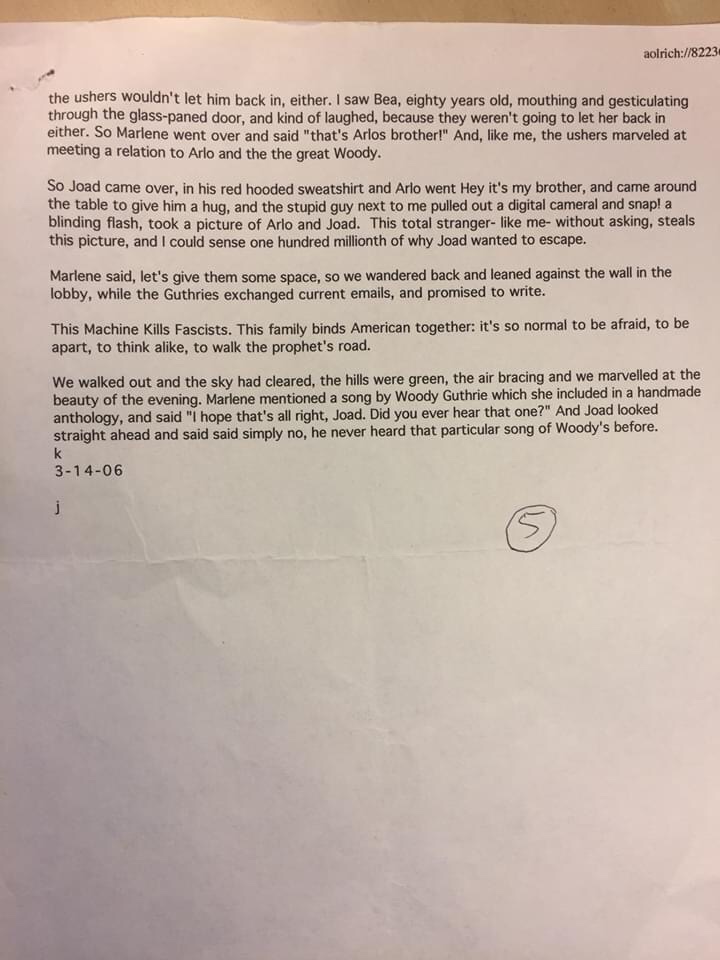
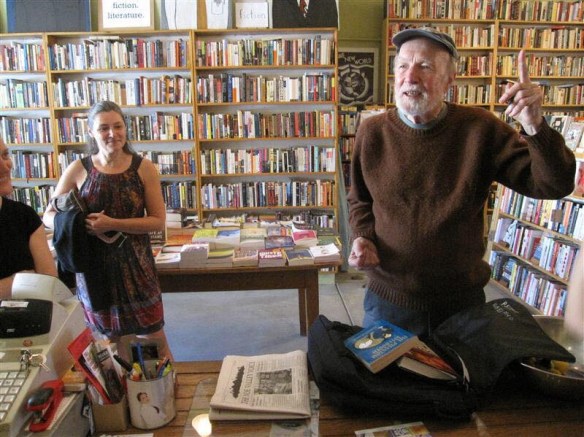

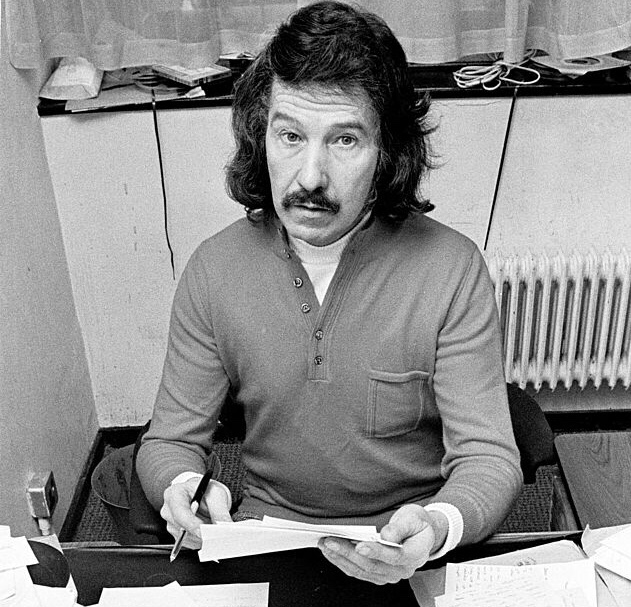
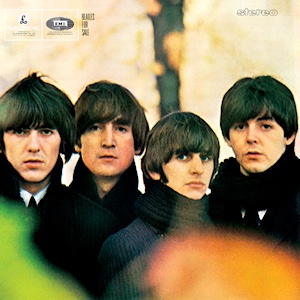
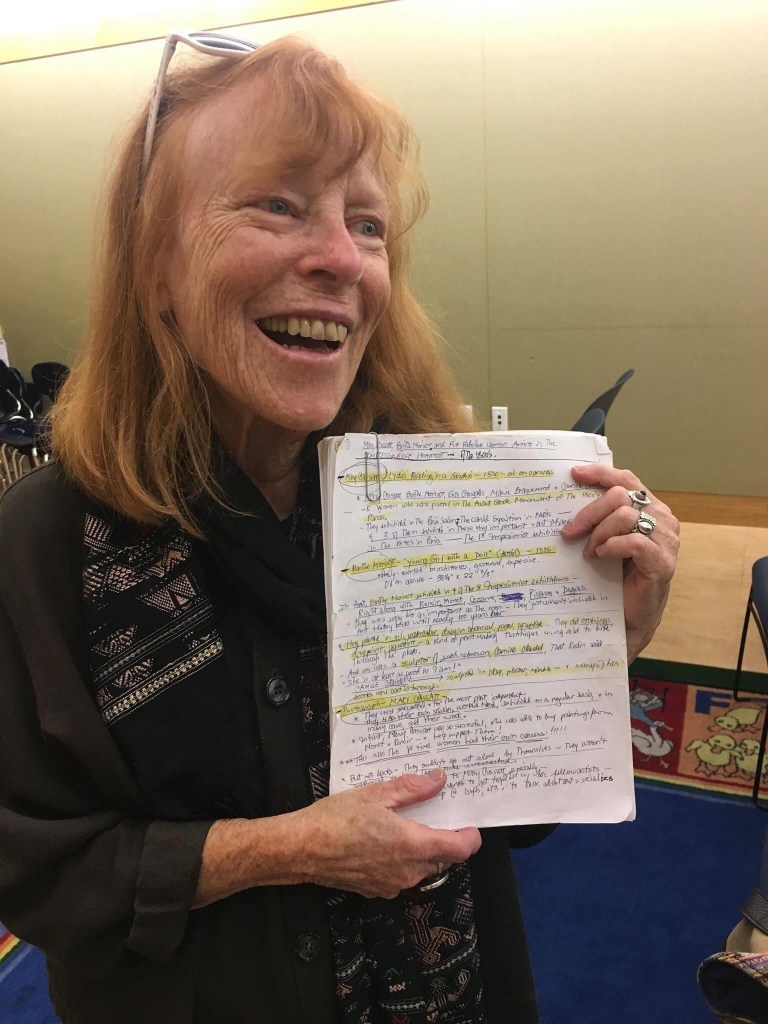
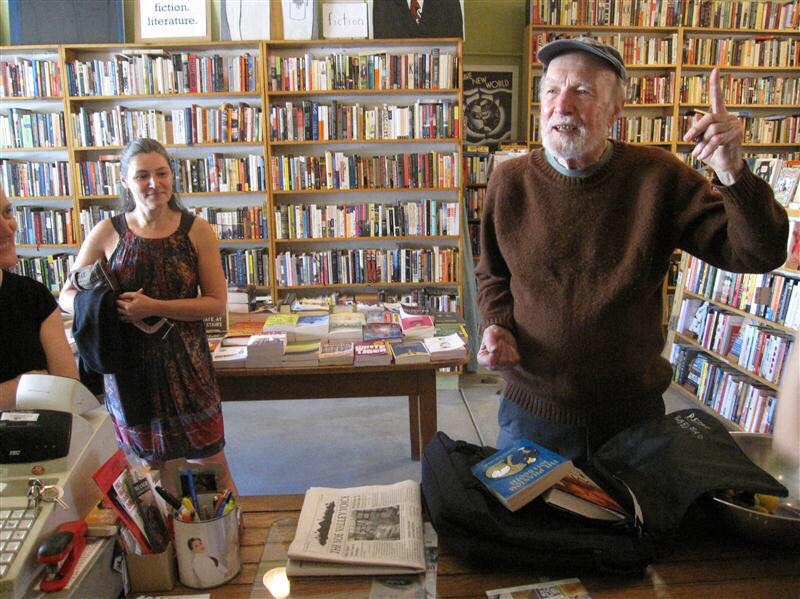






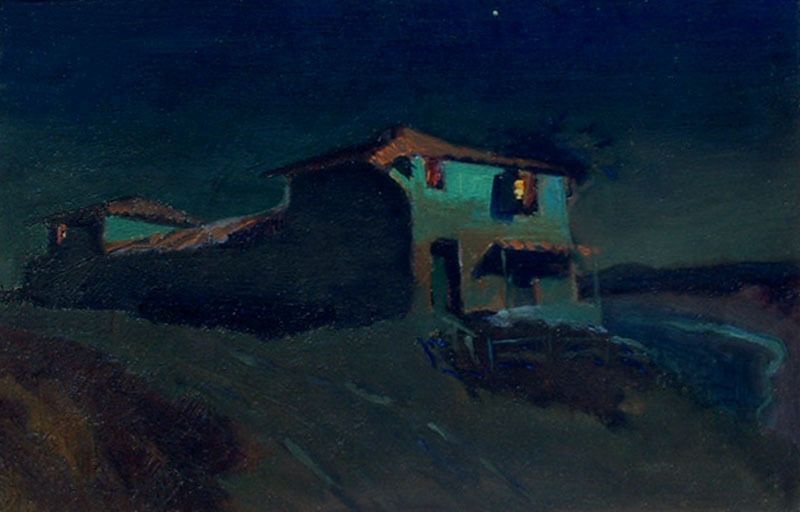
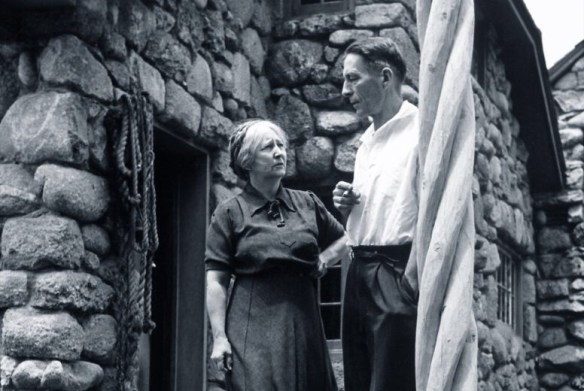

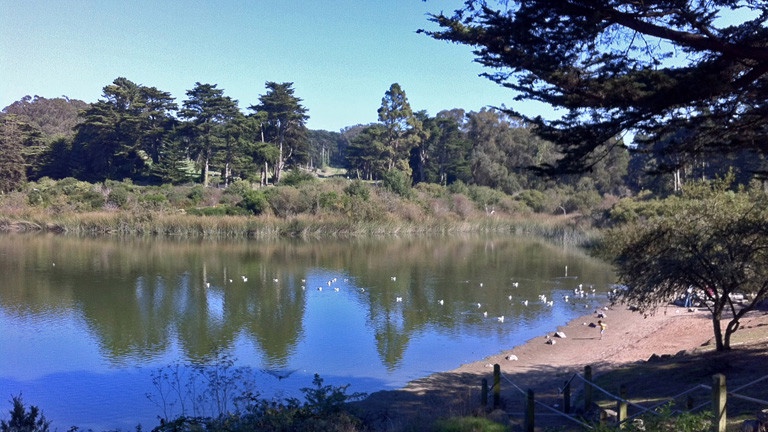

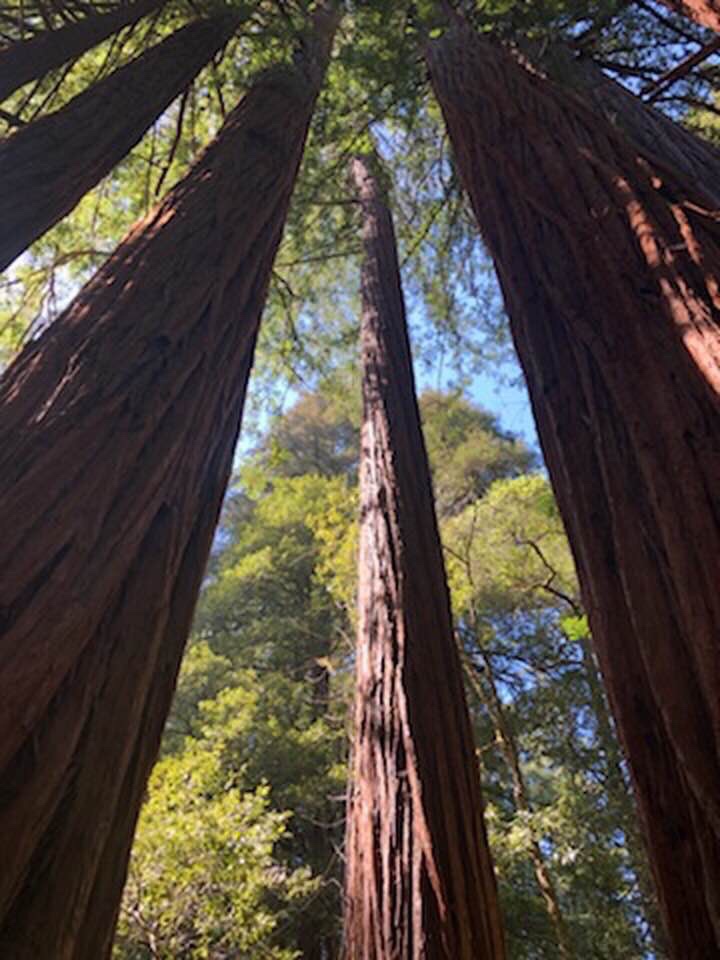
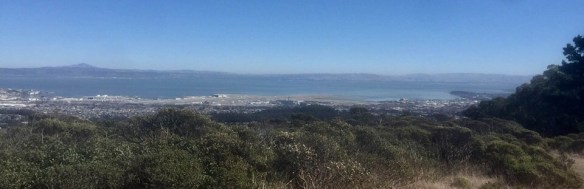
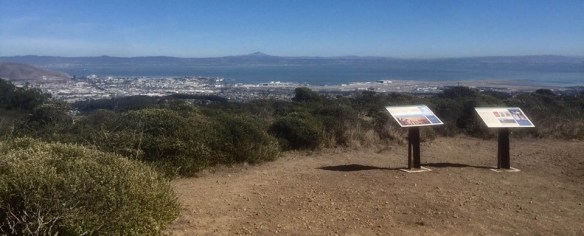
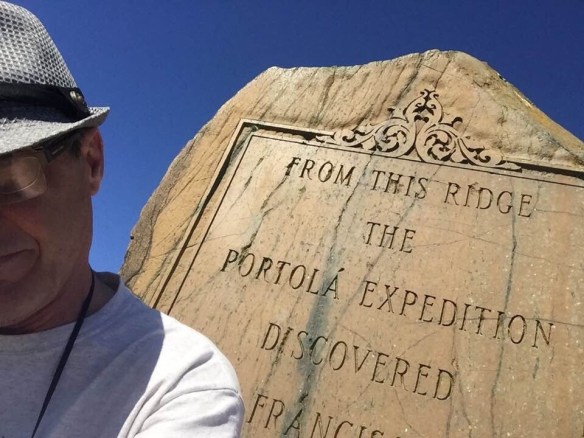



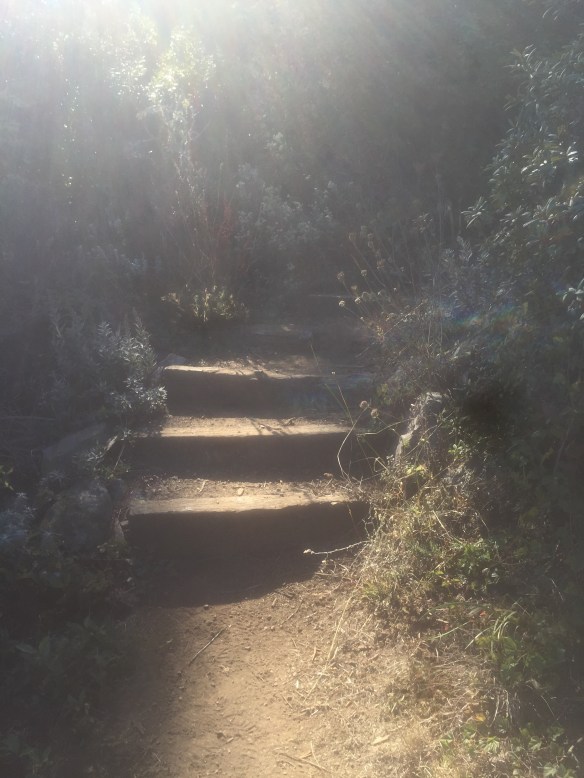
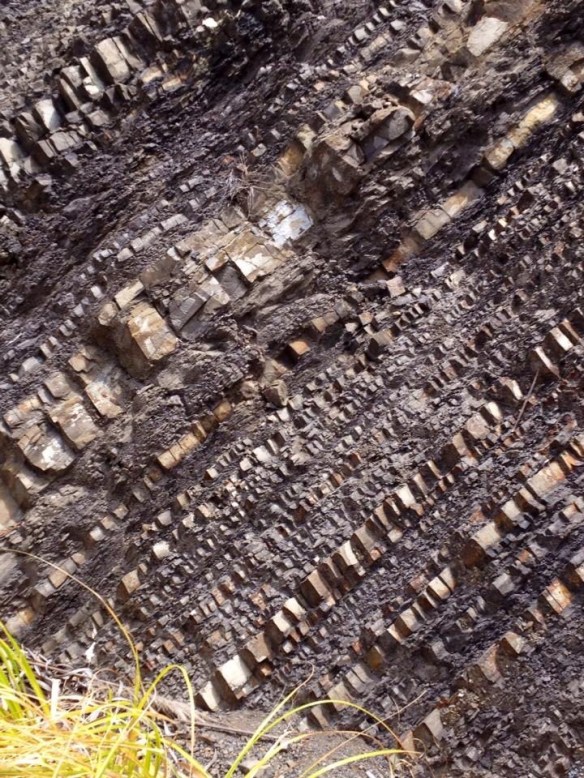


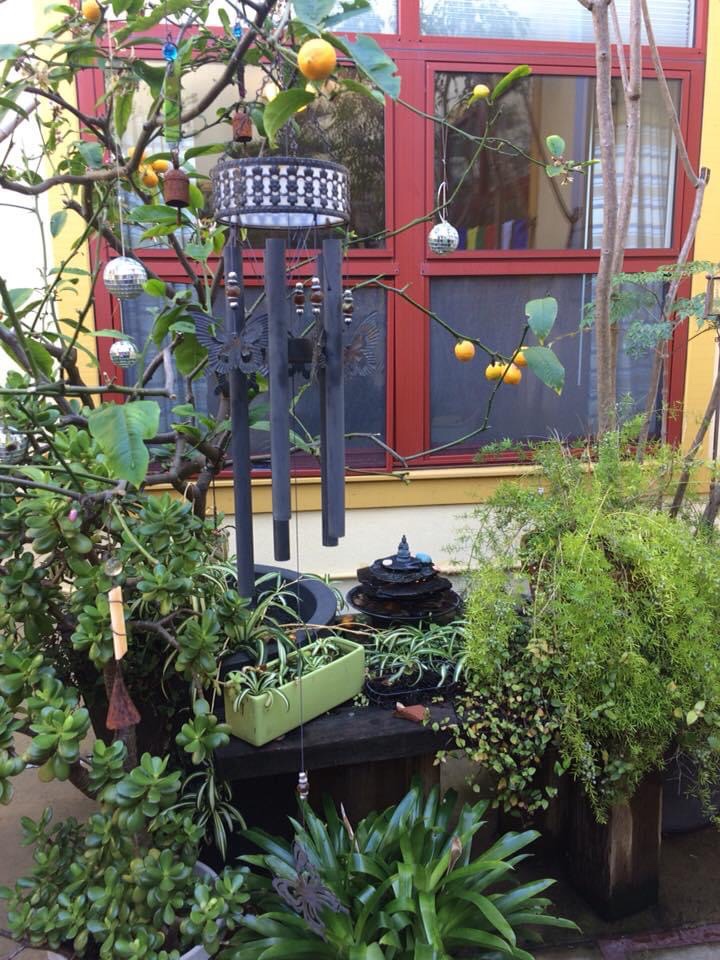
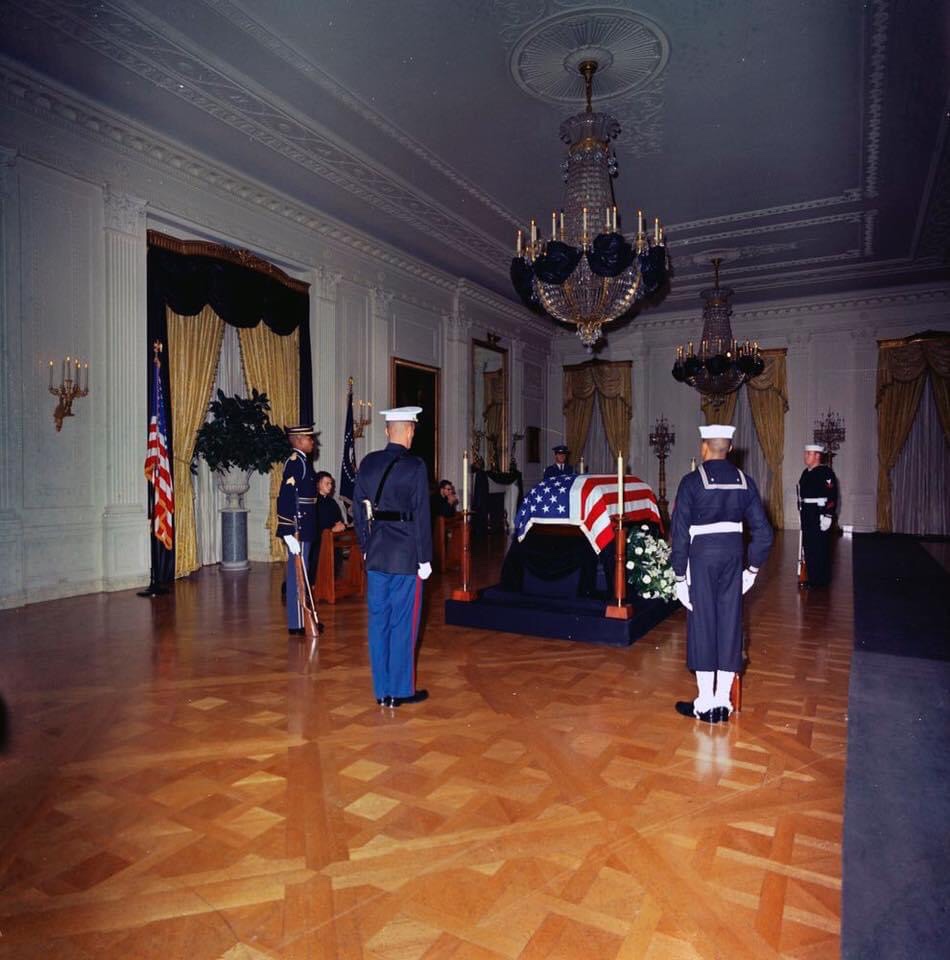
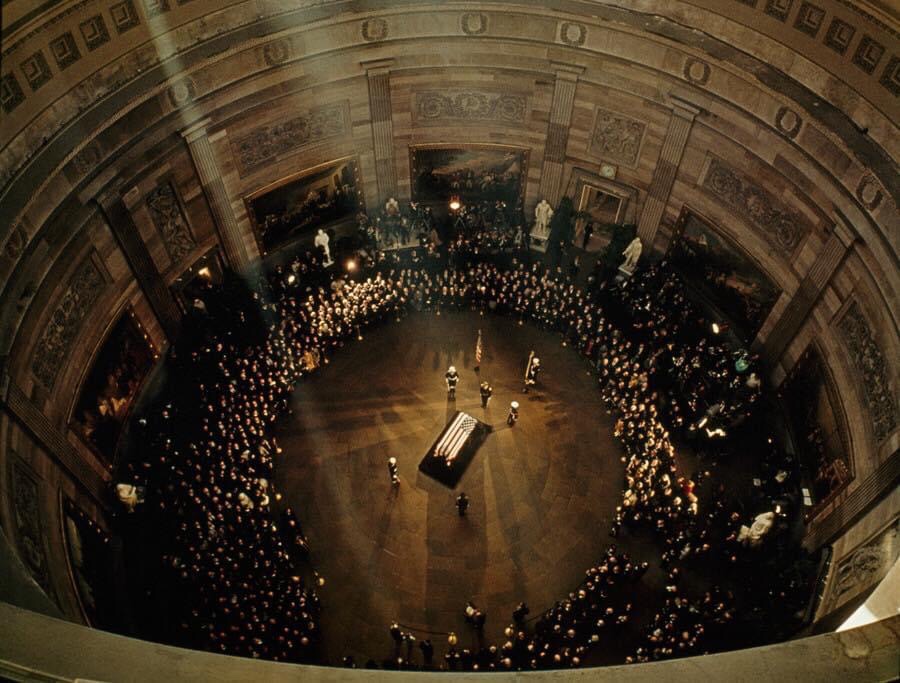



 jameskoehnsf's Blog