“Hospice has a way of making the unfathomable beautiful, where the secrets of living find their truest essence.”
-Mary Boudreaux
***
A poem by Meg O’Shaughnessy:
These words found their way to paper in the year 2000
following the breathtakingly sudden death
of my sweet and tender sister
Beth O’Shaughnessy Schoppman
Beloved Daughter Sister Wife and Mother
who left us 18 years ago today ~
Déjà vu
The window to the other side has blown open
flung wide, yawning
has it always stood so ?
Curtains still aflutter
with the faint rustle of
so recent a a passage
lend an illusion of easy travel
round trip possibilities ❤️
Through this sweet aperture
breezes croon and keen and whistle
carrying whispers of intimation and lament
lingering regret, tender parting songs
I sense a deep memory stirring
strain to recognize to remember
from here, from now
an ancient home
That land we inhabited before desire
whence we gazed into a life of body
through just such a window
before it came our turn
Beyond loss, before time
suspended in this eternity
***
Our hospice patient likes to have a sitter to keep company. He says he enjoys just talking, and says it’s not important if he remembers what he’s talking about. It’s not relevant, he says.
“Wednesday is blue,” he told me.
Other days are other shades blue. Different shades. Sunday is white, where all the colors originate.
But Wednesday: blue.
***
You catch your loved one when they’re falling. Bony knees- tightrope walking that impulse to get across the room – just one two three four steps- what used to be easy. Negotiations and boundaries suddenly upended. Establish trust in a few short days, just in time to let go.
Look at the sun on the window pane. Whole part of the brain is awake, another not functioning at all, and we don’t know which is which.
I watched a patient’s family member go through this today. Having a hospice team there gave the family a safe place to be angry, get organized, find one more glimmer of connection, let go.
It’s interesting seeing a hospice team function. And to see a family member see themselves as part of that too.
The support holds as long as it needs to.

I work in hospice and one of our patients asked me about my life so I told her about my wife our kitty cat my piano music and walks by the ocean. She nodded and simply said,” It sounds like you had a pretty good day.” Now when I worry about the future or get a little stressed I try and remember that usually I’m having a pretty good day…thanks to her for reminding me.
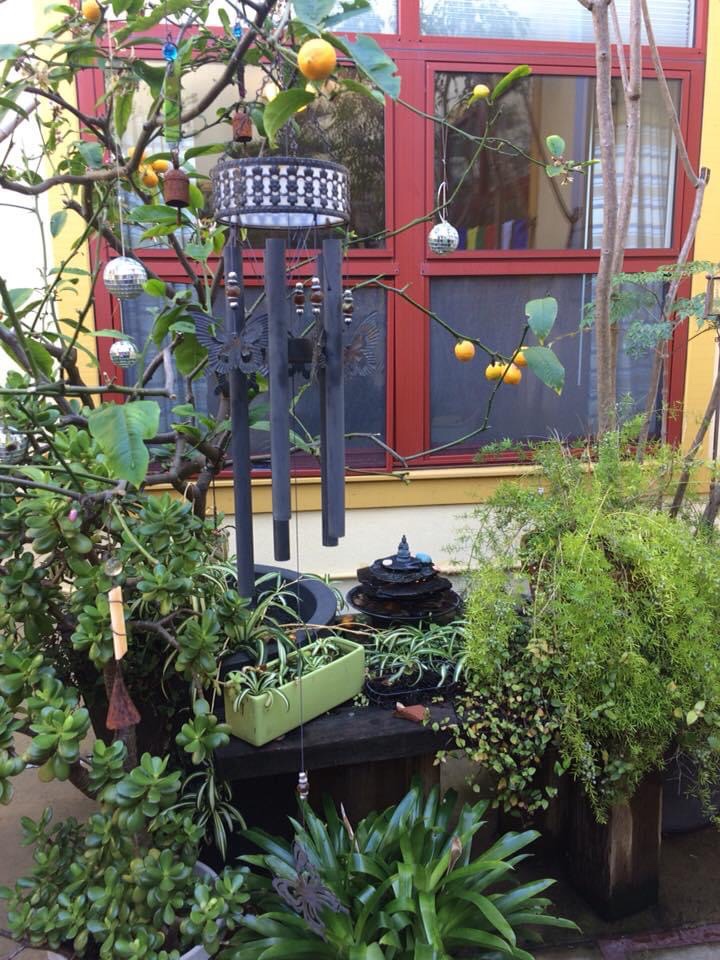
For Sharon, the woman who asked about my life, a hospice poem, written the morning she passed away:
Your Journey-and Mine
My little gray bus
Lights on every corner
Ribbons and streams
Down rush hour road
My two tree friends
With me at the stop
Ground-rooted
Leaning, winking
Telling the same jokes for decades
Unaware of stately leaves
Off goes that little toy bus
Blinking toward the bridge and gate, the drowned valley where
Once the mastodon and grizzly roamed
And sabre tooth cat.
That’s the simple story
Of the morning you
Drifted away.
Your hands are warm
And
here is your shawl for your great journey.
jk
San Francisco
2/7/18
***
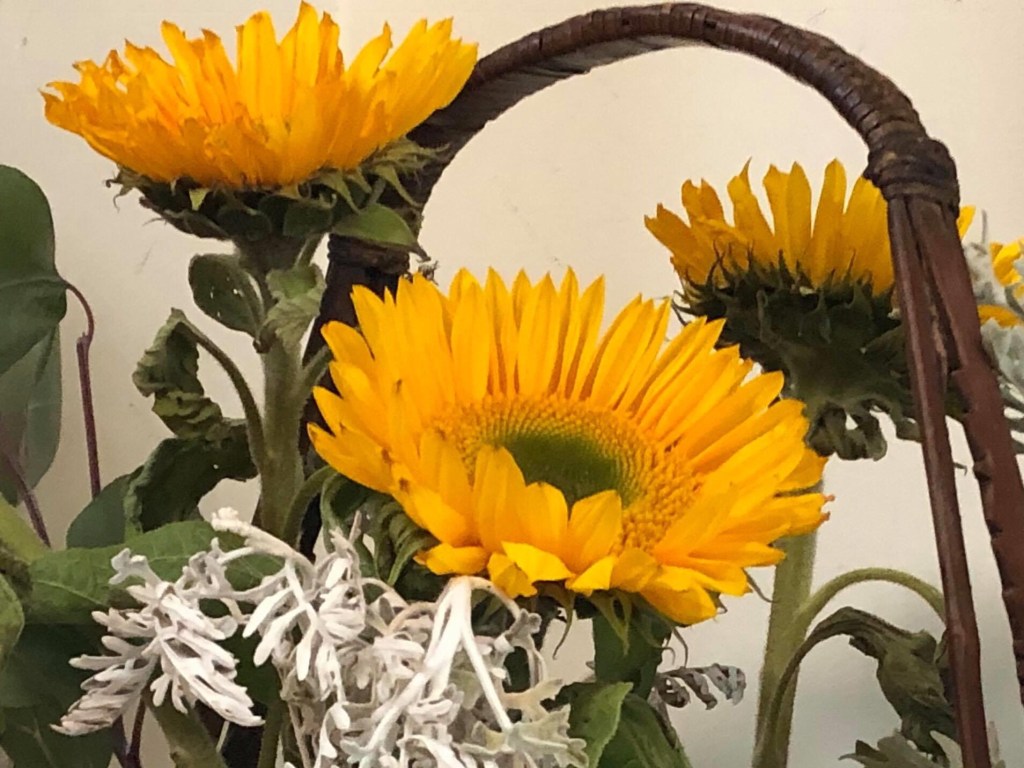
I thank the hospice nurse who intently listened to my report and validated everything I experienced, deeply understanding. To be listened to.
***
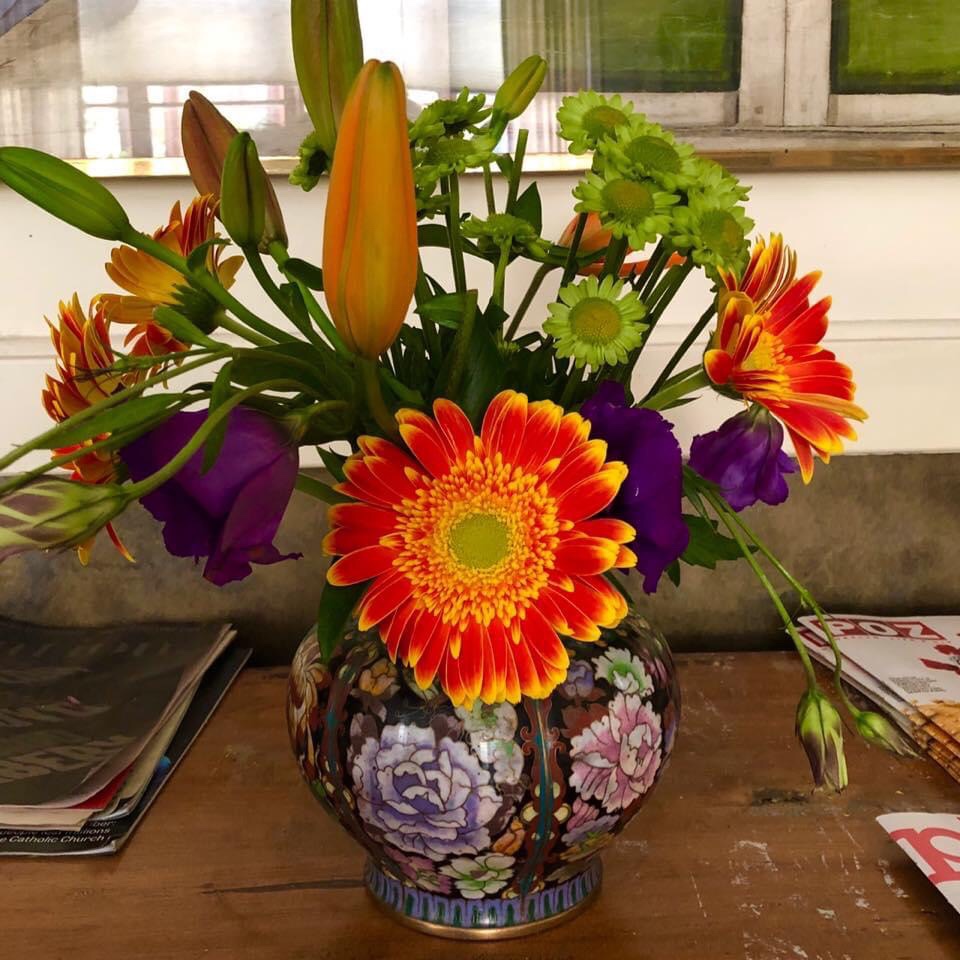
I learned a beautiful fact working in hospice yesterday. The internet suddenly is completely unimportant. Information is useless. A space of silence, breathing, a clock ticking away up on the wall, all that is good. Just the small talk of daily life, to which our man opened his eyes asking “Why is everyone celebrating?” A sitter replied, “just because you’re awake.”
***
The Fact of Breath, Final Breath
I began a little exercise book called “Fact of Breath” on May 24.
It had to do with inspiration and respiration during the pandemic crisis of Covid-19.
It was a tentative way to begin a written meditation on the symbolic meanings of breath. I’m not a scholar. I don’t know where I’m going half the time.
Breath as Spirit. Psyche. Pneuma.
But then these words were heard -read -reported all across America the next day:
“I can’t breathe.”
We’re currently in a global pandemic of respiratory disease, having everything to do with breathing, and a murdered man’s last words are, I can’t breath. Can’t move. Mother.
And pandemic turned to fury and protest.
We’re trained to listen for breathing, count respirations, count minutes in a crisis. Look at the clock. Call 911. Basic Life Saving. All about breath. And pulse.
Asphyxiation is about pulse, etymologically.
But asphyxiation really is suffocation-
Asphyxiation was the official cause of death in this case.
But the cause of death was a police officer- the effect was suffocation.
In a hospice situation, one watches for the breath, the pulse, the shallow heaving of the chest. You hear the second hand ticking on an old clock run by a double A battery.
You watch breathing, as it becomes rapid and shallow, sometimes gasping, sometimes rattling. Or one notes the stillness in the room between slow respirations. There is little left to do but observe. And notice your own breath.
Usually the room is cleared of clutter and so naturally becomes a meditative space of breath.
And every time, you think, it all comes down to this, the fact of breathing.
Inhalation and exhalation.
You know that there are a finite number of breaths, that there will be a final breath. You’ll see it or hear it or note the absence of it. And then that life is considered at an end.
Then pulse, no pulse. Time of death is often a quite peaceful interval, accompanied by a sense of relief. Emotion comes later. You have a sense of dutifully carrying out some things that matter only because we’re human. But then that’s it.
And then you close the door or leave it just ajar, open the window.
The activities that seem to matter are less important for a time.
The important thing we do is to keep breathing. And observe what makes us human.
Once upon a time…
Even before that- the book of Genesis was passed down from even older days, from some old clay tablet, probably.
That old, old book. Blow the dust of the desert off of it. –
I know, you’re saying, please god no, not the Bible.
In the beginning.
Man was an artifact, made of clay.
What happened next?
The Unnameable formed a form.
We were an object. A little statue.
Formed a man of the dust of the ground, and breathed into his nostrils the breath of life; and man became a living being.
Breathed.
Breathed life.
Breathed life into.
Became a living being.
Those aren’t my words. To myself I say them over again. The words themselves deliver oxygen, breathe life into.
To look into the mirror of death, of a murder, and see the fact of life and breath so clearly.
-Not only the horror of murder and the destruction of life, but the fact of breath.
The fact of breath is that, breathing is really what we’re doing, while we’re doing everything else. It’s the truly important thing we do.
Inhalation and exhalation.
Breathing makes us a part of all that is.
And breath is spirit. It’s not disprovable.
So tell me we’re not crushing the spirit out of things.
Tell me this is the Beginning not the end.
Breath Life into this project, this country.
Breathe.
Life.
Into.
***
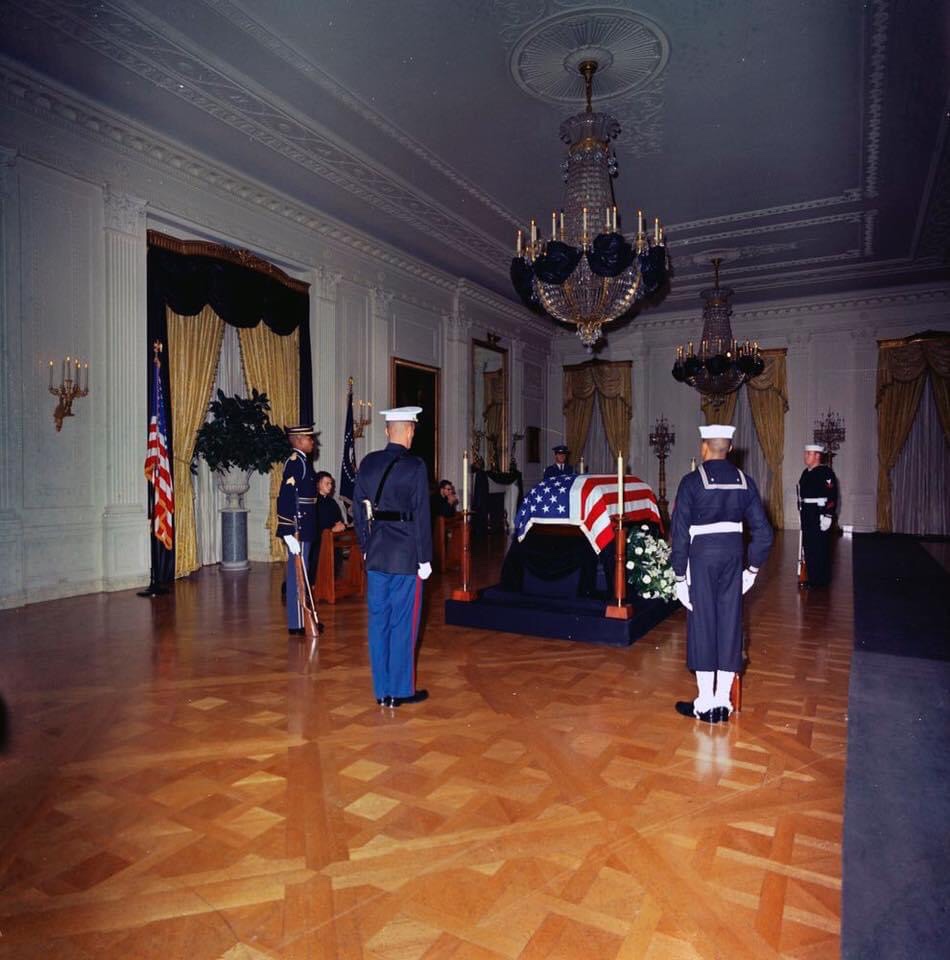
As a hospice worker I’ve known long hours and many double shifts as a sitter on duty in hospital- I actually think of the Honor Guard of JFK, standing at attention through the night, when I wonder if I’m going to make it through my shift.
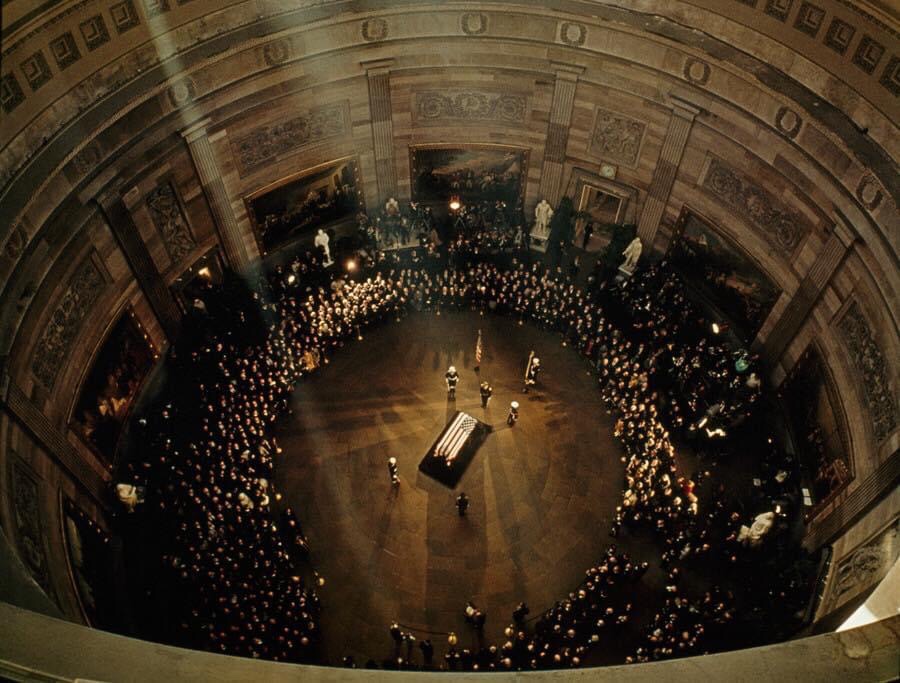
As a hospice worker I’m fascinated by the official team, honor guard and casket team at the JFK funeral. The casket team practiced late into the previous night with an empty casket with an officer within – the Capital steps are so narrow, each step was synchronized, the casket always level- and one team member said the mahogany casket seemed to weigh a ton.
The verbal command is “Ready-step” followed by a pause for a breath, upon each step.

***
The modern burial is in a casket. A coffin is the old- style wooden design which is narrow at the foot and has the long hexagonal shape, like in Edgar Allan Poe.
Fun fact.
I once asked a woman in Garberville, at the historical society, where’s the historic graveyard? She sharply corrected me and said, “It’s a cemetery, and it’s on the hill.”
I learned too that for graveyard the correct word was churchyard, before the time of modern memorial parks, or city cemeteries.
Is a person lying in state -or in repose? No.
Answer: the body is lying in state or in repose.
Lifetime Parking Space
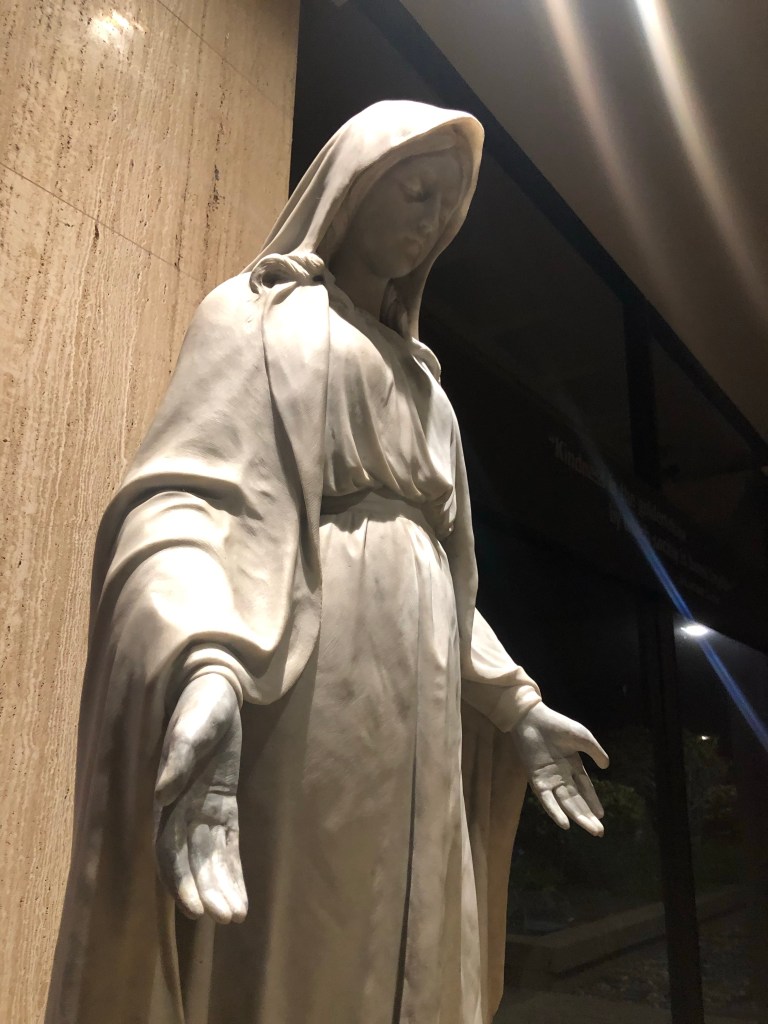
There’s a ghost in the place where I work, of one of the nuns who had worked the hospital for many, many years.
She a tiny lady, carries a clipboard, and wears the nun’s old fashioned wimple and she is old-school and elderly and appears in the corner of one’s eye out of the space of a deserted hallway, of which there are many in a hospital at night.
I confess that I’ve never seen her, except of course in my mind, which has its own deserted hallways- and a vacant stair. Old joke, apologies.
Yesterday one of the hospital maintenance workers passed away. Died. Right there at work, alone in their break room. Only forty years old. The Big Guy: one of those burly giants with a kind heart.
Tibet monk, my coworker, patient transporter, was on duty when it happened, and the following day told me about it.
Tibetan monk/ patient transporter had to take him down to the cooler in the adjacent concrete block of a building on Level One. Special gurney, blue canopy, blue as night.
“I’m so sorry you had to go through that, with one of our own, “ I said.
The monk acknowledged the little shock that passed throughout the facility. He was very serious, shaking his head, eyes lowered, thoughtful.
We are kind of accustomed to death around here, but we don’t like when it when it gets too close.
The departments become like families, and the maintenance people all wear gray scrubs, have their own culture, even their own language, so you knew when you saw them, idling their machinery, talking quietly, eyes lowered, many speaking Spanish in most formal tones, that they were taking care of each other.
I walked alone down an empty hall in the hospital and notice a cloud of something like grief, not heavy, not visible, but an atmosphere, an energy nonetheless. And the energy was strangely impersonal, more of an acknowledgement of the limits of life, than a tearful thing. Just hanging in the air in the long empty hallway.
Free-floating emotion in a hospital has no place; there is care and compassion, but open free expression, not so much. Subdued. Contained. Shh.
And then, in my mind, when I’m down by the lab where no one is, I see her, the nun with the clipboard.
Hello, Sister. And her glance says:
“Don’t you have something you should be doing?”
And in less than the time to tell that, she’s gone.
She’s absolutely right.
So back I go to the little transporter office and there I see the Tibet monk with his feet up on the table, tilted back on the ergonomic chair he stole from administration, and I make him remember the Man with the Lifetime Parking Space. I know he’ll laugh.
He gets to his feet smiling and says “Parking Space Man!”
Parking Space Man had worked almost fifty years at the facility and had his own lifetime parking space, for free, in consideration for his numerous decades of service.
He swore he’d never retire. He worked many years past the time when people liked him. He kind of irritated everyone, actually. He didn’t care.
Same little office as monk and myself.
I’d say why don’t you retire, travel with your wife, hit the road?
“I’ll never retire!” he’d reply. Because he had a lifetime parking space.
Then, time passed and Parking Space Man got pneumonia or something like that, and he still came to work, and everyone else in the little department had to wear a mask because he insisted he was ok even though his lungs rumbled and he coughed all the time and we were all concerned and were also rolling our eyes and, yes he finally ended up passing away. Finally. Here in the hospital. He was taken down to the cooler in the concrete building adjacent, down to Level One.
And his lifetime parking space now is $16 dollars per day, except weekends.
-We love that.
Hello, Sister. Yes, we can get back to work now.
Rest In Peace, my brother.
8/22/19

Excuse Our Dust
It’s a steel gurney with a blue canopy.
The wheels swivel, and there are small toggles for brakes. It rumbles in a slightly disturbing, unfortunate way, when empty. But when in use, the actual weight of a body justifies the rattling movable parts into a quiet rolling sound down the mostly empty hallways and down a freight elevator to cold storage, the actual morgue.
One walks along in uniform scrubs, deliberately, not fast, not slow, looking neither to the left or right. Without words, you transmit a sense of purpose, and others carry on without a word.
Of course it’s the last call of a shift, and the rest of the team has left. So I go alone to retrieve the special gurney in a remote clean room in a wing that’s no longer in use.
The gurney is covered by a canopy. The canopy is really fashioned from a blue plastic tarp, but it serves the purpose.
The key to the morgue is on a plain wood stick with a lanyard attached through a simple drilled hole, so it doesn’t get lost. The key jingles on a little bit of chain.
Everything is so simple.
There is anonymity or, more plainly, confidentiality. Postmortem care in facilities include the ID tags; the body will be enclosed in thin light synthetic, opaque beige plastic, ready for transport.
So the transporter really sees only a quiet form, in a room mostly empty, call bell now useless, television turned off.
That’s harsh.
All the living can do is to act dutifully and respectfully- perhaps that’s instinctive- anthropologists tell us this behavior is a defining characteristic of humanity, this care for the dead.
Who knows?
How aware one is of the weight and girth of a body; a roll from the shoulders, a final form of resistance, from the bed to the gurney, cold surfaces. It’s a little agony that one doesn’t sense if the person is small, tiny, elderly, as is often the case at end of life, in a hospital. That is so easy, when a person is as light as a little bird, when the spirit has flown.
But a middle- aged male, deceased, with a barrel chest, and a two hundred-plus pound frame, that makes one wonder at the phenomenal energy it takes to be alive. And to move that body takes effort. And that is significant life force, too.
One uses the actual gravity of the body to slide to the gurney’s shiny surface, and then hoists the light tarp-covered frame over it all- it fits in little indentations at the corners, solid. Of course you bang the frame against the wall inevitably. It’s not perfect. Then you go.
There are long hallways on the journey, and time to think.
There is confidentiality, but one checks the ID and notices everything. Often I know the first name.
The route goes down remote long hallways, authorized personnel only, fluorescent lit.
Sometimes I sense a question in the air, and I’ll respond, mentally. As though the person was walking along beside me. Like, where are we going?
Am I really alone?
I address the person with courtesy and respect, in my mind.
And I make small talk.
And say to the air, “everything is ok. Peace. We’re almost there papa. You just rest easy now. “ Or something like that. Sometimes a word of prayer, but not always.
With this person, I just tried to act like I knew what I was doing.
I take the elevator to the bottom level- below ground- and to an adjacent building, a floor below some renovated offices.
Then I stop.
There’s a slope, a steep grade in the hallway down at the end, and my guy is heavy. I put the brakes on and park.
Back hallway, almost to the morgue. I have some building supplies in my way. Hallway is half-lit, generators are humming.
“Excuse our dust.”
And if I roll down the grade of this back hall, my gurney probably would roll out of control into a big stack of light insulation.
So such is life.
I call for back-up and wait.
I’m not sure why I wanted to write this.
How often does one find oneself in such close proximity to end of Life, in a hallway with all of the supplies and light insulation of the daily projects of the living, and nothing but time?
Maybe I’m writing just to say you’re never alone. We need each other.
Life stops, and I do too, and sometimes back-up doesn’t arrive, so after a while I get up, move the insulation, take tentative steps and walk the grade slowly, with strong deliberation. Slow and careful.
And find some dignity. It’s not a silent movie where you knock over a scaffold and create some chaos. No. That crossed my mind though.
This is actually the opposite of chaos.
And when that last door closes everything is so still.
Throw your gloves off, wash your hands, take the elevator UP.
This is just a natural death. It’s not Covid, it’s just what happens in daily life.
Alan Watts saw himself as rowing a ferry across space to the other side. And he joked that he would always return.
And here we have the basics of our society, dimly lit, somewhat cluttered, but we do our best, to the edge of what we know.

Your grief, not mine
Carry a freight
a grief
a weight
to the track out to the pier
And then, push off from the limestone coast
Pilot past the hidden bay
the fogs, a brig
propelled by only sound now
Another century away
the low thrumming engine
bass vibration
a clanging bell saying
“This and that, this and that”
The rolling wheels
the crowd waving
shouts and whistles of farewell
Can’t take the suitcase you carefully packed
only the books you memorized
grief out of orbit now
looking back
earth, universe does not hold you
holding nothing, holds nothing back
Do you have that letter tucked away?
Do you remember what we said?
The personality,
the lack, the locked hunger
The empty safe-who took the book of you?
Your grief, not mine.
I’ll take it to the pier and let it go
just have time to catch the morning train and, seeing things,
see things just as they are
It’s good, breathing morning air,
the ocean, a warm coat
the lungs expanding, health
and strength again for walking
jk
12/7/2018
***
Tea Table
I have a little tea table. It’s a bit unsteady, in that its frame is slender, the table legs are held in place by twine at four points.
An artist who passed away left it behind years ago. Someone I’d met, but didn’t know. I was allowed take it.
It has limited use, perhaps just decorative, but is versatile: the table top is an independent feature, and so cups and teapot may be carried to bed, a luxury, a comfort.
The artist was a teacher I knew, and was efficient as well as proficient in use of tools and spaces.
Pens, sketchbook, watercolor brush and ink- and phone. Ever present there, no doubt.
I just noticed the table again just now. For no reason I ran my fingertips along the little rail. The table top has handles.
Its dark wood design takes up so little space in the universe.
This table is full of that person’s aesthetic.
I mentioned that name to myself, the previous owner’s, (though in this moment nothing is really owned, but passed hand to hand). With a hand on the table, and just this brief acknowledgement, I suddenly felt connected. Inspired. Healed.
Oh! my tea is ready.
November 22 Again
I’m joining the silence of those who remember 1963.
It was lunchtime, but it wasn’t till the early darkness of late afternoon that everyone in the country and around the world began to grasp the enormity of what had happened.
As a kid I imagined a globe shrouded in the darkness of space that we had just begun to explore.
Eternal flame: still alight?
Who knows?
My friend who was there on the hillside and witnessed the event passed away a few years back.
So that tells me it’s time to let it go.
I’m closing the book. Knowing is not always important, where the unknown is concerned.
***
 jameskoehnsf's Blog