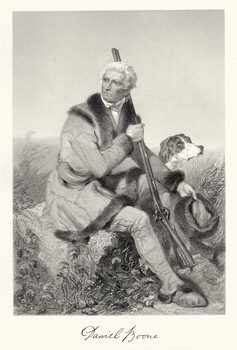
“I was never lost, but bewildered once for about three days.” -Daniel Boone
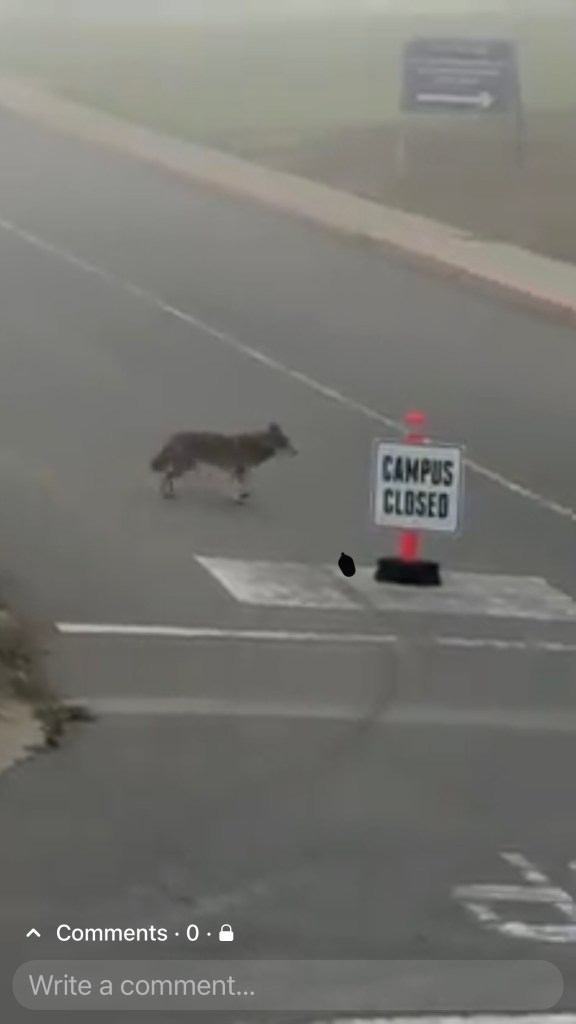
We’ve seen a coyote twice this week. Just after daybreak, on the green hillside expanse just across the street from us in Daly City.
Pretty close, too: close enough, and coyote well-fed enough, to think for an instant it was a neighbor’s dog.
Coyote, just sitting there on the grassy hillside which looks empty to us, but is actually teeming with life, a gopher/ vole buffet.
The coyote is watching us drive by. We’re going to be late for the train. For us, it’s 8 am.
That hill is a salient feature with a commanding view of routes to open space oceanside bluffs and the lake; to San Bruno Mountain and the bay.
If you walk up to the top you see all the way to the Golden Gate, Marin Headlands, the ancient escarpment washed by rolling surf.
You can see too Lake Merced tucked away in a wrinkle of low marsh. It’s a natural lake, so preceded colonization and looks like silver in the fog.
This coyote is not scrawny, not lanky, not mottled. He’s got a nice coat, imperial, and looks lupine, like a full- grown wolf.
Coyote is late for nothin’.
I wonder about consciousness sometimes.
I try to imagine what he senses, the map so internalized, every smell heightened and every sound keen in a silence of total participation.
He knows more than we know.
It’s a quiet morning, very little human activity. I’d love to sit there on that hill too.
But the train is in five minutes so we leave the natural world behind.
Longing. For what?
There is a story about Daniel Boone when he was out in the wilderness alone for long periods of time- months to years- he’d hang out on a rock and it’s said from a great distance a wild sound like a howling could be heard and astonished hunters found it wasn’t the sound of coyote or wolf, that was Boone singing.
Just sayin’.
Or:
When hopeful biographers came to call for interviews in his old age, they were told to wait.
After a long time they’d look about and realize he’d left. Boone, wilderness scout, now almost 90 years old, in 1820, was making his way down the back path to escape.
Just sayin’.
I hear you, coyote. I see you.
 jameskoehnsf's Blog