California Beginnings, one of many
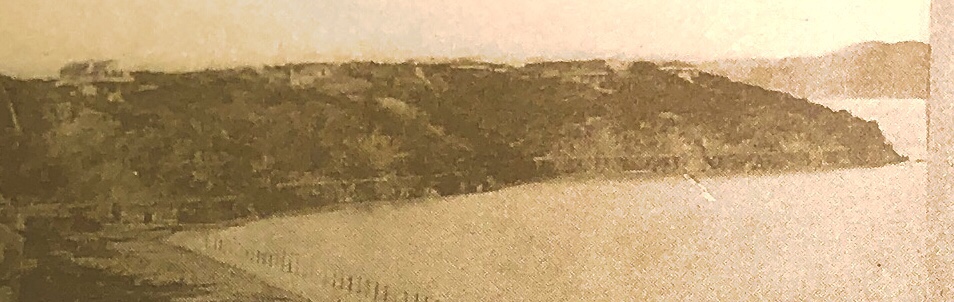
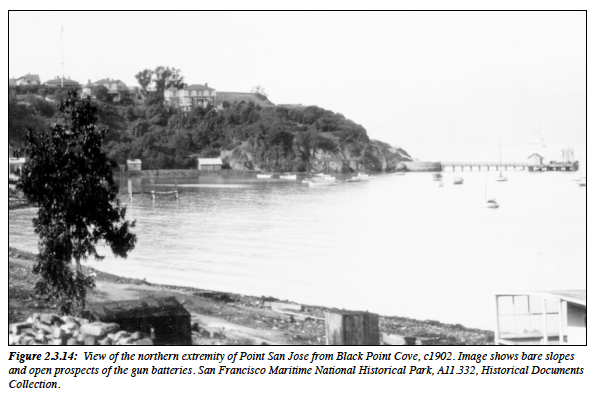
Here we see an image of Jesse Fremont’s Black Point home, now the path to Fort Mason. Home is at the right of the ridge.
I’m not the author of the notes below- part of research collection on this topic. jk
TWO HOMES ON BLACK POINT / POINT SAN JOSE
(Notes thanks to Armando Stileto Sf maritime and coastal history page FB.)
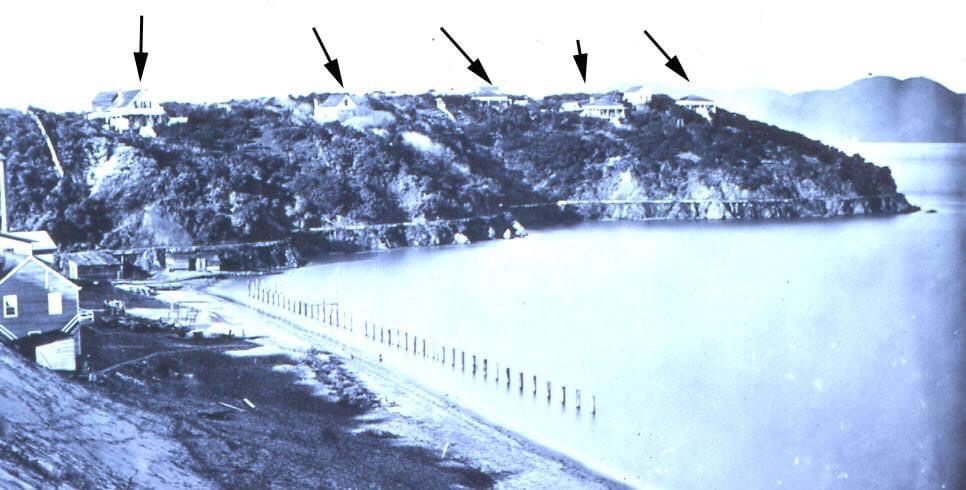
By 1855, Leonard Haskell and George Eggleton, both San Francisco real estate developers, had constructed at Black Point five homes, of which three still remain.
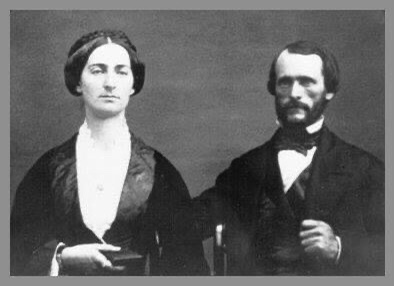
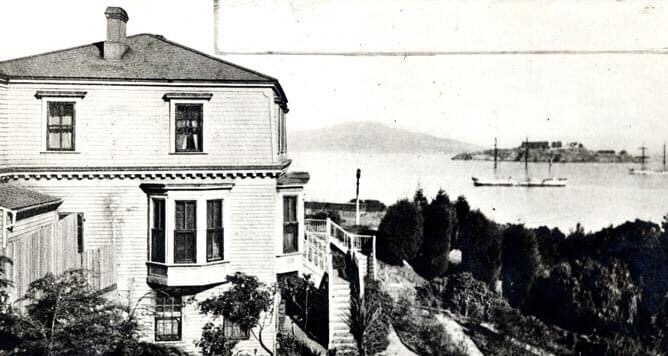
General John C. Fremont and his wife Jessie lived in one of these homes on Black Point between 1860 and 1864. Fremont bought the house at Black Point in 1860 for $42,000. The property included three sides of the point, and Jesse Fremont described it “like being on the bow of a ship.” They had a clear view of the Golden Gate, so named by John when he first viewed it in 1846. Alcatraz was so close that Jesse is said to have called the lighthouse on the island her nightlight.
Their house was one of six on the point. Jesse remodeled the house and added roses, fuchsias, and walkways on the 13 acres. Their home became a salon for San Francisco intellectuals. Thomas Starr King, the newly appointed minister of the Unitarian church, was a fixture for dinner and tea. Young Bret Harte, whose writing Jesse admired, became a Sunday dinner regular, as did photographer Carleton Watkins. She invited literary celebrities when they came to town including Herman Melville, who was trying to get over the failure of Moby Dick.
Conversations in her salon led to early conservation efforts when Jesse and a group including Watkins, Starr King, Fredrick Law Olmsted, and Israel Ward Raymond lobbied Congress and President Lincoln to preserve Yosemite and Mariposa Big Trees. Jesse’s husband, however, often away on business ventures, was not a regular at her gatherings.
Black Point was taken by the military for defense during the Civil War, and the Fremont home was demolished. One of the original six houses is used today as the Fort Mason Officers Club. Jesse filed lawsuits for compensation for the property, but the government countered that the families living on the point were squatters and produced documentation from President Millard Fillmore reserving it for military use.
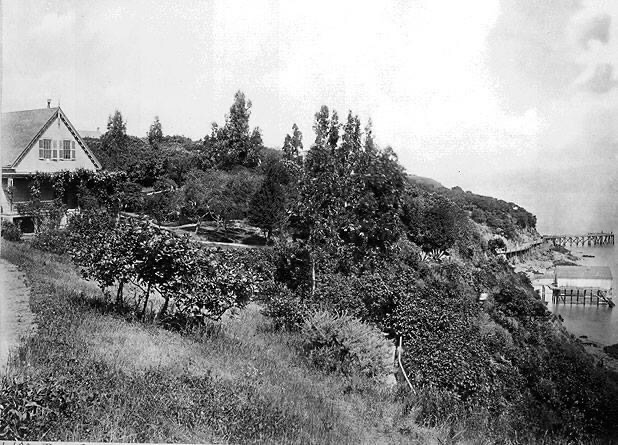
THE HASKELL HOUSE (Fort Mason Quarters Three), at the foot of Franklin Street, dates back to the 1850’s, has hosted a succession of military men since it was confiscated by the Union army in 1863 and turned into officers’ quarters. (The Haskell family wasn’t entirely happy about the terms of confiscation; Leonidas Haskell, a major on General Fremont’s staff during the Civil War, kept unsuccessfully suing to get it back until his death on January 15th, 1873.)
Over the years, the house has developed the reputation of being haunted. Colonel Cecil Puckett, who lived there during the late 1970’s, said “I feel that something or someone follows me about the house at times … I even feel that it watches me in the shower.”
The next tenant, Capt. Everett Jones (ret.), didn’t believe in ghosts — at first. “After we moved in we had a couple of parties there and we joked about a ghost being in the house. One Saturday morning after a party, I was in the kitchen putting things away and heard a big crash. Upon investigating, I found that a picture with a picture hook and a nail an inch-and-a-half long had crashed to the floor. It didn’t look like the nail had pulled out; it looked like someone had pushed it from behind.
“There was a similar incident later when five pictures fell off the same wall. And my daughter was sitting on her bed one morning and one of those bolt-on light fixtures fell off without warning … That all happened in the first six months after we moved in — we stopped joking about the ghost after that.”
Since then, the weird goings-on have continued. A painter working on the windows was actually pushed out a window by an unseen force. Plants have tipped over by themselves. Shadows have moved across empty rooms. Ghost hunter Sylvia Brown says she has “seen” a whole mosaic of spirits flitting about the house. The first, she said, was a man in a long black coat with a top hat who paced back and forth; then she saw a group of ghosts of frightened, disoriented black people cowering in the cellar.
In 1859, Senator David Broderick was shot in a duel with Chief Justice David Terry after an argument about slavery. Broderick was anti slavery and Terry was pro slavery. Broderick died three days later in the Haskell House.
The ghost in the top hat could be Haskell, pacing around trying to figure out how to get his house back from the U.S. military. (With the end of the Cold War, he may finally have a ghost of a chance.) But some say the truth is even more bizarre: The hatted ghost is the shade of U.S. Senator David C. Broderick, and the black ghosts in the cellar were underground railway passengers hidden by Haskell and Broderick.
(thanks to foundsf.org)

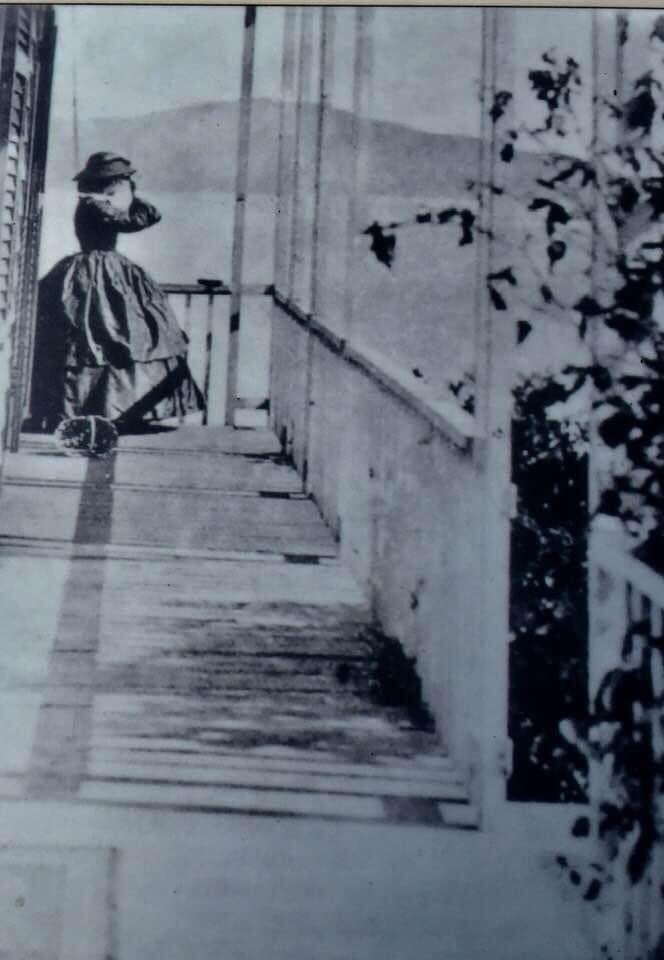
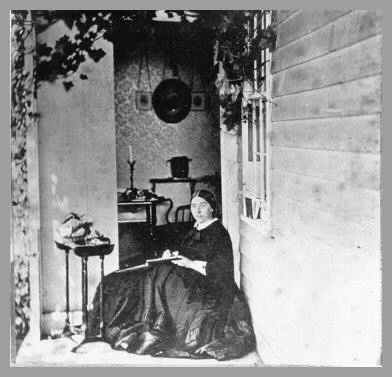
Jesse Benton Fremont lived on Black point 1860-64. Her literary salon included Carleton Watkins, Brett Harte, and Thomas Starr King. A center of Pro-Union political activity as well as the probable site of the promotion of preservation of Yosemite by the Lincoln Administration.


 jameskoehnsf's Blog