Dia de Los Muertos
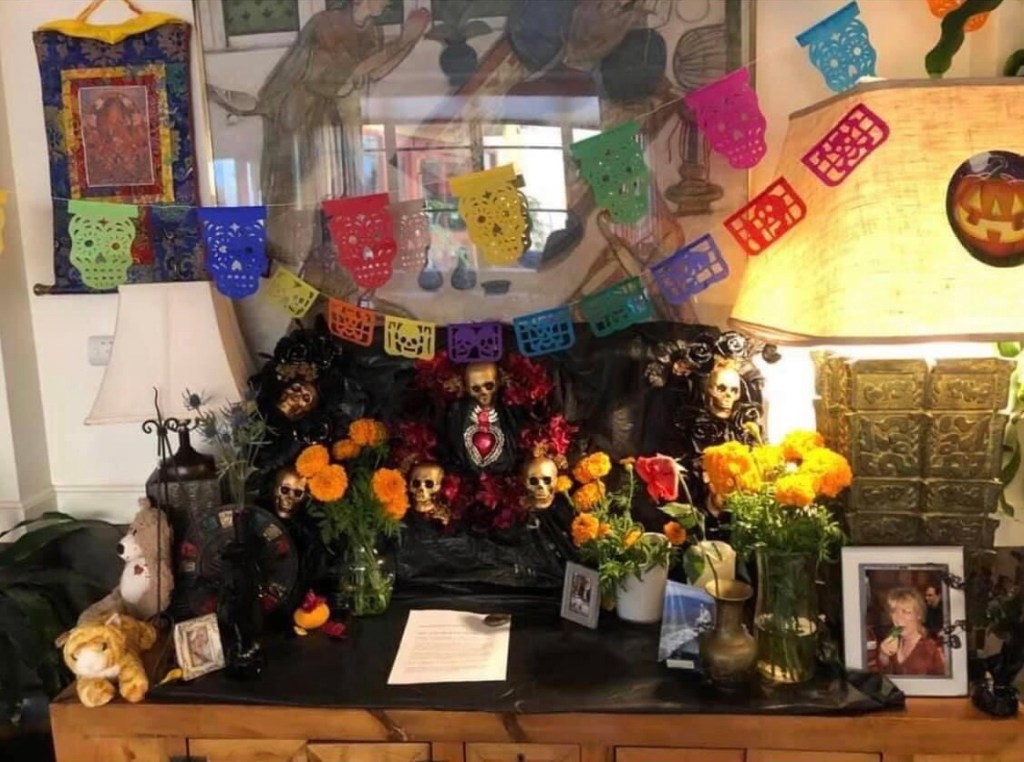
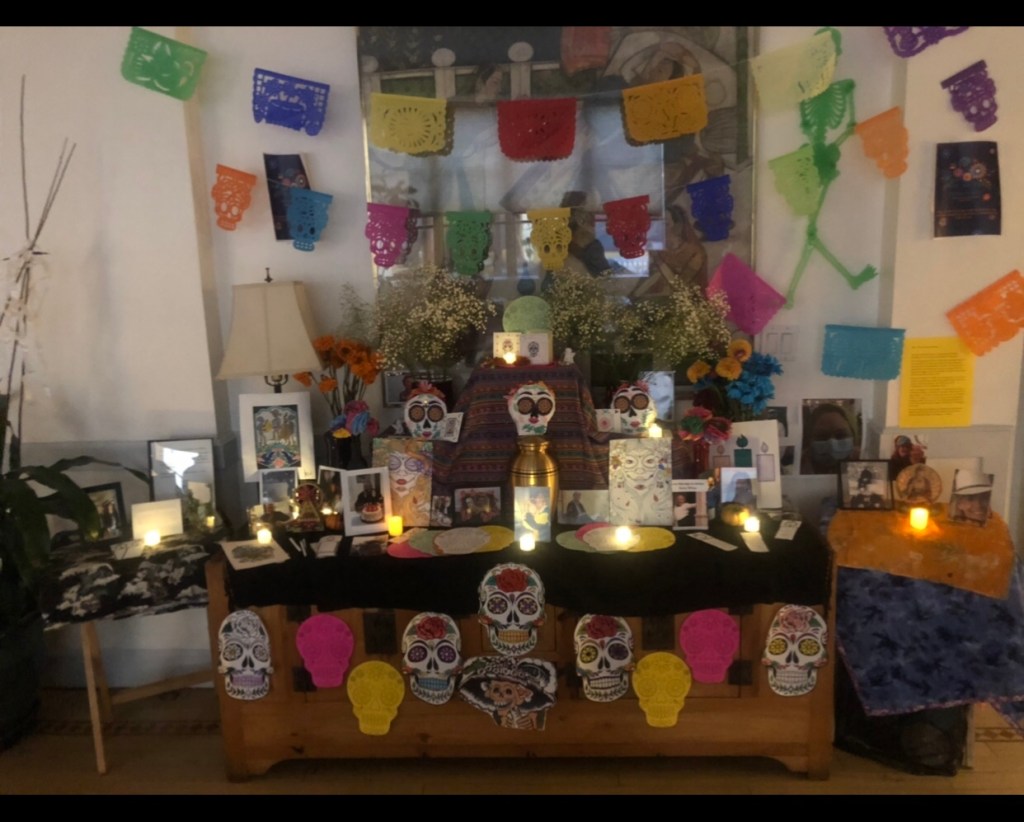
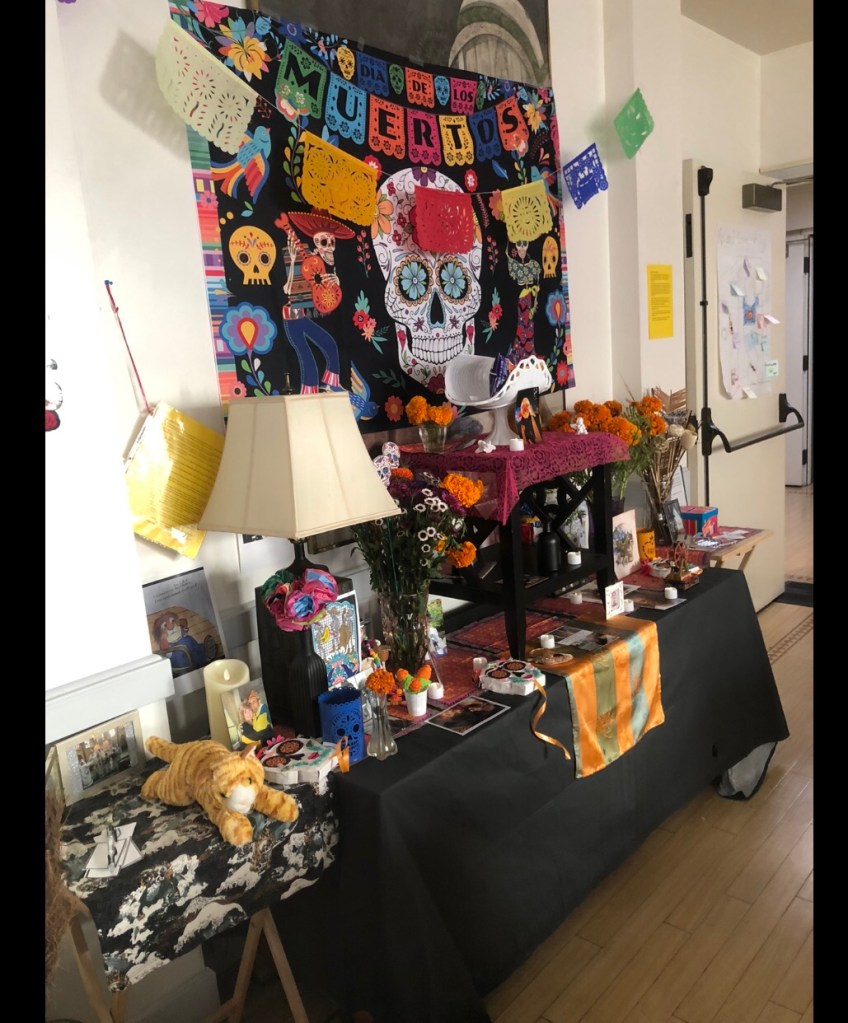
The altars were all unplanned in general- each just seemed to emerge without effort from what was available and with the creativity of residents and the fragile ephemera of daily life. Like a little miracle.
Traditionally observed on Nov 1 & 2. A huge parade in the Mission District nearby, with drums and costumes and masks and face paint and candle lighting in a park.
We wondered whether the altars would of interest or perhaps too controversial or would bring up challenging emotions or would be uplifting and inspiring- but that may be true of all creativity, which often involves some risk of confusion or failure.
But the altars seemed to “want to” emerge anyway. Whether a tradition has begun remains to be seen.
One thing I’ve learned is there are many dimensions involved, and sometimes an invitation to contemplate. Most everything is fragile and passes away- would otherwise be forgotten or discarded. But for a time all is still and has a place and value.
Going forward I see the altar in its simplicity preferable to complex and challenging. The photos were up til the morning of Nov 2nd, and the altar gained in aesthetic appeal, when the photos were removed and it was no longer overladen with imagery, I believe. It became more decorative and welcoming. That may be a key to future presentation.
Unsure whether photos of those who died, as opposed to more creative symbolic representations, are acceptable to residents, given all their life and death challenges. Possibly a middle ground can be achieved somehow. I worry a little about this.
Thank you Mary Anne Voss for developing the idea into reality as a team. And to Augustina Ramos Silva from Oaxaca where the festival comes from, for approving and encouraging and providing the beautiful wall hanging. She is visiting her mother (in her nineties) in Mexico, and they definitely have their resplendent “ofrenda” there.
Peace.


 jameskoehnsf's Blog