Author Archives: jameskoehneke

Rock History: a Geologic History of San Francisco (California beginnings)

California beginnings, one of many.

Rock History: a Brief Survey of the Geologic History of San Francisco

***

“seismic gift”

ground has shifted.

Things might not be where you left them.

stuff toppled off shelves or at ominous tipping points

roots exposed

Rivers

changing course

or running backwards

That quiet place with the cool shade’s gone

Long view open to landscape light

It’s ok

Home has shifted in relation

Always there

Geology exposed

Outcropping to read

time capsule

you and I

Pipes have cracked water leaks

Rivulet promise garden

A building razed opens a walk

High above the strand below

One walker

our walk together

dogs still playing with the sea

Heart moon still there!

Roads sliding sideways

New alignments

Possible

You have to clean up this!

Throw out that

Never knew we had this

Damaged goods now

This is still good

My beloved still thankgod

Some look for meaning

Others get to work

***

Rock History: a Brief Survey of the Geologic History of San Francisco

San Francisco is dominated by its natural features, and famous for the tectonic drama of its earthquakes and fault lines. Yet its geologic history is, for many, still a puzzle. The explanation of its topography is still not widely understood, though geologists have made great advances in piecing together the story of Northern California’s creation and evolution.

From them we learn that the uniqueness for which Northern California is known has a geologic foundation, metaphorically speaking, for as the distinguished geologist and author Mary Hill wrote, Northern California was “pasted” on to the continent eons ago.

When geologists look at the rocks in San Francisco they see a chaos that comes from somewhere else, a melange that, until recently, utterly defied explanation. The region was never completely native soil; the fault lines undermined the sense of permanence and coherence that pervades the United States throughout the rest of the continent.

The geologic history of San Francisco is a constant presence, which, through dramatic landscape, connects the city’s inhabitants with the events that formed the western edge of the continent; it set the pattern for San Francisco’s metaphors of migration and creativity.

San Francisco topography: drastic hills, upon which multimillion dollar homes perch precariously, and twisted roads through colorful neighborhoods to views overlooking San Francisco Bay.

Beyond are the Marin Headlands, ancient, severe, connected to the city by what is still a most modern suspension bridge, at the Golden Gate.

From San Francisco’s central promontory, Twin Peaks, one can see in all directions an astounding view of low mountains to the north; to the west and southward, the rugged but regular shoreline of the Pacific Ocean.

Eastward, one looks down nearly a thousand feet and across an expanse dominated by the city below: seven square miles, with its abrupt hills and flatlands at sea level; and beyond, the huge, peaceful bay estuary with low-lying East Bay hills in the distance.

The beauty of San Francisco defies analysis, yet a unity underlies its mystique; it makes sense, in some undefinable way.

Looking down from Twin Peaks one sees a wonder, or an oddity, of the world. Part of the mystery is not logical, but geological. Geology, the study of rocks, and lithology, which attempts to explain sediments and formations, have everything to do with the creation of San Francisco and with its romantic allure.

Clues to the creation have long been known, but explaining the origin of rocks of San Francisco and the nearby Coast Range presented a challenge to geologists for nearly a century. Geologist Deborah Harden, author of a standard textbook on the subject, describes “the bewilderment of early geologists who encountered the rocks of the California Coast Ranges…the rules of classical geology were not sufficient for geologists to explain the origin of the rocks they saw…a baffling mixture of different rock types, jumbled together with enormous complexity.”

Eathquakes were known, of course, but the theory of plate tectonics was not. Though the topography of the Northern California Coast Range is an obvious geologic unity in its basic northwest configuration, following the Pacific coast, parallel to the peninsula on which lies San Francisco, the relations of all these natural forms was never understood until the theory of plate tectonics was advanced and effectively demonstrated in the 1970’s.

Plate tectonics deals with the solid structures, the fractured masses, which, combined, form the earth’s surface. The concept of crustal plates in motion was associated with a discovery that had to do with the spreading ocean floor: mid-ocean ranges, their sediments and volcanic rock were accumulated and displaced, and eventually driven into deep trenches beneath the continent’s margin, a process known as subduction.

These concepts underlie the theory, and explain the intriguing contiguity of the continents. Continents appear to be fractured fragments of one original whole, known as Pangaea, and the actuality of ocean floor spreading proved to be a force driving them apart over multi-millennia.

California may sometimes be imaginatively pictured on the western edge of this great Paleozoic supercontinent more than 235 million years ago, this from Richard P. Hilton, in tracing the geologic background of prehistoric California for a book on the state’s dinosaur past. Hilton explains that the very oldest rocks, of mineral limestone content and thus of marine origin, were found in the Klamath Mountains of the northernmost part of the state.

It is surmised from this ancient evidence, that California began as isolated, distant islands, which gradually migrated to the continent’s coast- which was then what we know as central Nevada. That is the starting point of our geologic history, ever driven by plate tectonics, the earth’s device for creating the ocean floor and continental crust.

The volcanic, ocean-spreading phenomena of mid-ocean, forces the matter of ocean plate into ridges, and islands like the Klamath feature noted above, and troughs, and deep trenches at the continent’s edge.

Forced by the spreading ocean floor in a dynamic called subduction, plate under plate, smashing rocks were jammed, uplifted, their stratified contents in horizontal levels now upended to the vertical to create the mountains of the Sierra Nevada.

So also did compression at the edge crumple and uplift the Coast Ranges, where San Francisco is situated, somewhat like a broken link in the mountains’ chain.

Thus the western edge of the continent was formed. Yet San Francisco’s geologic hills, plied by little cable cars, were still thirty million years away.

Research into San Francisco’s geologic history seems to fall into two categories: the age of rocks, and the forces that brought them into existence as landforms. The rocks are old; the forces that brought San Francisco into being are fairly recent occurrences, geologically speaking.

Geologists Hill writes, “It was not until about three million years ago- just yesterday in geologic time- that the Sierra Nevada began to rise as a great fault block.” Much is still unknown, but the rocks that make up the hills of San Francisco offer substantial clues as to age and origin.

The processes described above, of subduction and accretion of landmass, have delivered enormous blocks out of the substance of the distant sea floor to form our various neighborhoods.

Much of the ingredient rock that makes up the city is thought to be 100 million years old, that is, of the Mesozoic Era, the age of dinosaurs.

Subducted sediments were shoved beneath the continental plate, up to twenty miles below the earth’s surface, for one hundred million years of compression, heat, grinding, crushing metamorphosis, to form the characteristic rock melange of San Francisco. The basic rocks that make up the city are referred to by geologists as the Franciscan Assembly. It underlies the central block of the city and much of the Marin Headlands, as well.

The melange includes sea floor and sediments, sandstone and shale, all a kind of metamorphic mud, which was uplifted a million years ago as land. Known as greywacke, it is the hard rock of Telegraph Hill and Alcatraz. (Ted Konigsmark’s “Geologic Trips: San Francisco and the Bay Area.”)

Franciscan assemblage also includes basalt and chert. Basalt is synonymous with ocean floor, a volcanic, that is, igneous dark rock that emerges in cold ocean as stone pillows upon contact with cool sea water.

Clyde Wahrhaftig, a pioneering San Franciscan geologist, tells us that the enormous edifice of Twin Peaks is basalt, as well as a substance called chert. The basalt is probably associated with the mid-ocean spreading zone, as well as with volcanic eruptions on the sea floor’s moving crust.

Radiolarian chert is a component of much landform in the Bay Area. Chert is prehistoric, skeletal matter of microscopic marine life, which rained down on the ocean floor over millennia, and so provides scientists with clues as to a rock formation’s origin and age. Though the skeletal matter is tiny it compounds over time into large rock masses, with a characteristic, layered intricacy.

The fact that the Twin Peaks edifice is made of such ingredients as once made up the ocean floor 100 million years ago is astonishing, especially when one considers that the chert’s silica probably descended to the ocean floor near the equator. The College of Marin’s website “To See A World Project” describes the origin south of the equator; thus it migrated northward along with basalt to emerge as components of Twin Peaks and Marin Headlands.

Chert and basalt are associated with of the tectonic Farallon Plate, which traveled hundreds of miles to the San Francisco subduction zone. The whole process is s matter of 140 million years, from sedimentation to uplift, so that in standing on Twin Peaks, one stands upon a piece of Jurassic ocean crust, to look down on San Francisco.

San Francisco is also founded upon serpentine, another ingredient of the chaos/melange. The Golden Gate Bridge is anchored near serpentine, and the large outcropping which overlooks the Cliff House and ocean is serpentine.

Serpentine is California’s state rock and has an exotic origin far below the earth’s crust. It is a version of peridotite, of which the earth’s mantle is made. (John McPhee, Assembling California). This deep stuff runs in a band from Fort Point to Hunters Point; it underlies Potrero Hill and the foundations of the Mint near Church and Market.(Wahrhaftig) Far from the earth’s mantle now, it is everywhere seen in a diagonal band across the entire city.

Greywacke seafloor sediments; basalt lava and chert from the deep sea; serpentine from the earth’s mantle, and metamorphic rock from subduction zones; hundred million year old rocks make up the enduring landscapes of San Francisco.

The final element is dune sand, much of it from the ancient Sierra, associated with the most recent Ice Age, when the coast, due to the glaciers’ retention of large amounts of the earth’s water, was out beyond the Farallons, twenty thousand years ago.

The geologic story of San Francisco is a modern experience. For all the great age of its rocks, the landform is relatively recent. The accretion of land to the continent’s end, and the processes of plate- smashing and subduction that gave birth to the West Coast, were mostly subterranean phenomena, until perhaps two million years ago, when uplift occurred sufficient to create a landmass which tectonically evolved toward the SF peninsula formation. (Arthur D. Howard. Geology of Middle California)

Hauled northward by the San Andreas Fault over 28 million years, various migrating landforms finally parked in the vicinity: Point Reyes, and the Santa Cruz Mountain formation, driving along before it part of the San Francisco peninsula. A great river cut through the Golden Gate on its way to the sea beyond the Farallons. And starting about ten thousand years ago, the San Francisco Bay, once a forested valley, began to fill, flooded by the rising ocean waters as the ice age glaciers began to melt.

Research has revealed the probable age of the rocks and their provenance as migrants to the coast, but still to explain are the curious hills of San Francisco.

That Twin Peaks stands above the city is probably a case of what geologists call vertical displacement, due to forces of compression along a thrusting strike/slip fault. Blocks may fracture, and be upended. San Bruno Mountain, in South San Francisco, is such an uptilted block.

Once upended, the forces of erosion take over. Everywhere, rigid rock remains; the soft shales and sediments erode off; this accounts for the flat regions of the city. Thus we have prominent hills, with steep eroded sides, and stretches of flatland, and wind-blown Holocene sand.

A final piece of the San Francisco puzzle remains, provided by geologist Ted Konigsmark. The city’s geologic map is banded by parallel blocks, basalt, greywacke, serpentine, and metamorphic rocks: each a distinct layer of ancient rock, one terrain piled on another, in a sequence of time.

“Stacked like pancakes” on a tilted plate, these rock layers were thrust into the subduction zone at a steep angle. Then, presumably through uplift and erosion, the parallel pancake edges, now upended, were eventually exposed as the street levels of the modern city- and so, north to south along the cable car line, one travels through time.

Looked at from a distance, the low bay, the flooded peak of Angel Island-a “drowned” mountain- one gets the sense of the eroded past of the city. (Wahrhaftig).

The bay is shallow, four fathoms to shifted sand. The deepest point, over 300 feet, is near the Golden Gate, where ancient river flowed. The ocean was the gate of migration, by ships from the south, traveling below the equator the long journey around Cape Horn in the Gold Rush Era.

Just as the rocks migrated northward along a transverse fault millions of years ago, a migrating population sailed in over decades. Ships of the newcomers and the entrepreneurs encountered the natural conditions of coastal fog. Many ships had tragic encounters with geology, running aground in sediments at Ocean Beach, breaking up against serpentine at Land’s End.

Eventually foghorns and lighthouses appeared point to point, and cable cars, and chaos and creativity. All of this is connected to the geologic history of San Francisco.

Because of the chaos of rock, and the modernity of the landforms, very few fossils exist here; fossils just don’t make it here.

It is interesting to note, too, that the theory that explained San Francisco to the world, plate tectonics, also explained the world to itself. Far from being an isolated phenomenon, or California trend, or a lunatic fringe at the continent’s margin, the creation of California is a good example of how the earth itself creates.

And for geologists the theory, somewhat like the discovery of gold, changed the world.

outcropping, devils slide
Why I Love the Mendocino Triple Junction (California beginnings)

Summer: Why I Love the Mendocino Triple Junction

(California beginnings, one of many)

-written after a 7.2 north coast quake, june 2005 notebook.

***

“I’ll have the Mendocino Triple Junction, please.” I know, it sounds like a banana split.

Or a fantastic train ride where the conductor calls out “Mendocinooo Triple-juncshunnn! All aboard!”

If the Triple Junction doesn’t kill you, it is somewhat like a banana split, or a train ride through time.

The Mendocino Triple Junction is the conjunction of three great tectonic plates, and it’s out there, I tell you, it’s real.

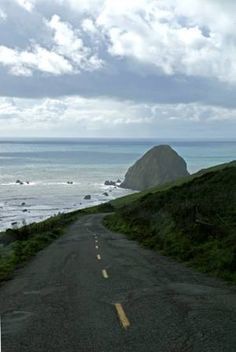
Now the Junction is off the coast about twenty miles, I think. Picture the most lonesome coastline of the sea you can think of, with high, bare coastal bluffs of rock, nothing but a few cows walking down the roadside of a two-lane highway twisting through its lonely pass and descending steeply to the sea and you’re there- at a place called Cape Mendocino. It is the part of California that stretches out to the Pacific furthest, the westernmost point, and standing there, alone, the wind messin’ up your hair, the cows walking by, and the sea like ruffled slate endlessly before you: You are looking out over the Triple Junction.

Thank you, scientists and mariners who figured this out, this whole San Andreas Shebang. I find it fascinating.

Last night we in California heard the Junction’s call: an earthquake, ninety miles out to sea, measuring seven point two magnitude, I think.

The Mendocino Triple Junction is comprised of three great ancient tectonic plates. Children, gather ‘round and repeat: North American, Gordo, and Pacific.

The big old Pacific one is under the sea, and bumping and grinding along the North American Plate to its east, it embraces and is doing a wild disco dance with the Gordo Plate in between. This sort of shocking ménage a trois got extra boisterous last evening about eight pm, and nearly caused a tsunami, but we were spared.

It was a horizontal movement of the plates, and so didn’t rock the water to create a massive wave. It did rock Crescent City though, and Eureka, and Arcata, I’m sure. These delightful little California towns are the last you come to as you approach the Oregon border, ‘way up there. They front the sea, in a haze of cool fog, with giant redwoods climbing remote mountains in the rear. A historic lighthouse at Crescent City holds its lonely vigil, while beneath the Pacific Ocean the great earth process creates and destroys and creates, like a heartbeat, over millennia.

Eureka has its old, stacked Victorian mansions, and Arcata its town square plaza and vegan breakfast menu. My wait person worked with horses and took classes at Humboldt State, the time I was there. And in the redwood forest a few miles to the left of my sunny omelet, and a few miles northward, one could see Roosevelt elk in the gravelly riverbed, and trees two thousand years old. Bump, grind, the earth dance goes on underneath it all. Erotic Earth, thank you, for creating this continent, and allowing this continental breakfast on dry land.

All this because of the Junction, the Mendocino Triple Junction!

Tectonic plates brought the sea floor to us and heaved it up as a gift of land studded with miraculous fossils; the sea floor overlooks San Francisco and is now its crowning hills waving with tall grass, cars wending by on twisty roads past wisps of sea fog. Tectonic plates in collision and subduction, ramming and jamming crust beneath, hauling up land in new combinations of mushed up rock, much of it dragged from far away in the Southern Hemisphere, and much of it 150 million years old. Big old scoops of delicious Franciscan Melange scraped along to grab every morsel and add to the continent, or to place on the continental shelf for later.

It’s delicious. If I have my facts straight, the old Farallon Plate was finally smashed up against our shore, and over eons it was subducted, thrust beneath the continent in an eastward movement against the unmoving western boundary of North America. When that old Farallon Plate was finally completely crushed, 28 million years ago (correct me if I’m wrong) the east/west tension of tectonic plates was compromised, and the plates began to trend north, creating the present San Andreas Fault; that web of fractures seen from above looks like a valley, all green and peaceful. But watch out, kids. The San Andreas has many moods.

So the Pacific Plate slides along the North American Plate, and carries northward landforms which became our home, sweet liberal Northern California, all hot tubs and peacock feathers. It took mountains from Big Sur and planted them north of me, at Point Reyes, against which our Spanish merchant explorers ran aground hundreds of years ago. Our beautiful coastline the Spanish would curse as they sailed by, because the Junction was bringing forth high mountains that rose right out of the sea, and those were covered with fog, and no place to land, no food, and no refueling station. California was saving itself for the right time, obviously, and though every town has a Spanish name, the relationship was somewhat strained. Why? It comes down to the Mendocino Triple Junction, and those plates creating California exactly the way it is meant to be, without regard for Man.

But wait, look at the array of lights, out over the San Francisco hills, across the bay at night, and far, far beyond low lying hills, into the heart of Northern California, Land of Gold. The fact that half of it is heading for Alaska shouldn’t disturb me right now. It’s beautiful, and it will still be beautiful when we’re gone.

How do I know this? Because the whole thing, I’ve learned, is recycling itself. It’s a big old Ce-ment Mixer, creating new gunk and churning down the old- nuclear plants and all. Trees and rock and everything.

And the “Ce-ment Mixer” is the new tectonic dance going on at the Junction. You can’t see it out there beneath the sea, but last night we heard about it.

A big sexy earthquake with a magnitude of seven: in terms of earth, that is heaven. For that’s creating the continents, a sign of Earth’s dynamic life. I know- run for your lives. Head for higher ground.

But without the Triple Junction at the end of my home fault, which starts down here at Frisco, and ends up there near Eureka, without all that, there would be no higher ground. Things around here would be mighty flat, and mighty wet. And at best, we’d have have fins and talk with bubbles, or sing with the whales.

So I love to stand at the remote, beautiful, lonesome rocky shore of Cape Mendocino, out in the middle of nowhere, with a few cows walking by, and look out over the great Pacific, and think of how, out on the horizon, and down below, the Mendocino Triple Junction is chugging right along.

We regard the Triple Junction with ease. We lean and loaf in California, like old Walt Whitman, at our ease, part of the Fault, the Junction, as relaxed as if we waited for a train, and thought, let’s have a triple scoop with sprinkles.

We’ll prepare for the next one.

7/15/05

https://www.google.com/search?q=june+15+2005+quake+California&ie=UTF-8&oe=UTF-8&hl=en-us&client=safari

The Mudflats of Yerba Buena. (California beginnings)

California beginnings, one of many. from the early notebooks.

The Mudflats of Yerba Buena.

Walk along the mudflat along Yerba Buena at night in the 1840’s. You could be walking a barely filled space, a track of boards and sand and trash, a length of “street” would suddenly disappear into a hole, and so would you, a short swift drop into the cold bay waters. Fifty six drowned that way- at least.

That is our explanade, our promenade, our embarcadero, in the time of arrival.

Now, sadly, I walk at night, on the concrete, far out into the former bay.

I actually miss the mud I heard so much about, and the trash, the piled up loads of ships, and the greasy lantern light in the dark out by the Plaza, a dignified term for the little ramp by the post office, with the drunks falling out, and the wind whipping the first sparks that might set the whole town aflame.

The bay is too shallow for all but a rowboat or a filthy plank, and the ships are all gone, but the dark waters still reflect a little greasy light at night, a reflecting glow, off into stillness of those drowned islands in the night: Goat, Wood, Alcatraz, to utter darkness of the endless bay beyond.

There was plenty of darkness in the nights of whale oil time, plenty of murder and mayhem punctuated by the occasional public hangings, duels and assasinations.

Out in Happy Valley, Market Street’s workers’ district, there were no lights, but fires, and noise and brawls, and working people and shanties and boilers. The crude medieval industries of early San Francisco: fish smells and foundries, smithies and boat repair, so at night: Darkness, aforementioned fire, shouts and nails and knives and more trash to trip over. Danger everywhere in a quiet stroll.

Beached ships and boats in the mud and at night it would be hard to find the water’s edge. Rats run on a plank to your saloon ship. And no way home, even if you had one, which you do not.

City of the homeless, all the way back to its beginnings.

And darkness also owned the various peaks- that was wilderness up there. Who is ever going to go up there?- with the cruel wind blowing walls of sand in your face, making a mockery of your efforts at civilization.

But there you see: banked on the vertical hillsides, the famed illuminated tents and sails of Yerba Buena.

Other than that one cannot see a goddamn thing.

The nearest cemetery is less than seven modern blocks away on a hill of sand next to a dune of sand with sand still blowing in your face, sand to sand, and your market district is a pueblo, nothing more.

So when and if they haul your corpse out off the baymud, there you’d be, in your impermanent resting place. In the center of a Spanish town made of dirt, with a plank road out those three miles to the Mission of the Crying Lady of the Sorrows by the Laguna of Tears and a creek and a marsh- and where is solid land, again?- and another cemetery of the first inhabitants, your neighbors, they too lie in ground that grows nothing, in ten thousand year old Sierra sands longing for the sea to wash it all away here in 1846.

“Dear Mother, we have just arrived. We saw a grizzly bear chained to a tree. The land abounds in opportunity, I have no doubt I shall succeed at last.”

Monterey; an Evening Walk. (California beginnings)

California beginnings- there are so many. From a travel journal.

Monterey, an Evening Walk with- and without -history.

An artist makes a bold line; such is the course of this bay, inevitable and remarkable as Vizcaíno the explorer saw in the year 1602: a broad, perfect, convex curve of water which can only be appreciated from the vantage point of the Discovery Site. Indeed, it is beautiful from my park bench by the shore.

It’s a study of blue with many little boats that pose with masts leaning slightly, moored and balanced and poised throughout the bay. It’s a simple scene to behold, even the first explorers claimed it was just a circle of calm water, that you’ll know it when you see it. Just head from the rocky point east from the Pacific when you see the pine trees, Punto del Pinos, and look for the beach.

The 1602 explorers’ report is unabashed tourism, a veritable postcard to the King, wish you were here. The latter day visitors didn’t recognize it at first, and so sailed right by. Is this it? Is this Monterey? Are we there yet?

Of course I found it right away, though I nearly missed my exit, which in modern times means you’re stuck on Highway 68, driving in concentric circles to get back to your destiny/ destination.

But finally there it is, Monterey’s defining arch, Fisherman’s Wharf on a sunny first day of fall, on a beautiful afternoon. I parked at a little beach nearby called San Carlos and got out of the car to stretch. I found out later that I had rediscovered the discovery site, for here a ship first landed. Here California’s Spanish era begins, and so its (recorded) history begins.

Monterey has a significant role in the creation of California, though it is part of a continuum, of course, like a skipping stone on the calm surface of the bay before me. Not just the stone counts for something, but the ripples, too. It was the capital, the focal point of strategic access for the Euro-incursion led by Spain beginning in 1542.

I looked for beginnings, even for misleading ones, in books and historic sites, leaving to serendipity and to Rough Guides history’s latest revision.

From the wharf, I doubled back to scan the layout and stopped at a food mart to get some bearings. The food mart was right next door to the RLS house, where Robert Louis Stevenson stayed in the 1880’s near the center of old Monterey, just up the hill from the bay. I found a motel right there with a beautiful indoor pool and a hot tub, here in the year two thousand- something. Then I ventured out to find history.

I reconnoitered on a sunny afternoon, but took my walks by night. I had Monterey mostly to myself.

What Monterey isn’t: It’s what it is not, that got me thinking as I looked from my bench across the silver blue green grey bands of Monterey Bay, with its ribbons of kelp and dolphins that leap in astonishing unexpected arcs.

What it isn’t: It’s not a factory job or the crush of rush hour traffic. It’s not scurvy on a Spanish Death ship; not “gold fever” or endless prosperity, nor military prowess or religious fervor.

It’s not the hammering nails of the Southern Pacific, or the Big Four that ran California in its gilded age of growth. It’s not the good-natured merchant/nation builder Thomas Larkin with his house in the middle of town, nor the dusty-robed Father Serra who founded the old Mission, and whose bones rest in peace near the opulent golf course just over the hill.

All these left Monterey behind, it seems, a rather sleepy town of old adobes and modern low-storied structures. The notable absence of high rises makes it easy to imagine Monterey’s former incarnations one by one.

Here you walk a historic map, up a tilted mesa; up one walks a gentle slope, ten blocks to the 1790s church and its Presidio above town.

At the foot of the hill, the bay. You can hear the barking seals all over town, especially at night.

I saw most of the historic sites after sunset, encountering Monterey’s treasured old adobes, one by one. Each little site is illuminated by a low street lamp and marked by a cream-colored sign with the family name and approximate date.

It is an 1830s version of Monterey I walked through, pre-Gold Rush era, in its small square adobes with red tiled roofs, its relaxed layout, clustered on the Calle Principal.

Old Monterey was a community the language of which was Spanish, and it was destined to be the Califonios’ capital, even after the American takeover in 1847. Much of the old atmosphere is still accessible to the imagination today. A history walk with the tourist map I found remarkably rewarding.

John C Fremont, Willian Tecumseh Sherman, Robert Louis Stevenson, these are the presences one can picture ambling about. It’s not that long ago.

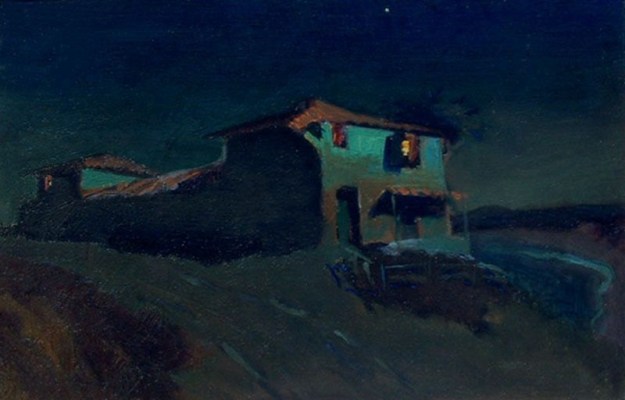
And a whole raft of painters: impressionists, plein air people, painters of romantic moonlit nocturnes. Painters -and writers.

One forgets what is real on an evening walk. Does the old barracks still exist? The old Whaling Station? If I knocked on Gen. Sherman’s little wood door in his little stone house of a warm evening, I was afraid he’d answer.

In modern times the downtown’s streets of shops culminate in a landscaped section of hotels near the wharf and the shore that was once “Cannery Row”.

My night walk takes me past the scattered adobes, their low walls of stone and mud-brick, back down to the old Customs House where US and Spanish and Mexican and indigenous cultures once converged- still do.

Here at Monterey, a potential antidote to scurvy and disease and despair of the long voyages of the Manila Galleons, the Spanish ships on transworld trading missions which had only begun 50 years before its inception, in the 1560s.

For fifty years the ships had taken the currents from Japan along the rugged California coast, haunted by the forbidding sight of Cape Mendocino: no place to land, to refuel to recover, on the long voyage to established ports in Mexico. These were commercial ventures, not the kingly missions of the Church- though the Pope, in a political quid pro quo, blessed the venture of Spain and Portugal, starting the first gold rush to the New World.

Forces in motion? Not here at night with the barking harbor seals and the marauding raccoons around the stilts of the wharf over dark water.

This is a scene of stasis.

Next to me, on the next park bench over, a woman toyed with her cell phone which emitted beeps and fanfares, while I looked straight ahead, thinking of history, looking at the shimmering water and kelp.

And when I get up, I can walk along Lighthouse Avenue in the moonlight, retracing the route to the sea.

Mountain Lake. (California beginnings)

Mountain Lake encampment, San Francisco.

-California beginnings, one of many.

***

(In 1772, explorer Juan Bautista de Anza proposed an expedition to Alta California and on January 8, 1774, with 3 padres, 20 soldiers, 11 servants, 35 mules, 65 cattle, and 140 horses, Anza set forth from Tubac Presidio, south of present-day Tucson, Arizona. In 1776, Anza ended his 1500 mile journey at Mountain Lake, in present day San Francisco).

***

Mountain Lake is near a street filled with rushing traffic, but is tucked behind the row of houses, and trees line the walks, insulating the traffic sounds.

The late afternoon birds were active around the margins and in the overhanging branches, the lake itself was placid beyond its protective fence. There were joggers at this after/work hour. Most smiled as they went by, which was an unusual perk for the pedestrian- most San Franciscans look dead level ahead and beyond, and never exchange a glance if it can be avoided. Here kids played along the rocks at one end of the little lake, and I sat for a few minutes at a bench near the stands of tall grass that grow at the water’s edge.

Mountain Lake is the only natural lake in the vast Golden Gate Recreational Area, and here, it is said, Anza and his men halted in their careful reconnaissance of the SF peninsula, at the end of the journey north in the 1770s.

I was startled by the sea. I didn’t expect to see the Pacific from out on 15th Avenue, as the beach is ‘way out at 48th, but the north-most tip of the peninsula makes its round a half mile from where I stood, and I didn’t doubt that the seasoned explorers noticed the lay of the topography in an arc from the west to the north, that is, from the Pacific Ocean to Mountain Lake, with a nearby river of fresh water and the nearby commanding lookout over the entrance to the bay. No trees, so the open hills provided a clearer view in all directions, I would guess.

Though not barren, the pleasant woodland we know today was more typically a sandy ocean/prairie grassland in the early centuries of recorded history. Although it must have had a bleak beauty, with sun and fog, there was a potential for re-supply by sea, and a footing for a fortress out of the wind, within a few miles; all boded well for future settlement.

Anza’s report stated they had pretty much everything they needed right here, and not far, they planted a cross to mark the site they chose for a Presidio.

The land explorations are amazing for their duration- Anza had journeyed from Tucson-twice- and books tell us he knew what he was doing. He supplied his troops with the best equipment, and brought a strong, experienced little force with him here to the lake.

I read the park signs, and appreciated the beautification project. Flowers and native plant species and fresh diggings and plantings. Anyone can volunteer to weed it and it’s obvious that people do.

The sun was dropping into twilight as I took the nearby Lobos Creek path, by the prairie environment the naturalists are creating, it is quite lovely, especially as the daylight fades, and the light changes in the various grasses and pale flowers. Gone are the bright and vivid garden flowers of spring; this little walk has the tans and browns and grays of grass and thistle. It’s quite nice.

I couldn’t see Lobos Creek, the fresh water source that encouraged the explorers; hidden in foliage, it moseys along the treelined ravine on its way west to the ocean at Land’s End.

It’s was there long before our arrival, and unnoticed it will remain, long after we’re gone.

A Visit to the Jeffers’ Tor House and Big Sur (California beginnings)

-A Monterey Discovery part two

(My own introduction to the great California poet Jeffers was through a beautiful reissue of “The Double Ax”.

These are poems of tragic grandeur and dissent, evolved from the elements of the California landscape in isolation.

Magnetic, shocking, violent, the great poems are texts of opposition to modern war; they seek sanity in the detachment of the remote ancient cliffs and surf. In a search for beginnings we find ourselves on the road to Big Sur where a couple of artists dropped out of modern life to create art that is timeless.)

***

A Visit to Jeffers’ Tor House and Big Sur; CA Rough Drafts

It was the classical education, perfect for a poet, and an homage to the literary father.

But it was the wife who was the driving force, the insistent muse, the artist.

One cannot visit Tor House without wondering about- and at- Una Jeffers.

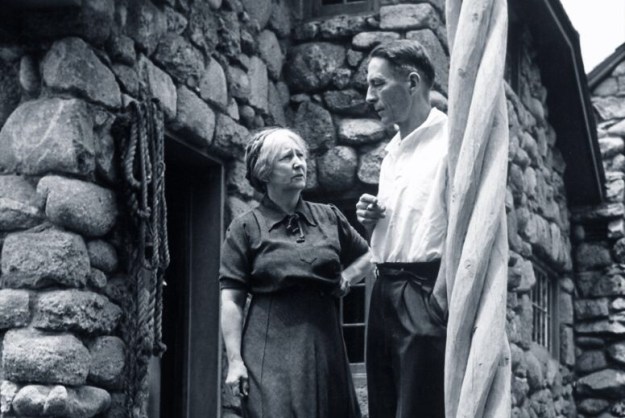
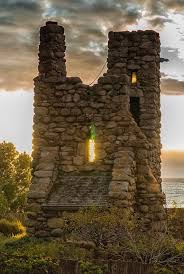
Tor House with its tower by the sea is made of stone rolled by Robinson Jeffers by hand up the beaches of Carmel, but the effect is feminine. They achieved a balance here. The stone house was built by a mason with the help of the poet, but the overlooking tower the Jeffers accomplished themselves. The stone house with its yard, the miniature estate on a town lot by the sea, makes one think of fairy tales, Jungian psychology, and the ancient cauldron, the mortal and pestle, of medieval Europe. The folklore was the rage of Una Jeffers, her pursuit of the poetry of history. Tor House is a Tolkien- looking affair, and would look handsome with a roof of thatch, if that were practical.

The nearness of the sea, the constant damp made me sniff the mold, and I worried about the collection of first editions of Jeffers poetry kept in a locked bookcase in a pantry. I said nothing, but longed to examine them, the volumes of the nineteen-twenties and thirties themselves were works of art, with Art Deco lettering on their spines, and a Rockwell Kent sort of feel to the presentation. A bit musty in the stone house, heavy with wood, panelled and dark, with floorboards that creaked when the poet, in a tiny upstairs loft directly above the living room, paced- meaning his writing was done for the day.

The place is somewhat shiplike of course, tiny as a rather luxurious cabin would be, with window to the Pacific, in the back yard. The Pacific Ocean IS the back yard. But luxury is not the word for this rustic haunt of Una’s.

It’s a stone house inspired by Una Jeffers’ fascination of the Irish towers of centuries ago. She collected impressions of these in trips to Ireland, and must have dragged the poet from one to the other.

From tower to tower they went across Ireland, and we tourists to Jeffers’ Tor House smiled at Una’s faded map, folded and framed on a wall in the living room, with its countless dots scattered about the country, marking each to’r they visited, at her insistence. There are scores of them.

This is a remote land, the California coast, and it must have satisfied their euro-centric desires for castellated Scotland or Ireland-

The plan of the newlyweds delayed, a journey prevented by the First World War and the birth of their first child. Fate brought them instead to the Big Sur region, at the relatively safe distance of Carmel, and with proximity to an actual town, that is Monterey.

They now had a house with stone tower by the sea and devoted themselves to artistic pursuits.

At night the Jeffers read aloud, and this is utterly believable, that they would drink wine, light candles in the stone house without electricity, and read old novels and folktales nightly.

It makes sense that Jeffers would limit the wine to one glass- a gigantic snifter- as an aid to poetry, and knock it over by dawn, momentarily waking the household. I’m grateful to know this salutary glimpse of the private lives of poets, and find it not ironic, but intimate.

Una collected strange music, some from the old mission, and played piano and organ, and much of what she collected one could classify as primitive, that is, prime- ative: that which comes first.

They were night people, obviously.

The life of the Jeffers was well conceived, and this is a credit to Una. The house by the sea, the need for solitude, the conception of art as how one lives each day, that has to be Una.

One gets the impression that the Poet was actually the quiet one. It is said that Jeffers rarely spoke, but listened to guests at their little gatherings at Tor House, and was not quick to laugh. But Una brought people in, and there was a bit of artistic hobnobbing now and then, which documents the Jeffers’ lives in Carmel.

Una was the story-gatherer and folklorist. She stopped the neighbors, those remote denizens of the Big Sur coast, that broken shoreline towering over cliffs, which they first saw in rainstorms and fog as enchanted, forbidding, downright spooky and beautiful…

Ina brought the stories out. Who lived in that shack overlooking the canyon? What murders, ghost stories, native folklore, in the local gossip?

Their travels in the near region were horse-drawn, and wheels of the surrey got stuck in the streetcar tracks on the road to Monterey. According to best friend and biographer, Edith Greenan, the source of many of these insights and intimacies, Una drove. Her biographer found the rough carriage ride terrifying, but tells us

“Una was unconcerned. She chattered away, pointing out fascinating old adobe houses. There was one little streetcar track in Monterey. My fear was great that Una would get the wheels of the buggy caught in the track. I no sooner thought of this than it happened. Undisturbed, Una sat up straighter than ever, completely disregarding the fact that she had done anything awkward. She refused to admit by the turn of a hair that a mild catastrophe had occurred. Miraculously she extricated us. The wrenched wheel revolved like a disgruntled egg beater, making a hideous sound. Of course people turned and laughed at our ridiculous progress up the street. Robin sat beside Una, not saying a word. He didn’t mention the accident and I didn’t dare to.”

Edith writes, “As we drove up the steep grade to Carmel, Una stopped to let the horses rest and to point out the Monterey Bay behind us- a perfect blue crescent, one of the most beautiful bays in the world.”

If the Jeffers had a rough ride to Monterey, then certainly the road to Big Sur must have been somewhat harrowing in the early days of the last century- I found it so on the modern highway as I negotiated hairpin turns in the fog, a thousand feet below, the crashing surf, and oncoming traffic appearing out of nowhere in a steady stream around the bend on this rise of Highway 1 as it heads into a cloud of invisibility for a few moments and then reappears out of the jagged edge of fog.

The cliff edge is sheer and rises above us at a near-vertical, and plunges to the foot of the Pacific at roughly the same angle. If the angles of the cliff were the hands of a clock, the hour hand would be pointing at two, the minute hand at 40 minutes past the hour, meaning it’s time for massive falling rocks from ‘way above. There is nothing but air between them and me, in a rolling, tumbling plunge downward.

In the nineteen-teens, the Jeffers went along this way by horse and buggy, but eventually the old country road snakes inland and ever upward, for no bridge spanned the seaside canyons, and a modern road was still decades away. Even looking at a map of the old road in my guidebook makes me queasy. It isn’t paved, and the guidebooks give stern warnings about four-wheel drive vehicles and extreme caution.

They drove the treacherous coast in a rainstorm and loved it. The haunting beauty of the coast does make one cling to life a bit more tightly , if not with the stern passion of poets.

On their first trip Una began to collect impressions which appear in the Jeffers poems. The folklore of Big Sur she found steeped in tragedy, and matched her mood for the morose old balladry of death and betrayal. The locals must have fed her stories, some true, about the legends of the place, and if its earliest inhabitants.

The balladry of the Elizabethans, with its shocking action, violence, and trenchant ironies, which push hard against a modern idea of sanity, fits with the remote setting of Big Sur as the world modernized and prepared for World War One. The Jeffers found their life on the coast to be a statement on the politics of the times, as well as a source of poetic inspiration. The dangerous world was the subject of lives, no matter where one lived.

The life on the edge, as we would call it today, has its dangers. The Jeffers revelled in the stories of Big Sur, the western feel: the woman killed by a stallion; of what happened at the abandoned shack at Point Sur; of small local epics of murder and mystery.

I sense they found in these, as much as lurid detail, the origins of Poetry itself. They read ancient poetry, and were experts- both were trained scholars, and must have pulled in such elements as the oldest traditions brought them by candlelight of an evening. They absorbed, as well, Earth knowledge of geology and sea coast, that provokes thoughts of beginnings, and man’s place in a scheme marked in terms of millions of years.

They were philosophically on a collision course with modernity and they knew it.

Jeffers rejected the precious and hopeless trends of modern poetry.

And he wrote poems in collaboration with the foggy, ancient coast which eventually were banned as unpatriotic. A vision of World War Two Jeffers saw as an incestuous tragedy of mankind’s longing for destruction. World leaders he saw as sellouts, as promoting unconscious drives, as placing the interests of men so far from their true place in nature. And all this is inevitable, this rapine. At the end, the rocks, the sea, and the old earth, inhabited by ancient birds, the vultures, the hawks, again ruling the roost. To be a poet wast to commune with rocks.

Robinson Jeffers’ verses. gripping and untranscendent, depict the sea coast, the planet’s horizon, its sun going down in a haze to the sea, which the Jeffers saw nightly through their bedroom window. They must have looked at each other and said, we’ll die here! With the sun going over our wall, and a minstrel in our gallery above our hearth. With our poems, and ancient keepsakes, our memories of dinner over the fire. With the spooky organ music of the old missions, and the oldest poetry safe in our cave by our various altars in the moonlight.

No doubt these two night creatures saw stars when the fog factory was down, and some nights along the coast of Carmel must have been bright with moonlight though drained of color. A somewhat dangerous walk in the dark by the ocean. One would stumble and laugh and catch one’s companion and chat and perhaps build a fire.

-Artists, they really are kind of crazy, aren’t they?

jk

6/20/ 2005

A Monterey Discovery (California beginnings)

Here’s a piece about “discovering” California. It’s only one beginning of many. From my notebooks.

***

A Monterey Discovery

(1602: Three ships, two hundred men, and their commander, Vizcaino, whose plans specifically included the attainment of personal fortune in pearl fisheries along the California coast, the discovery of which Spain would subsidize in return for a survey of a region crucial to the fortunes of Spanish galleons enroute to the Philippines and Japan.)

***

The elements are simple: green grass near the granite pillar, the border marked by a little white fence. Leafy trees and shrubbery fill what appears to be a gully at the foot of the Presidio hill.

One wouldn’t consider this generic spot “californian” but for the nearness of Monterey Bay, and the interest of its rocky shoreline as it curves past Cannery Row to the Point of Pines, beyond which the blue waters take on the granite color of the Pacific Ocean.

Yet this is the Discovery Site, the spot at which the explorer and entrepreneur Sebastian Vizcaino reconnoitered beneath a great oak tree, in 1602. His ship at anchor in what was in inlet, he surveyed by eye, recommending the harbor to future explorers, recommendations which were realized by Father Serra in 1770, when Empire Spain finally put forth the effort to develop the missions and trade routes of Alta California.

It’s not much larger than a parking space, the little corner of discovery.

The little hollow behind the fence reminds one of a vase of flowers with too many stems, overgrown and green. And, between the little hollow and this curbside, a small patch of mown grass. Though the foot-traffic of joggers and tourist passers-by is pleasant enough, the traffic of SUVs and compact cars beyond the curb is ceaseless. One crosses with the light, to visit the Discovery Site.

In some sense there is nothing to see here. One looks vacantly into the middle distance for some moments, listening to the traffic shushing by before it dawns that here indeed was the inlet where ships could approach and anchor, and boats might land. Yes, the gully is the natural drainage of the area right down to the bay itself a few hundred feet away. The great oak, the Discovery oak, the Vizcaino oak, is long gone, but today’s tree-covered ravine represents what was once a broad inlet near which ships were anchored. Now it is filled, cut off from the bay in order to build Lighthouse Drive, but beneath, it still runs to the sea.

Yes: above me is the broad hillside with its dramatic vista over Monterey Bay, where once existed a small, ancient cannon emplacement, the Castillo. And there, a few hundred yards away, is the curve of the bay itself. Right at the landing site it begins, trending eastward with its salient features of beach, Custom House, old wharf. Along and around its curves, east and north, the shore runs up to Santa Cruz, in the far bluish distance. That is the blue bowl of Monterey Bay. And to the west, Pt Pinos, the Pacific, Mission Carmel.

An estuary of fresh water is just a shot away, where now ducks serenely glide. Right here, a place for ships to land, refuel, repair. And

It’s a natural half-way point along the endless coast, which, for mariners, ran all the way from the Asian ports; they followed the linear coastlines of the continents, using the currents to their advantage. They did not cross the seas, but followed the land.

Vizcaino was among the earliest European explorers to leave a contemporaneous record, to recommend further exploration.

“It is all that can be desired for commodiousness and as a station for ships making the voyage to the Philippines,” wrote Vizcaino of his of what is now Monterey.

“In addition to being so well-situated in point of latitude…for the protection and security of ships coming from the Philippines.. the harbor is very secure against all winds. The land is thickly peopled by Indians and is very fertile,” he noted.

The Manila galleons of the fifteen hundreds were death ships, but for a harbor with wood and fresh water, re-provisioning and rest. Tragic fragments of China silk, porcelain shards were brought to the Spanish explorers when they’d land, handed over by the local inhabitants; instant archeology from a galleon wreck, the reminder of the likely fate of a larger percentage of every crew.

Monterey was a necessity, and its discovery was an expedient. That it represented the founding of California was only in retrospect: Who knew?

A complex exploration and vague cartographic history precedes us here. But it is the mariner Vizcaino, beneath his oak tree, which links Monterey to the beginning of its Spanish era.

Nearly two centuries passed for the huge oak tree, before the Spanish return.

***

The Vizcaino Oak is the mythic Plymouth Rock of California’s Spanish founding era, a founding relic that represents similar history of colonization, conflict, decay development.

Remnants of the tree by which the 1602 explorers moored do exist and are modestly displayed perhaps not as relics of the past, but as objects of curiosity, easily overlooked in two glass cases: one at the old Mission Carmel, and the other at the Royal Presidio Chapel, here at Monterey, not a mile from the discovery site where it once grew. The equivalent of small smudged type-written photocopies tells the story of the oak to those with the patience to linger. History itself becomes its own shorthand as one jumps back via 3×5 cards to 1770, when Serra, too, stood beneath this oak, one limb of which is mounted by the church door.

Visitors to the chapels founded by Serra find the Vizcaino oak fragments only by accident. I stood before a display case for long minutes at the Mission Carmel, wondering if that worm- eaten hunk of wood was indeed a fragment of the Oak. I had read that the entire oak was saved, and it was on view behind the first presidio chapel of Monterey, not far from the Quality Inn with the indoor pool where I was staying.

When I approached the chapel, I walked around past the redwood trees to the rear and found only roses. Fragrant roses bloomed all about the garden there, and within the old chapel the choir practiced, and night fell, and the stained glass windows began to brighten. But no Discovery Tree.

It is of a piece with the history. For the explorers who followed Vizcaino over a century later were unable to find Monterey Bay or that tree. Portola, who led the mission expedition along with Junipero Serra, walked to San Francisco’s empty dunes and back, not knowing they’d passed it ‘way back there on the first march north.

Though on previous marches the Monterey Bay had not been recognized by these latter explorers, on a return reconnaissance they “got it”.

Of Monterey Bay they reported… “We now recognize it without any question… both as to it’s underlying reality and it’s superficial landmarks,” and “quite near, the ravine of little pools, the live oaks, especially the large one, whose branches bathe the waters of the sea sea at high tide, under which the Mass was said… by Sebast. Vizcaino.”

There at the Discovery site the great oak once stood for its span of three centuries, near today’s little white fence and historical marker.

I look back in time through an old photo of the site taken in 1890 or so, according to its caption. At that time the site was a much more open valley to the sea, bordered by a predecessor-fence which overlooked the disarray of branches of the Vizcaino oak in the photo.

On the white rail fence of that time is painted the words “Smoke Horse Shoe Tag Cigars.”

An eyewitness and creator of California history, Gen. Mariano Vallejo, who grew up in Monterey in the nineteenth century, was aware of the historic tree at the Discovery site. Controversy arose as to its authenticity- if a tree can be said to be authentic, which leads one to think that the tree wasn’t a big deal over the latter two centuries, just part of the landscape.

But Vallejo knew it as THE tree, and the story goes that eventually, when the land was to be improved, and the tree cut down and thrown into the bay waters, boats were sent to fetch it back.

So the Tree was “discovered” yet again- in the unlikely waters near Santa Cruz, and hauled back to Monterey.

“…Our arrival was greeted by the joyful sound of the bells suspended from the branches of the oak tree…”So wrote Fr Junipero Serra, on June 3, 1770.

“Kneeling down with all the men before the [makeshift] altar, I intoned the hymn… Then we made our way to a gigantic cross which was all in readiness and lying on the ground. With everyone lending a hand we set it in an upright position… I sang prayers for its blessing. We set it in the ground…” Then “raising aloft the standard of the King of Heaven, we unfurled the flag of our Catholic Monarch likewise. As we raised each of them, we shouted at the top of our voices: ‘Long live the Faith! Long live the King!”

This account certainly conveys the weight and heft of the ceremony at hand, as though by history’s eternal eyewitness- although the iconography of anguish is left unexpressed.

On a sunny morning in May, I spent an hour, thinking of these things, sitting in a pew a few feet from a fragment of the oak- now behind glass, worm-eaten but venerable.

There is a Mass at noontime there at Royal Presidio Chapel, which itself is a true founding site of Monterey. I am only an observer, but my observation was that there was a moment of reflection in the light of a modern time, and that Monterey was blessed to be lost and found again, and lost, successively. The empire has moved on.

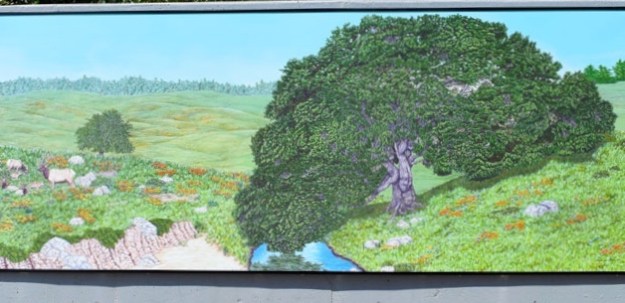
(Mural of Vizcaino oak, near the original site, with care for historical accuracy, by artist Stephanie Rozzo, 2015.)

A Fraser reunion

There are a few stories to tell. Famous author’s missing shoes; walks by the Lake at JT’s; Indians Championship game sitting right near my twin sister’s whole crew.

Eulogy for Bill Fraser

1. Welcome – Welcome everyone, close family, friends. This service may actually be a continuation of a week of reminiscing, a process of story telling- all Frasers have at least 8 stories, I’m told- and not all of them intersect in expected ways! It’s an ongoing process extending back through eighty years. His daughter Ingrid said that in a way he really did know how to bring people together after all. So here we are to acknowledge and celebrate the life of Bill Fraser. So since all Fraser have a story I’ll begin with one.

2. I’d start with just one story. On a camping trip with his wife a Elizabeth, they saw a bear with a beer can stuck in his mouth. The bear could not dislodge it. Alarmed at the bears plight, Elizabeth urged Bill to intervene. Bill went right went up to the bear and attempted to pry the stuck can out. (He failed, but all walked away unscathed- a ranger came to see to the bear.) This particulate brand of fearlessness may sound familiar to Fraser’s, certainly it represents the arc of the life of this particular Fraser.

3. A summary of a life is never simple. Bill Fraser was a distinguished architect, active in New York, Seattle, California, Florida, Oregon and Cleveland. He was perhaps a bit of a workaholic- with a endless vigor and intensity and curiosity to finish projects. He was an avid photographer. He was an incredible artist and a quick study, instantly seeing artistic order and design and composition possibilities everywhere. A lover of Nature that challenged Nature- as in the story with the bear-these qualities are hereditary, by the way. Quick mind, quick reaction time, creatively “overcoming objectives” as his brother Jim puts it.

4. A theme emerges: His brother Jim puts it this way: “What happens when you tell a Fraser no?” All seem to agree that Frasers are fighters, (sometimes amongst themselves) and a devil-may-care passion, and a fearlessness about outcomes, was often what Bill Fraser was all about.

5. A person like Bill was difficult. It can be said that Bill was sweet to outsiders, but tough within the family. It hasn’t been easy, and more so, this final year. Life goes on, in spite of everything. To the point that a little miracle has occurred. A life that seemingly has ended at a zero point- his brother said he seemed to have lost everything- has generated the greatest wealth there can be.

6. For here we all are. This past year has been a time of people coming together to help each other, to find each other- if only to get through the next “thing”, life’s next daily challenge. These recent weeks have been full of thoughts and reminiscing, with conflicts to figure out, or file away. Old decisions may have been dusted off or discarded all together. Or that may have happened long ago, people not wanting to hold on too tightly to the past. With endless stories to tell, laughs around a nice bottle of wine at day’s end with family. And,again, Bill’s daughter Ingrid said- ” ‘Spite of everything, Bill sure knew how to bring people together!”

7. So here we are sharing thoughts and perhaps a prayers, thankful for the gift of life, enjoying what’s good about this particular complicated one, and the unique gifts shared in the Fraser family. Keeping what’s good, moving forward.

Sept 12, 2017

written with input from Jim Fraser and Ingrid Fraser

Respectfully,

James Koehneke 

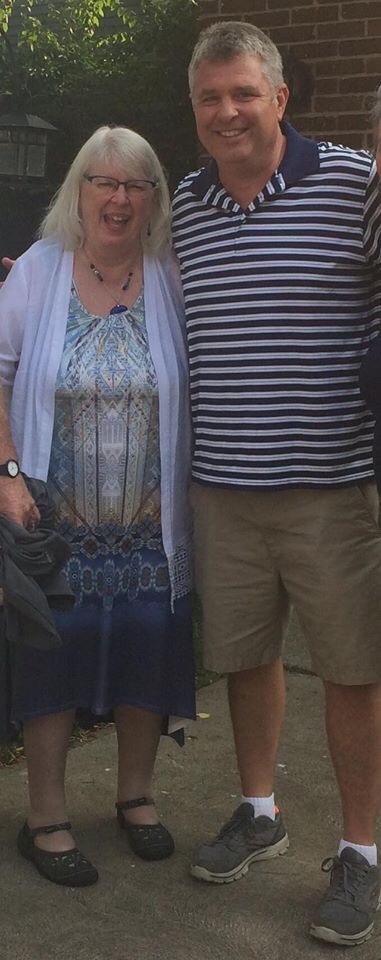
(Pictured Ingrid’s Aunt Mary and Gene;

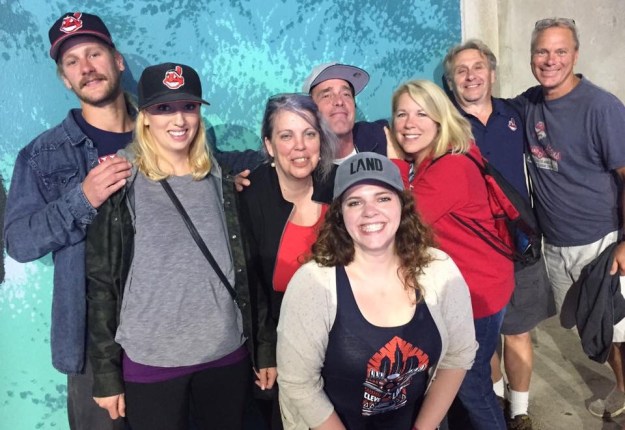
(above, Ingrid’s Aunt Lorraine and JT Fraser; above, Lauren and young Charlotte; above, Koehneke/Pinter at an Indians baseball game) All reunion for memorial of Ingrid’s dad, in Ohio.

The Little Book Of Guns

Americans, for your perusal. Peace. 

My Little Book of Guns

Book 1

Guns An Introduction

Adults please leave the room for just a sec.

Ok kids, adults are insane but you don’t have to be: assault weapons are bad, and should be completely banned.

Guns chapter 1

I had a Davy Crockett rifle that fired caps and little corks. We’d run out of ammo and have to pretend to bonk the enemy over the head just like at the Alamo. You know, “gun-wielding”. It didn’t occur to us to mow anybody down. There was lots of fake hand-to-hand fighting. My big sister occasionally tried to declare peace but we were unclear on the concept. We actually took turns being the victors or defeated losers. You got to win, or you were told you were dead. Then you had to lie down and count to ten.

Guns Chapter 2

Years ago I had a roommate – a jazz musician – who got a job as a security guard night watch. He told me they gave employees the option of carrying a gun or not. He chose not to, he said, because he might shoot me with it. Of course I thanked him. Then we had beers.

Guns Chapter 3

When I was young and working in North Beach I was held up at gun point at work. He stood between me and the only exit and backed out the door with the gun trained on me. I prayed no one would come in the door behind him. His hand was shaking. 

2nd Amendment, anyone?

Guns Chapter 4

I was also held up at knife point at work. I worked at a liquor store.The man with the knife came behind the counter, between me and the only exit. 

My co-worker was trying to decide whether to try and defend me by hitting the robber over the head with a wine bottle. He chose not to. 

Epilogue.

The knife-wielding robber returned months later filled with remorse. He’d been fired and was trying to support his young daughter. He was desperate.

He promised to pay the money he stole back. 

I know. The moral is unclear. It’s not an advertisement for an assault rifle, however.

Guns Chapter 5

I was actually shot at only once.

I was walking down Haight St in the old days. Back in the seventies. Heard a sound in a window across the street and instantly a handful of leaves were torn off the tree right above my ear. 

They rained down quietly. 

I didn’t think to zig zag or take cover. 

Or wonder, why me?

Why not me?

Book 2

Guns in Everyday Life

I have a friend who owns a gun. I’m sure he distrusts the police, feels at odds with society at large and understands a gang mentality somehow. 

He demonstrated how gunfire sounds in his neighborhood.

It’s a rapid succession of pops.

“Popopop pop pop!”

Then screaching car tires.

-Oh, and a lady I know lives on a block where a five year old girl was killed. Accident. Drive by shooting. Wrong place. Wrong time.

-Oh, and a co-worker who had relatives at a house in Oakland where multiple people were killed by gunfire at a party on a Saturday night. 

In Conclusion

It seems like it makes sense for women to have the right to bear arms. Protect and defend. Men, not so much.

Oh and the Second Amendment. Well Regulated. That would be your National Guard. 

Postscript. 

Instead of a nationally prominent politician, Harvey Milk is a monument. He is greatly missed.

jk

11/7/2017


Bonus question: 

Do you have a relative who accidentally shot himself (non-fatally, fortunately)? I do. A couple  of generations back. A little to the right or left and I probably wouldn’t be here.

***

Generations of Lost Time

(11/ 2018)

“On the night of October 1, 2017, a lone gunman opened fire on a crowd of concertgoers at the Route 91 Harvest music festival on the Las Vegas Strip in Nevada. He killed 58 people and wounded 422, with the ensuing panic bringing the injury total to 851. The shooter, Stephen Paddock, a 64-year-old man from Mesquite, Nevada, fired more than 1,100 rounds of ammunition from his suite on the 32nd floor of the Mandalay Bay Hotel.”

900 Lost Years. The Generation of Lost Time

What is lost when a person dies through gun violence?

The average age of the those twelve people who had their lives taken through an act of gun violence at today’s mass shooting (Thousand Oaks, 2018) being 20 years, and normal life expectancy being perhaps 75 years; that’s 55 lost years, say, multiplied by a factor of twelve equals 660 lost, unlived years. Potentially.

Yes, perhaps 12 lives lost, and 660 lost years, individually. But 75-year life expectancies x12 people equals 900 potential years of individual living, extinguished. In a few minutes.

Almost one thousand years of actual life not lived due to today’s gun violence here in California.

Think back one thousand years, because that’s what that is.

But listen:

If the median age of the 59 fatalities in the Las Vegas mass shooting a year ago, which some at today’s shooting witnessed, was 40 years, it’s safe to say each victim would have lived out another 30 yrs, so that’s almost a cumulative potential of 1,800 years of living taken away in last year’s Vegas massacre.

A period of 30 years is thought of as one generation, and by definition each generation would progress and procreate, so there is an equivalence, that if approximately 60 generations of life were lost- if thought of as a quantity of linear time, each life standing hand in hand, as it were- it would symbolically stretch back to the second century- to the year 218 a.d. of the common era, so could represent a lost history from that time- including the (lost) emergence of modern Western Civilization.

My co-worker, the former Tibetan monk, says that the generations of Lost Time should be imagined forward- not backward- toward the year 3818, symbolically.

What would this world be like in that advanced (lost) forward time? And, symbolically, any advances would be lost to humanity over that (symbolically) lost time of history, that can’t happen in this scenario.

That’s 59 people standing in a row forward or backward in linear time.

And add today’s 12 people into the calculation of lost time.

And last week, in Pittsburgh. (The Synagogue tragedy).

And now that loss is incalculable.

***

A Child’s Garden of Death;

An Alphabetic Primer

A is for Aftermath:

When something occurs that’s severe

B is for Bathos: politics that’s insincere

C is for Casualties- that’s what you kids were

D is for Dark Ages when false beliefs seem sure

E is for Emergency: mostly predictable griefs

F is for Failure and Flowers in wreaths

G is for Government unwilling to act

H for Hypocrisy feigning to care about the social contract

I is for Inconsequential, lives for which we don’t shed a tear

J is for Japan with less than ten gun deaths per year

K is for Kiss when someone says goodbye

L is for Last on a day with a sigh

M is Mentality like the automatic weapons-toting kind

N is for NRA (out of my mind)

O is for “ oh my god” as after the gunfire’s sound

P is for Plot as in planning, or a spot in the ground

Q is for Quandary what kind of automatic weapon to get

R is for Requiescat en Pace and forever regret

S is for Semi-automatic with a bump stock and extra magazines

T is for Tragedy and the search for what it means

U is for Unidentified until the parents are told

V as in in Violent Entertainment that never gets old

W as in Weapons of Mass Destruction which are used on a school ground

X as in crossroads where our destiny is lost or found

Y as in Young and hopeful- to the future we’re sending

Think well before we reach Z, a message a bit less

Heart rending.

jk

2/15/18

***

:1963 “The Release of the JFK Assassination Files, The Final Frontier”

Or, “Lying to Seven Year Olds”

Children.

The President was shot today. He died.

For a while, we don’t know how long,

your house will be full of ghosts.

Whenever you’re alone, a ghost. Under your bed, ghosts. On the landing: Definitely.

One ghost, the young President. Shot dead. And now he’s a ghost- floating around everywhere. So lonely.

That’s what death is. You become like an image you can’t forget. But everywhere.

The very young president, shot dead and now wandering. Wondering what happened. Longing to tell you something, to know something.

A sad quiet sick feeling in the whole world for days. Thumping drums, horses’ hooves. TV becomes a funeral parlor. A picture of the ghost in every window.

Scary as it is as a kid, you and the ghost have an understanding. That, if you could figure it out, the dead President could be at peace. The president wouldn’t have to wander forever. Not to hope to lead, and to be unable. Not to wish so hard to reassure the people, and to be unheard.

What would help would be the truth.

Just to tell the truth. Just for one person to tell the truth, about what occurred on Nov 22, 1963.

That can never happen.

jk

***

(After a synagogue shooting the survivors requested the President not come to memorial.)

Please wait

Don’t bring the Secret Service,

the NRA,

the black armored vehicles

the rooftop scopes

Please wait

Don’t bring the hate for the huddled masses’ yearning or the lies

Don’t bring your birth certificate or

the ghost of your fascist father

Please wait

Don’t bring your immigrant wife

don’t bring the daughter who turned her back

looking forward to skiing vacations,

the children abandoned in cages

forsaken

through your inhumanity

Please wait

Leave behind your princely son, who does the sword dance with our enemies

Please wait

Don’t mumble a prayer with a prompt from Siri

or Google the sacred tradition at the last minute or read from prepared remarks

Please wait:

we don’t counterpunch at a funeral

or send the migrant ship back

or close our hearts at borders

Please wait to capitalize

to dominate a scene of loss

to dishonor the past

Please wait

jk

10/30/18

***

Our Mall Shooting

1. Our mall shooting wasn’t a very big one. It’s not going to mean much to the public at large, I suppose: only two people wounded.

But the following occurred just down the road from me- where my wife used to work every day. Right by our food court, where everyone hangs out.

“It was like, ‘pah, pah.’ Then it was a pause. Then it was, ‘pah, pah, pah, pah, pah,'” said staff Sgt. Isaiah Locklear who was working at the recruiting office when the shooting happened. He said he ran towards the commotion and saw a 16-year-old boy who had been shot in the stomach.

“He was laying on the floor, waving his arms. ‘I’ve been shot.’ He’s like, ‘Please. Don’t let me die. I don’t want to die. That really hit me.’ He didn’t want to die. I was telling him he wasn’t going to die. I was going to stick with [him] through it,” Locklear said.

That’s the tv reporter’s description of a shooting at the Tanforan mall where my wife used to work, until recently. It was only a month ago, July 2nd.

That was just a week before the Gilroy shooting, which is already receding from media memory- Gilroy, where I have family.

That’s two shootings a week apart that could have impacted my life. Ok, that did impact my life. We are just so good at moving past these incidents now.

The Tanforan incident was not a mass shooting, but a level of gunfire that evacuated the mall and sent a search along the commute route of the rapid transit- and so affected the entire community.

My wife had recently transferred to another department store, and the feeling was hard to repress that things could have been far worse.

***

2. So I want to say something about retail.

Americans, the workers in your stores are under fire in several ways.

These precious jobs are drying up as the tech industry transforms retail into a fully automated impersonally robotic world.

And the workers in those dwindling jobs in department stores that still exist are underpaid, as most workers are, in an overvalued, hyper economy.

So, have you heard whether the victims of the El Paso shooting were workers? Or how a shooting permanently impacts a work environment?

No, because we are conditioned not think in terms of workers and workers’ rights and the well-being of workers.

Workers are expendable. That is the unspoken subtext of this tragedy.

That is why Congress won’t act. Because, for them, you don’t exist.

When the stores and the retail jobs disappear people who can, will buy things, through Amazon perhaps, and so feel insulated from danger.

But those jobs are disappearing- and they are not being replaced.

Mall shootings? Workers’ ability to make a living, to work in a safe environment-it’s not an issue that Congress is worried about.

Do you know that stores are safe havens for the homeless? That those with no place to go find department stores, for warmth, a bathroom, a hiding place, a momentary shelter – and no policing can solve the myriad impacts on that work environment?

So the few workers are sheltering-unwillingly -the many homeless. A symbiosis, of sorts.

No, the homeless and the American worker don’t exist for the US Senate, or the bankers and hedge funds and people in Admin and Finance.

These won’t be the last shootings in a shopping mall. Not until there isn’t a mall, or a store or a retail center with people in it to serve you.

I’m glad my wife is ok, I thank god my Gilroy kin were unharmed. I’m horrified, as is everyone, at the news of more gun violence, every day and in every way. Including murder and suicide.

We aren’t divided on this issue- despite what gun advocates say. They say that whatever we decide to do won’t work.

They’re wrong.

***

Oh here’s a fun fact: the shooters in our mall- they were just kids. Sixteen years of age, and fifteen. So only a potential mini-massacre; it really doesn’t count. Already forgotten.

Kids with guns. Is that in the Second Amendment too?

***

Note to Self:

I don’t wish to offend any animals but.

Did you hear?

The Elephant is leaving the GOP.

Elephant would like to be removed from political logos due to centuries of gun violence against elephants.

Yes. The elephants know all too well.

Usually animals take no stand on political matters, by minding their own business.

Times have changed.

Other animals have refused to be Republican Party mascots:

Snake

Porcupine

Skunk

Jellyfish

Dung Beetle

Buzzard

Junkyard Dog

Chicken

Termite

Cockroach

Lizard

Slug

Animals that object to being hunted down like humans (such as Wolf) have stood with Elephant against gun violence.

They are too numerous to list here. But they know gun violence can pretty much destroy paradise.

WAAG. Wild Animals Against Guns. They have neither website nor social media.

They do have feelings- and intelligence; it was the animals that originally taught humans what to eat and how to survive. They know a lot. We should listen.

***

Lions have asked not to be stuffed and displayed in your penthouse. Thank you.

-So far we have 90% of the humans, and all of the animals, against gun violence and for common sense.

(No animals were harmed in the making of this public service announcement.)

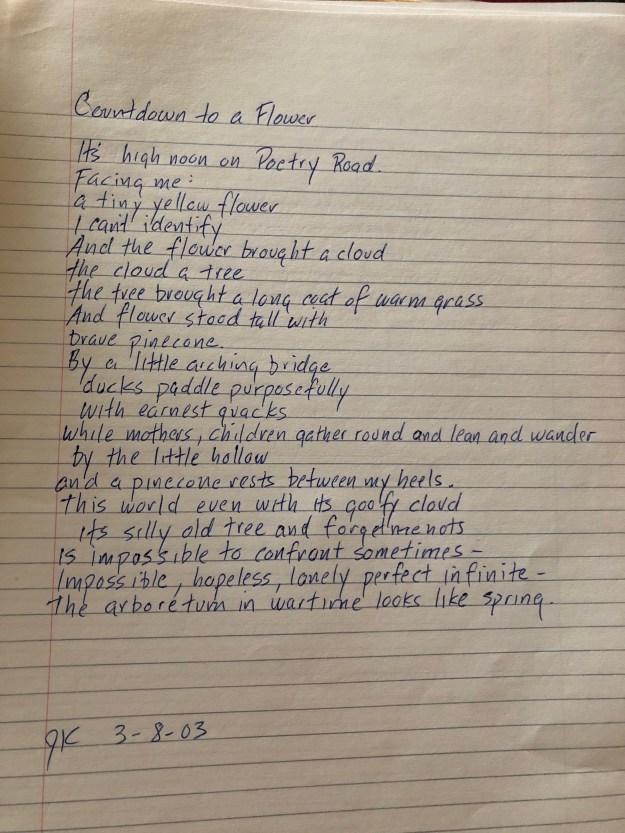
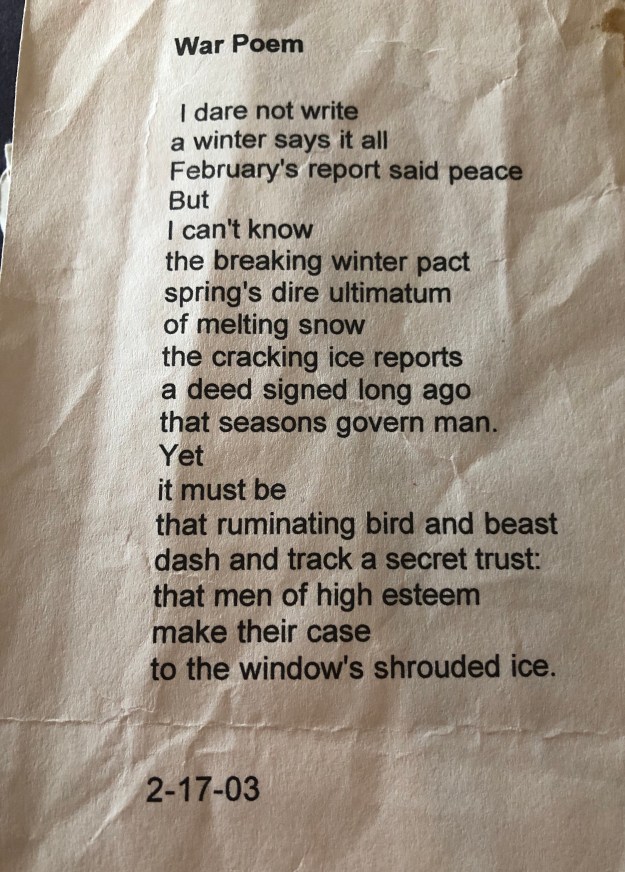
My Debate- poems in wartime

Looking through a crate of poems. This one was

“on the presidential debate” -it was october, and a war was going on.

So here’s an old poem from the last war, about a Presidential debate.

***

My Debate

…I understand the President’s speech after 911

I understand it.

…To change the world, throw it all forward, everything at stake-

I understand it.

…I understand the philosopher’s dilemma:

To change the world through ethics seek justice, everything at stake-

I understand it.

…The victim’s cry

I understand it

To throw it forward so all can hear-

I understand it.

…My place in the world

I understand it

my push toward truth let go the lie-

I understand it.

…The call of the World

I understand it

To throw it forward sight unseen

I understand it.

10/10/2004

Walrus -and the Democrat.

a doggerel from the last war

(10/11/2006)

To the tune of “The Walrus and the Carpenter”

Republicans and Democrats were walking arm in arm

“A little conflict far away shan’t do us any harm.”

Said Republican to Democrat, “I know what we shall do. We’ll bomb a nation far away from peaceful me and you.”

“‘Twas them that attacked-not we,” concurred his Democratic friend, though who ‘they’ were eluded, as to whom and why and to what end.

“Afghanistan, Iraq, Iran, they look alike to me.

“Let’s bomb them all,” said Democrat,

“and peaceful we shall be.”

A peaceful world and safer, for moms and apple pies

“I do love apple pie” said Repub as he did amble by.

“Mom’s a saint- she’d love us for the peaceful things we do,”

said Democrat. “After all I’d rather fight them there, than here near peaceful me and you.”

“Fight them there in old Iraq, it should be very pleasant.

It’ll take a week or maybe two, just like hunting pheasant.”

“Republicans and Democrats, we do it for our own protection.

And anyone who disagrees might lose the next election.”

And off they went contented at their mutually assured contention

that military force be used to make a peaceful intervention-

upon the world and its children to make a safer place

though the only place of safety may be in outer space.

A million sons and daughters went to fight the peaceful war

One out of five, or 20 percent was wounded, dead, -or more.

But peaceful day and happy had Repubs and Dems back home.

It’s time to rest from thinking, how hungry they’d become!

“What’s for lunch, Republican?”

asked Democrat so meekly.

“You tell me, oh Democrat,”

replied Republican discreetly.

“No you decide,” said Democrat, not wishing to offend.

And here we leave the peacemaking friends

for here our poem must end.

***

This was a poem for Cindy Sheehan whose son was killed in Iraq. She became an anti- war activist, vilified by Republicans. From my memory box.

“When did your life become not a mirror” ( a poem for Mrs Sheehan)

When did your life become,

not a mirror, but a refuge

a quiet place of lake and grasses

Clouds, alright, and white caps, where your leaves drift down and dapple,

not this trick of ingenuity, mirror against mirror?

The lake itself, a cloud,

and grasses,

global facts beyond dispute-

the godly imaginary moment,

life’s garden beginning

was a time before politics

and now this-

a moment of death, you’d think finality but…

When did your life become

a breath with others breathing

just the breeze touching the surface, that’s all.

Was this war’s gift,

the quiet lake and grasses, if only within you,

and if only for a moment?-

but a moment when

all wars cease.

To place a mirror face down gently on the table by the window-

that’s a revolutionary act.

jk

6-2-07

***

“A Small Matter of the Truth”