Author Archives: jameskoehneke

Bipartisan Buzzsaw

Democrats 1

My advice to Democrats is to run to your War Room turn on a big screen monitor and watch 10 hours of Warner Bros cartoons.

Because you are going to walk into a buzz saw.

You’re going to be hit with cast iron frying pans.

You’re going to stick your forefinger into a light socket and your bones are going to glow like an X-ray.

Your hair will stand up and your mirror will crack and little pieces of glass will tinkle to the floor.

Your guts are going to be plucked like a bass guitar and grand pianos will come raining down on you in a pile of wires and wood chips.

You’re going to be tripped onto the glue line and boxed and wrapped and ribboned and stamped and postmarked and delivered by drone to your next door neighbor’s angriest bulldog.

And that’s just the beginning.

Democrats 2

***

Oh Jesus. It’s finally happened like bad plumbing or a problem with the sump pump.

Democrats are trying to decide a thing.

Oh my f-ing god. Sweet Grandma Jesus.

Here’s a clue: Col. Mustard in the library with a golf club, Democrats.

Three years to solve the great train robbery. It was the guys with masks on, Democrats.

Will you have balloons at your convention? Oh, joy.

Yes, the lunch menu is all in another language. You’re in Chinatown, Democrats.

Please ask Siri to find a plumber with a snake and a plunger and hope your cerebellum is not wedged too tightly up moderation alley, Democratic Party.

Oh my holy plastic garden gnome of a god, please guide the Democrats to the wisdom to know the difference.

Amen

A Light in the Mansion

What is needed is a good lawyer. Or hundreds of them. Trump’s border separation policy, suffragettes in white and the very ghostly Laura Nyro entertains the President and saves the country. Are we saving the country?

Short Story: “A Light in the Mansion”

(Executive Mansion, in the year 2018.)

…A crisis on the border has awakened The Inhabitant. The chief. Mr Lincoln.

Many times I sit up all night in that wooden creaky chair outside the Executive Office door listening to the clock tick and I’ll hear the old man pacing hour after hour.

Occasionally the door opens and he emerges.

He casts a long shadow down the hall and that’s a dim cold hallway indeed, tonight. Night shirt, scraggly beard Old Abe. Skinny as a rail – but not half-crooked, as he sometimes jokes.

Wrapped in his old shawl, sleepless; he sometimes speaks. He may moan in anguish- he quotes the Bard, performs his favorite, Lear, to himself- and writes. On a troublesome night like this he usually appears in the doorway around midnight to see if I’m asleep at my post.

“Guard duty for Eternity? At least the work is steady.”

“Yes, sir.”

“-Be careful what you wish for. I see I won’t have to issue you a pardon- You’re wide awake.”

A national crisis of conscience has awakened the spirit of Mr Lincoln:

“It is the old specter of Know-Nothing-ism. The tired outcry over immigration.

I always curried favor with the large immigrant populations-all of them. I, in the early days on the hustings, wrote for the German newspapers in Illinois- campaign bumpers mostly- translated by others of course. On the stump I would have gladly delivered a speech in ten languages- including jackass- and ancient Hebrew – if I could- and a few of my opponents could do so. But simple is best.

“This twitter fellow- my successor- Trump- he’s got a “leaky faucet” don’t he?”

“… Sir?”

“He has a preexisting condition of the mouth…” The President continued.

“I used to ride circuit – we’d all ride together and my co-counsel used to spout so much beloved nonsense he used to have to lag behind himself to let his brain catch up.”

“We have such a case at the southern border tonight.”

“Sir?”

“You forget I can see from here to next Tuesday.” Mr Lincoln waved his hand formally; from the portal of the executive mansion stood a line of ladies stretching as far as the eye could see into the darkness, all with a silent appeal to the chief executive.

“The mothers. For some reason unbeknownst to President Twitter they would like to be reunited with their children at the border.

…Re-union has a ring to it. Is a moral imperative written into the case law?”

The President, from nowhere, dumped
an enormous pile of paper that stacked as tall as himself and he sighed.

“Son, what do you think the law and precedent will tell us about the case of these children, the tender internees: is seeking freedom a criminal act in your estimation?”

“Sir.., I would think not, so”.

“… that, seeking asylum with a child, on behalf of a child, is that a natural duty of the mother in such a case?

-It’s in the declaration. That is the first guarantee of freedom there in the Declaration. Life, liberty.”

The President, with his dead-level gaze, continued. “That is my compass – that’s my polestar. That’s the direction of freedom.”

He gestured outward into darkness.

Down that long hallway of the mansion one saw a succession of mothers – supplicants. “Mr Lincoln hear my plea.”

Lo. Behold thy mother, he muttered, a bit whimsically. “Our troubles have just begun.”

Sure enough there was Mrs Lincoln at the head of the line.

Mrs Lincoln, dressed in suffragette white, carried a placard which said in bold print: “Save the children!”

Mrs Dolley Madison stood right alongside carrying a sign upon which were the words “Save the country!”

Mrs Coretta Scott King carried a sign that said “Save the people- Now!”

Mr Lincoln smiled. “Those are the words to a stirring tune the first lady heard one time; composed by a shy little lady with dark brown hair at a grand piano. When I hear that tune I know I won’t rest until my soul work is done. It seems there is always a powerful woman behind an enormous change in the Nation.”

The President grinned his weary grin.

The Chief returned to his desk and with great care wrote a page under the Executive Mansion letterhead in which I saw the characteristic cursive known to all.

“ ‘Save the country’ –

…Those are your orders. Beyond which I cannot go, as the young man said at the neighbor lady’s gate.

jk
6/20/18

What is needed is a good lawyer. Or hundreds of them.

Short Story: “A Light in the Mansion”

(Executive Mansion, in the year 2018.)

…A crisis on the border has awakened the inhabitant.

Many times I sit up all night in that wooden creaky chair outside the Executive Office door listening to the clock tick and I’ll hear the old man pacing hour after hour.

Occasionally the door opens and he emerges.

He casts a long shadow down the hall and that’s a dim cold hallway indeed, tonight. Night shirt, scraggly beard Old Abe. Skinny as a rail – but not half-crooked, as he sometimes jokes.

Wrapped in his old shawl, sleepless; he sometimes speaks. He may moan in anguish- he quotes the Bard, performs his favorite, Lear, to himself- and writes. On a troublesome night like this he usually appears in the doorway around midnight to see if I’m asleep at my post.

“Guard duty for Eternity? At least the work is steady.”

“Yes, sir.”

“-Be careful what you wish for. I see I won’t have to grant you pardon for sleeping on duty. You’re wide awake.”

A national crisis of conscience has awakened the spirit of Mr Lincoln:

“It is the old specter of Know-Nothing-ism. The tired outcry over immigration.

I always curried favor with the large immigrant populations-all of them. I, in the early days on the hustings, wrote for the German newspapers in Illinois- campaign bumpers mostly- translated by others of course. On the stump I would have gladly delivered a speech in ten languages- including jackass and Ancient Greek and Hebrew if I could- and a few of my opponents could do so. But simple is best.

“This twitter fellow- my successor- he’s got a “leaky faucet” don’t he?”

“… Sir?”

“That is, he has a preexisting condition of the mouth…” The President continued.

“I used to ride circuit – we’d all ride together and my co-counsel used to spout so much beloved nonsense he used to have to lag behind himself to let his brain catch up.”

“We have such a case at the southern border tonight.”

“Sir?”

“You forget I can see from here to next Tuesday.” Mr Lincoln waved his hand formally; from the portal of the executive mansion stood a line of ladies stretching as far as the eye could see into the darkness, all with a silent appeal to the chief executive.

“The mothers. For some reason unbeknownst to President Twitter they would like to be reunited with their children.

…Re-union has a ring to it. Is a moral imperative written into the case law?”

The President, from nowhere, dumped
an enormous pile of paper that stacked as tall as himself and he sighed.

“Son, what do you think the law and precedent will tell us about the case of these children, the tender internees: is seeking freedom a criminal act in your estimation?”

“Sir.., I would think not, so”.

“… that, seeking asylum with a child, on behalf of a child, is that a natural duty of the mother in such a case?

-It’s in the declaration. That is the first guarantee of freedom there in the Declaration. Life, liberty.”

The President, with his dead-level gaze, continued. “That is my compass – that’s my polestar. That’s the direction of freedom.”

He gestured outward into darkness.

Down that long hallway of the mansion one saw a succession of mothers – supplicants. “Mr Lincoln hear my plea.”

Lo. Behold thy mother, he muttered, a bit whimsically. “Our troubles have just begun.”

Sure enough there was Mrs Lincoln at the head of the line.

Mrs Lincoln, dressed in suffragette white, carried a placard which said in bold print: “Save the children!”

Mrs Dolley Madison stood right alongside carrying a sign upon which were the words “Save the country!”

Mrs Coretta Scott King carried a sign that said “Save the people- Now!”

Mr Lincoln smiled. “Those are the words to a stirring tune the first lady heard one time; composed by a shy little lady with dark brown hair at a grand piano. When I hear that tune I know I won’t rest until my soul work is done. It seems there is always a powerful little lady behind an enormous change in the Nation.”

The President grinned his weary grin.

The Chief returned to his desk and with great care wrote a page under the Executive Mansion letterhead in which I saw the characteristic cursive known to all.

“ ‘Save the country’ –

…Those are your orders. Beyond which I cannot go, as the young man said at the gate of the pretty lady.”

jk
6/20/18

Embarcadero to Mission Bay

Angel Island from the Ferry Building
Bay traffic at Ferry Building
San Francisco Bay
South Beach Harbor, looking east
Steamboat Point, (now the ballpark)
Pier 26
Pier 24 annex
Pier 30, since 1955. (In 2020, the adjacent lot, used for a testing site for Covid-19.)
Along Pier 40 It happened to be the hottest day of the year so far.
Embarcadero, near Steamboat Point

A brief walk south from the Ferry Building brings along the former site docks for boat building, ship repair and the Pacific Mail Steamship Co- the global connection ca 1871.

Pacific Mail Steamship Dock (Carleton Watkins)
I can’t help thinking this is Carleton Watkins/ Pacific Mail Loading Coal view detail

Mission Creek connects San Francisco Bay, by what was in early days a navigable route, almost to Mission Dolores. Today, a marina with houseboats and condominiums, just adjacent to the ballpark.

Islais Creek
Mission Creek
Mission Creek houseboats

From the bay to Mission Dolores inland, mostly marsh and mudflats and creeks and often grizzly bears. The herons and the creek are the living connection to that environment.

Night Heron

Mission Creek to Mission Dolores

Further exploration:

Mission Bay Trainyard

http://explore. R a museumca.org/creeks/1640-RescMission.html

https://pondEwww.foundsf.org/index.php?title=Unraveling_the_Mystery_of_Lake_Dolores

Mission History as Revealed By Creeks, Streams, Lakes and Lagoons

Southern Pacific site

https://digitallibrary.californiahistoricalsociety.org/object/2922

https://www.ucsf.edu/news/2007/11/7374/walking-water-history-mission-bay2

No Telephone in Heaven

No Telephone in Heaven- The John Lennon Wishing Tree

Lennon’s manuscripts, handwritten lyrics, paintings, drawings, doodles, the stuff of his daily life. Lennon’s glasses- iconic, still bloodstained, as Yoko insisted they remain; Lennon’s rumpled clothes in a tragic rumpled paper bag- the evidence bag, exactly as they were returned to her the night of his death. His effects simply displayed, one winter, years ago, This at the Hall of Fame in Cleveland, Ohio, my home town.

It was a December night when we drove downtown to see the Lennon exhibit. Great flakes of snow drifted past the illuminated glass pyramid of the new Rock Hall of Fame. We stood on an upper floor, looking out at the lakefront in the darkness of the winter evening. Anchored nearby on the lakefront was a long, heavy carrier, one of those giant Great Lakes ships, at rest, now itself an exhibit. There was a slight family connection, my sister knew someone who was on the crew of the ship- memories, snowfall, out there on the lake.

The ship is a reminder of the industrial life of Cleveland- or of Liverpool, for that matter, John’s hometown. The Rock and Roll Hall of Fame is a silly place really, I thought, but this night was quite special. Standing in a glass pyramid on a winter night before a frozen lake is certainly a vision that Yoko would appreciate.

In the exhibit of Lennon music and memorabilia was a white telephone next to a white chair, and we were told that if the phone rang to pick it up- it would be Yoko. We spent time near the phone, with some apprehension, but enjoying the possibility of her call.

Yoko Ono- we hoped she would call.

As the old song goes, there is no telephone to heaven, but there was a way to send a message to John if we wished. Yoko had placed a traditional wishing tree, upon which we could hang a little handwritten tag on string, write a message to John and hang it on a branch.

I can’t remember what I wrote.

The tree was white. And the chair. And the telephone, and the snow, and the paper. All in the exposed darkness by great windows of winter.

These anticipations of connections reminded me of music notation.

One night, when I was standing by my piano I had a vivid sense of Beethoven’s presence in the sheet music open there. (Beethoven, another December soul.)

The fact of composition, the actuality of creativity and the intent to transmit directly, person to person, something that was once handwritten, something of such genius and originality, left me staring at the music on the stand above the piano keyboard.

It was as if the ink were still wet on the page, or the sonata had just been composed, as if there was no interval between the composer and us. Beethoven was there in his work. It had the intimacy and immediacy of a postcard, or a long letter you’d just received. Full of the living presence of the writer.

So a Beatle song lyric is a scrawl on a scrap of paper, and there it was. Lennon’s rough drafts were everywhere in display cases.

It’s meant to be simple. Don’t read anything in. Glass Onion.

Outside, visible from where one stood looking at Lennon-art, big flakes of snow in the winter darkness. And Lake Erie, vast winter lake.

We were very moved by the peace there. It was as though the place was filled with it. It was partly Lennon, and Yoko, and December itself. Looking toward holidays which are always complicated by love and darkness and candles and colored lights and politics and war. The Lennons tried to disconnect Christmas and war and their appeal is heard annually. War is Over If You Want It.

Has it been 25 years since the edge of my afternoon paper caught fire?

That December 8th afternoon was dark early on account of winter, and the candles at the little cafe tables were lit. Cafe Flor. San Francisco. 1980.

The flame caught the very edge of my paper as I read the headline that John Lennon was dead, murdered in New York. The front page actually burst into flames in my hands. Shocked and embarrassed, I had to put the fire out by beating it with the flat of my hand.

The art we do. It’s worth it. Peace is worth it. Democracy in the street and in our government is worth it.

Yes, we all have a dark side. Can’t we see it sometimes, loose in the world?

Snow drifting down, working class understanding. Repression and expression. “She” loves “You.”

How personal this is. My piano teacher back in the old days watched so intently, so interested in every note of Rachmaninov, Scriabin, or Gershwin or Satie, or Chopin- and most especially Liszt. There is an extreme amount of love and generosity in all this.

(John Lennon felt he had a limited vocabulary as a musician; those of us who had formal piano lessons carry on as best we can.)

A little light glowed by the black Steinway 9-foot studio grand piano where we sat together of an evening, teacher and I, looking at the piece before us, squinting forward at notes, like lights on a lake, with wonder and intention. Miss Snow. Yes, her real name.

How much this matters, to sit at a piano. Especially in winter, or near Christmas, when carols and hymns come out of the past like a dream, cloying and earnest. And people get out their LP records, and yeah, for us, Beatles.

“Beatles ‘65” was a Christmas album for us -yeah, that long ago.

The Beatles sent their fans a recorded greeting each Christmas. They’re full of the usual upstart charm and mayhem and fun. Sort of an aural Christmas card with puns and plays and skits and Xmas-y goofing off.

We ought to send something back.

We miss you, John! Thanks for coming to America. Thanks for bringing peace to Cleveland. Thanks for reminding us of peace on earth, and peace wherever you are, if you want it.

http://imaginepeacetower.com/yoko-onos-wish-trees/

jk

San Francisco.

12/08/05

Sent to Republican Senators

November election

Sent.

“Dear Senator Rubio,

Dear Senator, it is time to call on President Trump to concede and cooperate with the President Elect, for the good of the country, and to ensure the national security. I believe Republicans know this is right thing to do, without further delay.

Below you find the precedent set by President Lincoln, who, with the fate of the Nation at stake, prepared a memorandum should he have lost the election in 1864, as the Civil War neared its turning point.

President Lincoln feared would lose the 1864 election in the crucial final year of the Civil War and the Union cause be lost forever. Lincoln wrote a “blind memorandum”- a sealed envelope- declaring his intention if he lost:

“Executive Mansion
Washington, Aug. 23, 1864.
This morning, as for some days past, it seems exceedingly probable that this Administration will not be re-elected. Then it will be my duty to so co-operate with the President elect, as to save the Union between the election and the inauguration; as he will have secured his election on such ground that he can not possibly save it afterwards.
A. LINCOLN

Lincoln was prepared to concede if he lost the election. He won decisively, 212-21 in the electoral college.

It is the template for the Republican Party, straight from the chief.

I write from California on an issue that affects every citizen of the United States.

Sincerely,
James Koehneke

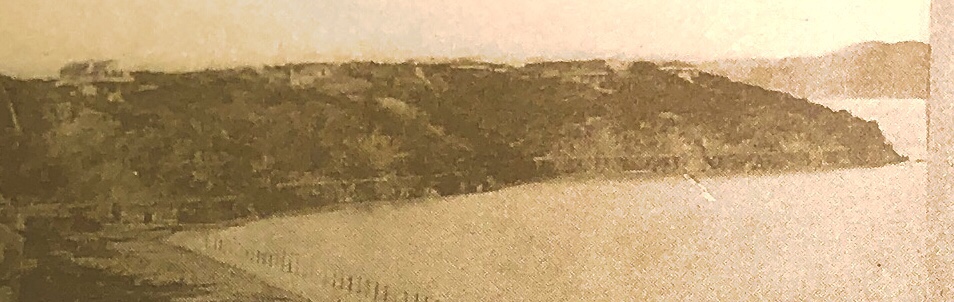
Jesse Fremont at Black Point

California Beginnings, one of many

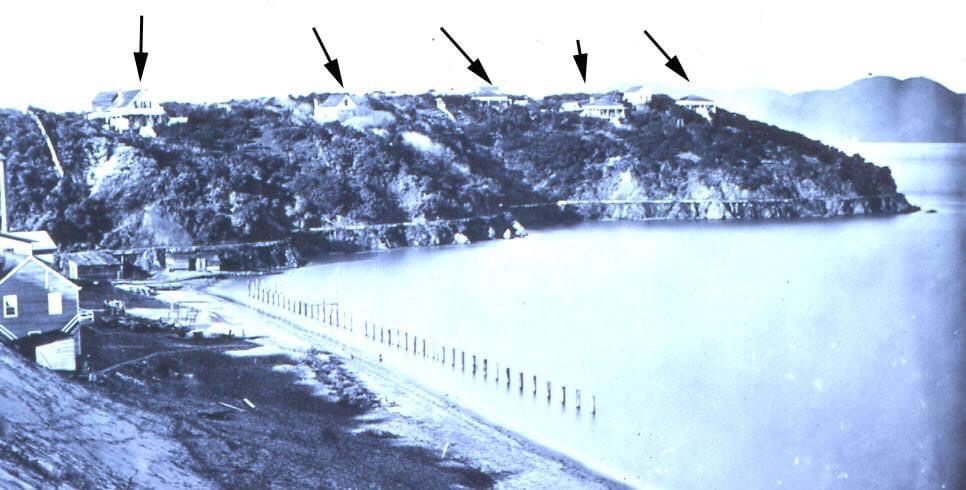
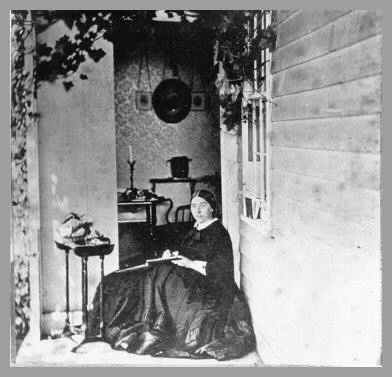
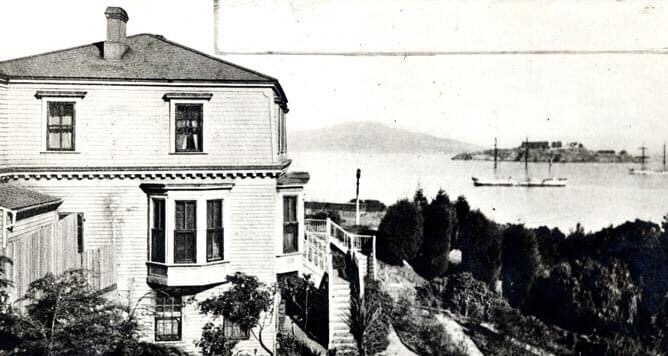
Here we see an image of Jesse Fremont’s Black Point home, now the path to Fort Mason. Home is at the right of the ridge.

I’m not the author of the notes below- part of research collection on this topic. jk

TWO HOMES ON BLACK POINT / POINT SAN JOSE

(Notes thanks to Armando Stileto Sf maritime and coastal history page FB.)

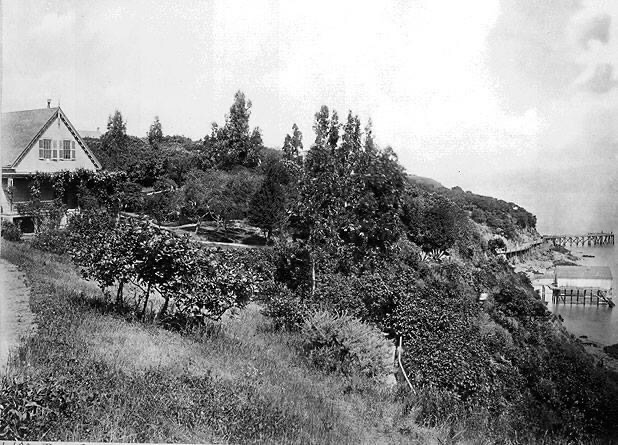
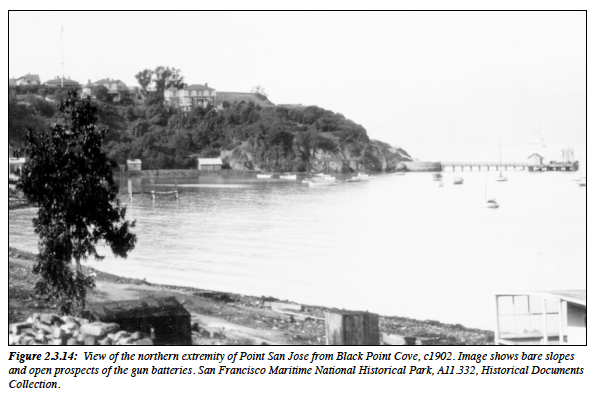
By 1855, Leonard Haskell and George Eggleton, both San Francisco real estate developers, had constructed at Black Point five homes, of which three still remain.

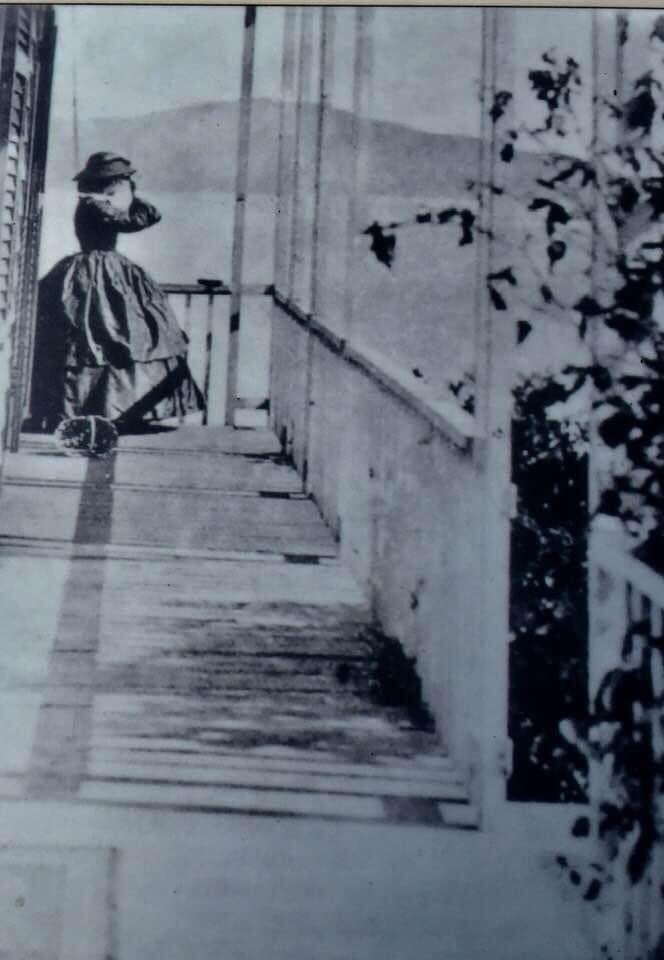
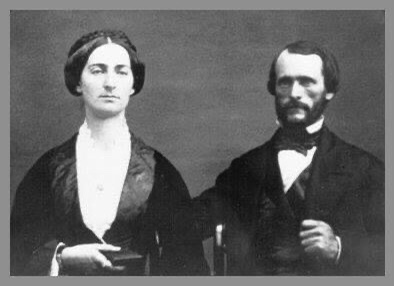
General John C. Fremont and his wife Jessie lived in one of these homes on Black Point between 1860 and 1864. Fremont bought the house at Black Point in 1860 for $42,000. The property included three sides of the point, and Jesse Fremont described it “like being on the bow of a ship.” They had a clear view of the Golden Gate, so named by John when he first viewed it in 1846. Alcatraz was so close that Jesse is said to have called the lighthouse on the island her nightlight.


Their house was one of six on the point. Jesse remodeled the house and added roses, fuchsias, and walkways on the 13 acres. Their home became a salon for San Francisco intellectuals. Thomas Starr King, the newly appointed minister of the Unitarian church, was a fixture for dinner and tea. Young Bret Harte, whose writing Jesse admired, became a Sunday dinner regular, as did photographer Carleton Watkins. She invited literary celebrities when they came to town including Herman Melville, who was trying to get over the failure of Moby Dick.

Conversations in her salon led to early conservation efforts when Jesse and a group including Watkins, Starr King, Fredrick Law Olmsted, and Israel Ward Raymond lobbied Congress and President Lincoln to preserve Yosemite and Mariposa Big Trees. Jesse’s husband, however, often away on business ventures, was not a regular at her gatherings.


Black Point was taken by the military for defense during the Civil War, and the Fremont home was demolished. One of the original six houses is used today as the Fort Mason Officers Club. Jesse filed lawsuits for compensation for the property, but the government countered that the families living on the point were squatters and produced documentation from President Millard Fillmore reserving it for military use.

THE HASKELL HOUSE (Fort Mason Quarters Three), at the foot of Franklin Street, dates back to the 1850’s, has hosted a succession of military men since it was confiscated by the Union army in 1863 and turned into officers’ quarters. (The Haskell family wasn’t entirely happy about the terms of confiscation; Leonidas Haskell, a major on General Fremont’s staff during the Civil War, kept unsuccessfully suing to get it back until his death on January 15th, 1873.)


Over the years, the house has developed the reputation of being haunted. Colonel Cecil Puckett, who lived there during the late 1970’s, said “I feel that something or someone follows me about the house at times … I even feel that it watches me in the shower.”


The next tenant, Capt. Everett Jones (ret.), didn’t believe in ghosts — at first. “After we moved in we had a couple of parties there and we joked about a ghost being in the house. One Saturday morning after a party, I was in the kitchen putting things away and heard a big crash. Upon investigating, I found that a picture with a picture hook and a nail an inch-and-a-half long had crashed to the floor. It didn’t look like the nail had pulled out; it looked like someone had pushed it from behind.


“There was a similar incident later when five pictures fell off the same wall. And my daughter was sitting on her bed one morning and one of those bolt-on light fixtures fell off without warning … That all happened in the first six months after we moved in — we stopped joking about the ghost after that.”


Since then, the weird goings-on have continued. A painter working on the windows was actually pushed out a window by an unseen force. Plants have tipped over by themselves. Shadows have moved across empty rooms. Ghost hunter Sylvia Brown says she has “seen” a whole mosaic of spirits flitting about the house. The first, she said, was a man in a long black coat with a top hat who paced back and forth; then she saw a group of ghosts of frightened, disoriented black people cowering in the cellar.
In 1859, Senator David Broderick was shot in a duel with Chief Justice David Terry after an argument about slavery. Broderick was anti slavery and Terry was pro slavery. Broderick died three days later in the Haskell House.


The ghost in the top hat could be Haskell, pacing around trying to figure out how to get his house back from the U.S. military. (With the end of the Cold War, he may finally have a ghost of a chance.) But some say the truth is even more bizarre: The hatted ghost is the shade of U.S. Senator David C. Broderick, and the black ghosts in the cellar were underground railway passengers hidden by Haskell and Broderick.


(thanks to foundsf.org)

Site of Fremont home today (jk)

Jesse Benton Fremont lived on Black point 1860-64. Her literary salon included Carleton Watkins, Brett Harte, and Thomas Starr King. A center of Pro-Union political activity as well as the probable site of the promotion of preservation of Yosemite by the Lincoln Administration.

Fremont House, far right (Armando Stileto post, Sf maritime and coastal history page)
Fremont House, not shown, at far point. Muybrudge
Jesse Benton and John C Fremont
One if five 1855 homes on Black Point
Haskell House 1855 (JD Jenkins photo posted on Armando Stileto Sf history page)