The hummingbirds agreed to return to my porch and converse with the color red
the tomato plant at my fence agreed to grow, promising to tomato
and the eucalyptus grove on the hill has by mutual consent agreed to perform the interpretive dance that brings the wind and the windblown seed drifting about
The ocean, always busy plunging, yet still stands in support of more cormorants who honor the ancient rocks
and the fleet of pelicans are in formation commanded by no one to fulfill a conning role with respect to nature, carrying intelligence to the remote districts
Clouds and blue sky cooperate in summer and moist foggy air agrees to reach across the aisle to shake hands with the inland heat
morning afternoon and night have agreed to allow each expression in turn
and the midnight bullfrogs agreed that while it is disruptive to croak in the still pond at night keeping everyone awake, nothing ought to be done, noting in all fairness the quiet in the day, and the nonstop chirping of the birds in the dancing trees.
The Fact of Breath-an explorations of the mythic symbols of Covid-19. My notebook of the pandemic year
Bread and Roses image
-What we are conscious of, matters.
Let’s think about archetypes of breath.
For “psyche” relates to breath and spirit.
from Greek psukhē ‘breath, life, soul’
“psyche” spirit or soul.
To me, psyche underlies identity; the deeper mission involved in personhood.
Then, pneuma.
“pneuma” Ancient Greek for breath, again, spirit.
The human psyche, not necessarily the mythic allegory, I believe is traditionally depicted as feminine, in contrast to “techne” as the masculine counterpart.
I would think that within the psychic drama of the Covid pandemic, the experience of the psyche might be that of the frontline nurse, embattled, masked, depicted as a young woman in scrubs, though today all gender identities would be included.
So “psyche” still a highly feminine symbol, involves breath spirit survival.
And pneuma underlies pneumonia, the symptoms of respiratory distress.
Pneuma is the Divine Spirit in some sense.
spirit, breath, soul, survival.
So how potent is the archetype of the frontline nurse, symbolically? At a time of respiratory (inspire, respire) distress?
And the fact of breath.
One can’t resist thinking of an old masculine world, literally out of breath.
This drama begs for psychological interpretation.
Greta Thunberg.
Of course the reigns of power are thought to be in the hands of a male who would never concede power to psyche. The president.
So a psychodrama ensues.
What we are conscious of matters.
Is there a possibility of a healing path here in these meanings?
Mask or Crown: Symbols of Healing
Psyche pneuma mask and crown.
Potent symbols of conflict and healing.
Worth contemplating.
Symbols point to deeper truths.
The deeper truth, if any, is not subject to a stronger argument, a political calculation.
A persuasive argument is often a false cadence in the world of myth and fairy tale.
Americans who protest the lockdown of states and the wearing of masks pose arguments, undermine statistics. Rely on logic, the left brain:
“The suicide rate from the lockdown is higher than the deaths from Covid.”
“The fatality rate for Covid19 is lower than the flu.”
These engage on a level of argument. They are conceived as irrefutable.
But the world is engaged in a drama that involves our deepest instincts. The psyche will not be persuaded by counter arguments. And you don’t win an argument in mythology.
So what of masks and crowns?
The soul is communicating on a soul level now.
What truth will prevail in this psychological experience?
Mask- and Masquerade.
“The red death had long devastated the country. No pestilence had ever been so fatal, or so hideous…
But Prince Prospero was happy and dauntless and sagacious. When his dominions were half depopulated, he summoned to his presence a thousand hale and light-hearted friends from among the knights and dames of his court, and with these retired to the deep seclusion of one of his crenellated abbeys…
The abbey was amply provisioned. With such precautions the courtiers might bid defiance to contagion. The external world could take care of itself. In the meantime it was folly to grieve or to think. The prince had provided all the appliances of pleasure. There were buffoons, there were improvisatori, there were ballet-dancers, there were musicians, there was Beauty, there was wine. ..all these and security were within…
It was toward the close of the fifth or sixth month of his seclusion that the Prince Prospero entertained his thousand friends at a masked ball of the most unusual magnificence..”
-Masque of the Red Death Edgar Allan Poe
The surgical mask really has one purpose only, and it’s not symbolic.
But we now have engaged the mask in a wider symbolism.
For the king in our story (president) refuses to wear one.
The Man of Bleach has refused the mask.
Here in the realm of the archetypes.
Did I say king? Yes. Sovereign?
Is there a status here that mask-less Trump would refuse?
sovereign supreme ruler ruler monarch Crown crowned head head of state potentate suzerain overlord dynast leader king emperor prince tsar royal duke grand duke crown prince mogul baron liege (lord) lord emir sheikh sultan maharajah raja atheling, whatever that us. pharaoh leader of the free world
In any case, our king of Covid refused to wear the mask.
To wear or not to wear a mask involves him deeply in the psychodrama with the nurses and first responders.
The mask of psyche. Breath. Spirit. A plain surgical mask.
There is no right answer. But there is a truth, down there in the realm of myth and fable, in the sub-basement of the crenellated castle.
The powers have shifted.
The truth is more fundamental than a fact, an angry thread.
Truth, or troll:
Protestors who refuse to wear the mask are choosing their own destiny.
Truth, or troll:
The psyche, the spirit, the energy of planetary change may well disregard the hopes of a king, a political party, the richest person or family on the planet.
Truth, or troll:
A corporation is a person.
Truth, or troll:
The earth and all living things are one thing.
We are in this together.
The Fact of Breath: Antiviral Archetypes
Corona is a Crown
Coronavirus is not a living thing. It’s a protein they say and it looks like this, a jeweled and beveled orb with attachments.
Corona is a crown, as the sun is depicted as radiant.
The radiance of the sun relates to motifs of spiritual iconography, and these symbolic effects are transcendent of life, while partaking of its essence.
In painting, a holy figure may be depicted surrounded by a shape of significance: a nimbus, a halo, a mandala, a corona, a crown.
Corona is a crown.
An aureole of radiance. That is golden.
Areola is anatomical, beauty, erotic, motherhood, nurturing, life- giving.
Aureole has to do with aura. Aura, pneuma, psyche: air, breath, spirit.
Aura comes from breeze meaning a light wind. Aura is air. The mineral element is gold, aurum, Au.
Aura surrounds you. Your coat of many colors.
A halo is a disc of light. Surrounds the head. A corona is a crown.
A nimbus is a luminous and voluminous cloud, encompasses the entire figure.
Mandorla is iconography, an almond-shape of holiness surrounds the holy figure.
The Virgin of Guadalupe is set in a mandorla.
A corona is a crown.
A crown simply drawn in a child’s hand has a sawtooth shape. That is the dancing sun, that light emission from what in history would be its jeweled edge.
Though your crown is often of tissue paper held together with scotch tape.
The President’s hair, blowing about. Hopefully a nimbus. We don’t think so. Meant to be gold. We don’t believe so.
What do you think of the material world?
It means everything. Alan Watts said Americans aren’t materialistic, for we hold the material world in low regard. We often create junk, and throw it away.
We have a right to not wear a mask, to throw the mask away.
A materialist culture would value wood. Revere. Tools. Measurements. Design. Art calligraphy.
Our museums hold our treasures. Look, an almond shape of holiness surrounds this holy figure.
To hold this world in low regard, to let it go, we sing on Sunday, the day of the sun:
“As I went down in the river to pray Studying about that good ol’ way And who shall wear the starry crown Good Lord, show me the way”
Coronavirus, I am taking all the meanings from you, leaving you dead fragments in air. Air is from aura is from air a gentle breeze. Arum is gold. Corona is a crown, your crown of gold.
Narcissus flowers with an outer white corolla and a central yellow corona.
Who shall wear the starry crown Oh Lord, show me the way.
***
As I went down in the river to pray Studying about that good ol’ way And who shall wear the starry crown Good Lord, show me the wayO sisters, let’s go down Let’s go down, come on down O sisters, let’s go down Down in the river to pray
The Fact of Breath, Final Breath :The murder of George Floyd
I began a little exercise book called “Fact of Breath” on May 24.
It had to do with inspiration and respiration during the pandemic crisis of Covid-19.
It was a tentative way to begin a written meditation on the symbolic meanings of breath. I’m not a scholar. I don’t know where I’m going half the time.
Breath as Spirit. Psyche. Pneuma.
But then these words were heard -read -reported all across America the next day:
“I can’t breathe.”
We’re currently in a global pandemic of respiratory disease, having everything to do with breathing, and a murdered man’s last words are, I can’t breath. Can’t move. Mother.
And pandemic turned to fury and protest.
We’re trained to listen for breathing, count respirations, count minutes in a crisis. Look at the clock. Call 911. Basic Life Saving. All about breath. And pulse.
Asphyxiation is about pulse, etymologically.
But asphyxiation really is suffocation- Asphyxiation was the official cause of death in this case.
But the cause of death was a police officer- the effect was suffocation.
In a hospice situation, one watches for the breath, the pulse, the shallow heaving of the chest. You hear the second hand ticking on an old clock run by a double A battery.
You watch breathing, as it becomes rapid and shallow, sometimes gasping, sometimes rattling. Or one notes the stillness in the room between slow respirations. There is little left to do but observe. And notice your own breath.
Usually the room is cleared of clutter and so naturally becomes a meditative space of breath.
And every time, you think, it all comes down to this, the fact of breathing.
Inhalation and exhalation.
You know that there are a finite number of breaths, that there will be a final breath. You’ll see it or hear it or note the absence of it. And then that life is considered at an end.
Then pulse, no pulse. Time of death is often a quite peaceful interval, accompanied by a sense of relief. Emotion comes later. You have a sense of dutifully carrying out some things that matter only because we’re human. But then that’s it.
And then you close the door or leave it just ajar, open the window.
The activities that seem to matter are less important for a time.
The important thing we do is to keep breathing. And observe what makes us human.
Once upon a time…
Even before that- the book of Genesis was passed down from even older days, from some old clay tablet, probably.
That old, old book. Blow the dust of the desert off of it. –
I know, you’re saying, please god no, not the Bible.
In the beginning.
Man was an artifact, made of clay.
What happened next?
The Unnameable formed a form.
We were an object. A little statue.
Formed a man of the dust of the ground, and breathed into his nostrils the breath of life; and man became a living being.
Breathed.
Breathed life.
Breathed life into.
Became a living being.
Those aren’t my words. To myself I say them over again. The words themselves deliver oxygen, breathe life into.
To look into the mirror of death, of a murder, and see the fact of life and breath so clearly.
-Not only the horror of murder and the destruction of life, but the fact of breath.
The fact of breath is that, breathing is really what we’re doing, while we’re doing everything else. It’s the truly important thing we do.
Inhalation and exhalation.
Breathing makes us a part of all that is. And breath is spirit. It’s not disprovable.
So tell me we’re not crushing the spirit out of things.
But Americans, we aren’t the Lord Jesus. We’re actually the Romans. We are the dominant force. We’re the haves in the world of have nots.
Grieve- deeply- but be honest to the core. We have not forsaken violence. Not in a million ways in our daily life.
A rattle snake is a peaceful creature and noble. It warns before it strikes, and would prefer not to be bothered.
That’s a step up from where we are today.
Carl Jung tells we cannot heal what we can’t identify; that therapists who feel morally superior to their patients are fooling themselves instead of promoting healing.
If we separate ourselves from these violent acts we have no hope of improving or healing or preventing them.
We have to be honest about our society now.
It’s what we buy, what we think, what we supply, what we demand. It’s allowing for the free expression of violence in the White House, in our policies, our “entertainment”. It’s undervaluing our citizens, and misusing and abusing our military power. It’s treating the Earth as a S-hole country, a dump for refuse. It’s allowing a fraction of people to rule the world- which in itself is a form of violent domination. Its the crushing of language and truth, our greatest resource. It’s faking our religion and pretending to be a religious sect in order to dominate those who would be free. It’s being willing to be lied to every day It’s snarky hateful comments meant to detonate in someone’s psyche. It’s hunger and dissatisfaction and dissociation and fear. It’s the implosion of masculinity and the denial of the Feminine. It’s truly the loss of individuality and a denial of the inner self. It’s the ultimate pressure of a deep push for conformity and the steamrolling of anything that stands in the way of the Empire of What Is.
It’s American road rage writ large.
It’s it’s it’s
It’s not you it’s not me it is it is it is.
08/03/2019
A Covid Walk by Night
Hospital is weirdly empty now. Just sayin’.
No visitors. Front entrance locked.
Enter through an underground check point.
ER empty. N95 masks at all times.
Usually busy med/surg floors now just echo your own footsteps. Quiet. Buttoned down. A few rooms in a row with universal precautions. Gowns, visors, masks, gloves and tables marked “Clean”.
But half the rooms are empty and clean and ready.
Calm prevails. The exact opposite of NY. For now.
The FD paramedic comes in wearing the astronaut mask with the air purifier. Laughs and jokes with a familiar local patient. Hands him money for a meal.
Let’s keep it that way.
Stay home stay safe.
***
Yup. SF cops are everywhere on Market St. at midnight. I have my essential worker badge on.
A midnight commute by public transport east down Fulton along the Panhandle on empty buses without fare to Market St then backtrack back westward on Haight then southbound on Fillmore past Church and Market.
Haight-Ashbury is boarded up, stores behind ornate gates, the sixties iconography oddly contained and sedated. Pavements stand out, landmarks recede.
Why didn’t I walk? It’s a beautiful night.
Homeless and wanderers are few. A light rain, gentle mist. Every few minutes a police car goes by. I’m now essential worker, but it’s obvious the police are heavily monitoring the district. I actually put on my hospital badge, sensing we’re close to the time they’ll intervene with loiterers.
State of emergency, quietly expressed.
What would Herb Caen say, I wonder.
I often walked the Haight at night back in the late seventies. Ghost/ memories include the Grand Piano Cafe, Shady Grove where Merle Saunders performed often, Psalms Cafe that had hints of the early days. Steaming espresso and steamed up windows and it rained and rained sometimes in winter. I was always soaked like a rat.
Sometime in the eighties it got to be too much and I bought an umbrella.
Not a soul on the street, but somehow easy to re-inhabit memories. The present time plane is thin without the natural human nocturnal activity.
Thomasina Demaio, artist
***
Notes to self.
In other developments , technology has imported the human nervous system, and at this early stage the only counterbalance is a daily walk in Nature (without automobiles) and creating art with tools or instruments.
Disembodied technology may signal that normal cognitive processes are “wrong”, to be replaced by world views designed for marketing strategies and comfort.
That’s when a walk by the ocean may be most effective, disrupting the network and allowing consciousness to breathe.
Its like a mean little asterisk, having a little rave dance/party in my chest.
Yikes!
But we have what we need for today.
Stay in the moment.
Take a breath. Thank the mind for sharing.
Ahh. Yes. Thinking of all that I love about this world.
It’s Spring, for one. Those little chirping baby birds finally flew out of the cable box by the garage. Below, tons of bird droppings. So you see.
So the mama bird isn’t giving us the side-eye any more when we come home.
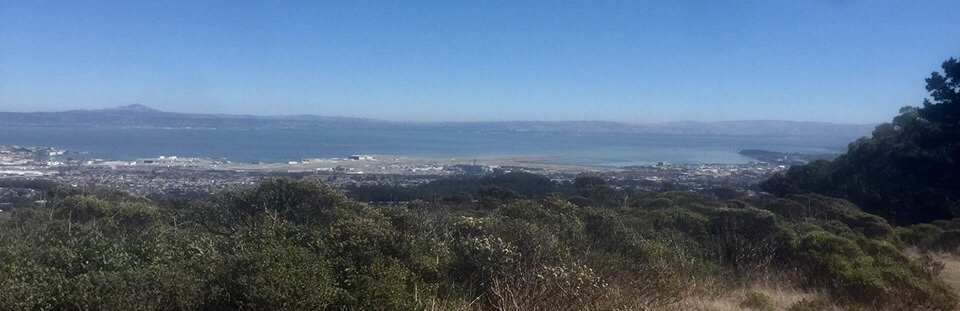
My wife will take a walk on the hill and it’s a panoramic view of the whole N hemisphere of the Bay Area. It’s a vast green place, and the ocean and sky a stunning blue.
I have the fucking best library in miles. Excuse my French.
Oh yeah: I have everything Rimbaud wrote. And everyone else. I worked in a bookstore for thirty years, so, yeah.
Today.
I’m working so I get to serve others. I have something simple I’m supposed to do, and it’s not rocket science.
My lunch is in a nifty container and includes home-made split pea soup, which improves from close to perfection each day- the flavor of the ham gives it that savor. (Ingrid!)
Yesterday checked in with family and friends, from a distance, to drop off cookies. We’re not all crazy at the same time, which is awesome.
When we got home the sun was hitting the flowers out back just right so they were – how do you say?- just doing a slow dance of unbelievable color and grace. It’s a planter bouquet of pansy and what-nots.
What is the message?
Oh yes. Breathe. And Mozart. Later. With the screen door open, finally.
2. A World of Clean Air Sounds Good-(When You Can’t Breathe).
There is a probability that we in the US will make some critical mistakes through ignorance, sociological distortions, impatience, fear.
We have clues as to what those mistakes might be, but reliable statistical data of Covid-19 has yet to be assembled and confirmed.
Our mistakes will be the decisions we make.
One decision is to reopen a “normalization” economy. People will die, but economic failure might be avoided. But people will die.
The normal economy would go forward with no repairs to its structural inadequacies, its failure-modalities.
Because those who own most of the wealth don’t want to restructure.
And people will die. Trying to scrape by.
But there will be benefits to the “financials”. The hedge fund guys are getting very impatient to get back to the game of golf, and cheap labor and imports and no health care and screw the nurses and teachers and frontline workers who were willing to make sacrifices.
It’s too early to solve this, and it can’t be done through half measures.
The wave is still out there.
Historians will look back and the word they’ll use is “ignorance”. They will consider our bad decisions tragic and avoidable and pathetic.
And they will name names.
Beginner’s mind. The unknown. A respect for the resources we do have and a humility and good faith and courage to make the whole world better. Not by saving the world, but by making some good decisions now.
The world doesn’t want us to save it: we aren’t the heroes in the global pandemic and climate change. We’re the problem. Look in the mirror.
The idea that we could save the world in itself is so pathetic. Now nature has given us a pathway out.
Nature has given us a pathway out of our disaster. We need to follow it.
Don’t “re-open” anything now. We’ll know when it’s time. And a new global agreement will be in place, and economic supports. And austerities we haven’t considered. Yes, the top one percent has to decide whether life itself is worth the candle. It’s one big empty luxury hotel now, the good life.
But a world of clean air. That gets your attention. When you can’t breathe.
3. The First Five Minutes
Scenario:
It’s the first week of Covid-19.
You just get to work and it’s a low census and calm so you think this is cool and then a bed alarm sounds.
The entire nursing staff is in shift report, the hallway is practically empty;
a patient has dementia and possibly Covid-19 and/or “rule/out” Covid, droplet precautions in order, big infection control table at the doorway to patient room, and large stop signs and warnings, so you cannot assist without PPE on;
that patient struggles out of bed and the bed alarm goes wailing;
you just arrived on the unit a minute ago-first week of Covid-19;
and another aide runs up too, thank god, gown mask goggle gloves, alarm’s going off, you both run in- hurry! Hurry up slowly, deliberately, but fast!- fall prevention-
…infection control: gown mask visor gloves! we can’t put them on fast enough! It’s the new Covid protocol;
So the patient can’t walk, can’t talk, but climbing out of bed, impulsive, loud bed alarm squawking-
two person assist and that’s an order-
we don’t know the patient, or each other- patient has dementia, is confused, impulsive;
and it’s shift change, before report- and all of the protocols for Covid-19 are new and rigorous, the first week of lockdown;
all nurses are away in shift change huddle, and the other aide has to go home, shift change,
so now this minute you’re alone,
gown mask visor gloves- glasses steamed up-
then the patient codes.
Stares up at the ceiling from a bedside commode.
Holy shit! A two-hundred pound patient, staring upward, not moving.
“RRT! Rapid response team!”
Fortunately the transport nurse is walking by. So now she dons gown mask goggles gloves shouting “RRT!”
Immediately a team of ten: interns, white coats, nurse-supervisor, infection control officer, all pour out of the elevator, infection officer calling out directions like a general, all jam into the doorway, and oh crap! all ten people have to don gown goggles mask gloves as fast they can, “are there more goggles? – oh my god it takes a minute!
while two of us (safely) move the unconscious patient-gait belt pivot hoist- “1,2,3!” onto the bed then you clear out of the way and the team piles in.
It all happens in like four minutes.
You find something useful to do- elsewhere (stay the F out the way) and see the response team leave that room conferring, relaxed now.
That patient was DNR -do not resuscitate- and the transport nurse walking by just pats your shoulder and looks intently into your eyes to see how you’re doing.
Deceased.
And thats the first five minutes of your shift.
That’s the first week of Covid-19.
So yes, I’m a little jumpy. A bit emotional. That was almost a month ago. My very first Covid- related patient.
So if people are pretending this is over- this ain’t over.
So stay home- stay safe.
4. CoEvolution Covid
crisis (n.) early 15c., crise, crisis, “decisive point in the progress of a disease,” also “vitally important or decisive state of things, point at which change must come, for better or worse,”
from Latinized form of Greek krisis “turning point in a disease, that change which indicates recovery or death” (used as such by Hippocrates and Galen),
literally “judgment, result of a trial, selection,” from krinein “to separate, decide, judge,” from PIE root *krei-“to sieve,” thus “discriminate, distinguish.”
A Door of Perception:
The first thing that happens is one slows down, becomes curious and alert.
One notices the quality of light. The energy of objects, the color, form, weightlessness of things.
The vibration of things. The deep hum of things.
There will be no traffic, construction at a halt. Things at a standstill.
We’re home.
This isn’t a new world- it’s earth, our home address. That’s what your guide would tell you.
Form interacts with form, shadows open into deep space. Lamplight is luminous, but shafts of darkness interact, allowing for depth perception and a change of consciousness.
How large the moment is.
Change of consciousness? Dude. Some people long for it, work for it and yes, took drugs to seek it out. Religions, too, were founded upon it.
And now due to Covid-19 we have a global change occurring.
My old hippie friend back in the ‘70s used to say, about LSD, once you take the journey, in theory you don’t have to take it again.
You can draw upon your multidimensional hallucinatory vision/ journey ever after- when the universe was right outside your window, and then, no window.
True enough.
Of course Lloyd at the SF Art Institute back in the seventies took LSD daily, but never mind. The guidance was correct.
Of course we fucked things up, the kids of the sixties and seventies. What else did you expect? We sold out immediately.
But some things we improved. Look at the space we’ve preserved. Look at how we love fresh homegrown vegetables. And recycling. There’s a banana bread/ earth mother/ old hippie in a lot of us, passed down through the weird American culture. As well as a revolutionary fervor and a push for reform.
So Covid-19 has caused yet another global change of consciousness.
We miss the old life, we say, when it vanishes into a new one.
Did Americans of all ages miss this moment, fail to engage?
We can honestly say, no; people have sheltered in place, endeavored to innovate, create, ensure survival of others.
When perception comes, or insight, or ecstasy, what do the artists do? What does the essential work of art tell us?
Is there a turning point, an insight, a seeming accident that changes everything?
We need to know what they know, the artists, about creativity and process. And how to completely embrace the Unknown …which is impossible. But.
With the courage of cosmologists, they express where we are.
When cosmology remaps our place in space and time and marks a new era in human history we mark it well.
We have a new transformative myth. Now activated, as all myths, it involves survival and heroism, and a preservation of inner truths, countering a world of cynicism.
The way might be home-made. Garden grown. Local. Communal. Global. It’s what we decide it can be.
I notice that, among the first reactions to a shortage of surgical masks were cloth masks that were homemade, some quite colorful. And then word got out about DIY masks, using a kerchief and rubber bands.
Back in the hippie days, Coevolution Quarterly and Foxfire were guidebooks to home made hacks and how to make a yurt, a shirt, how to plant a raised bed. How to stir fry vegetables. What fresh coffee is.
How do we do Covid?
And here we are again at the beginning of a movement, at the beginning, at a door of perception:
…The first thing, one slows down, becomes curious and alert… to how large the moment is.
5. Covid Wave Symphony
Is it a change of consciousness yet?
As we flatten the curve we would do well to add dimension to our graphic representation: it is a wave that is affecting society. It is a wave.
The metaphor of a wave applies to sine waves, shock waves, the waves produced by grinding tectonic plates, and to the statistical models of fatalities from Covid-19.
The wave symbol is our only tool to plot the course of Covid.
We engage this symbol thoughtfully.
First thing: the wave is bigger than you are.
You can ride a wave, or be subsumed by one.
Don’t turn your back on the ocean.
In this wave of Covid-19, we consider amplitude, and dread an amplification, as we plot statistics in an early phase.
Musicians and sound technicians perhaps have an insight into the wave.
The visual representation of Covid data, extending into two dimensions, to ascertain present conditions, involves basic themes- signature melodies so we know we are still in the same symphony.
“Flatten the curve” is technical and disproportionate: influencing wave action is what we’re engaged in, now.
We may have to improvise.
There is a possibility we could be overwhelmed. Respect the wave, the surf. A riptide will exhaust a swimmer.
How like a great earthquake, is this Covid wave.
The question that engages us today is one of magnitude.
It’s seven am and here is latest news from my corner:
Due to circumstances beyond our control it is a gorgeous foggy morning, luminous with mists, and here, just a squirrel on a fence and myself.
It’s rare to see a squirrel in this green neighborhood, so something has changed in the balance of nature here. Some creature has been displaced. I’ll have to ask hawk or perhaps coyote. Owl would know.
I’m listening to the morning birds. And the fog collects into heavy drops and drums on the parked cars in a satisfyingly random way.
I compare the crow unfavorably with the robin, the trees listen to my categorical denials, dripping big drops of condensation on my hat brim. What do you think?
The fog reminds me of the diffused light of a pure snowy morning, or the surf breaking in drifts too dazzling to look at directly in a walk by the wild ocean.
Don’t you agree, squirrel?
He’s gone.
Oh here’s my bus, good, just as I predicted!
Dear Corona,
I have to think.
Took a walk on the grassy hill and the grass was knee-deep and fragrant and wet with intermittent rain. I could see all the way to the ocean and bridge from the great hill.
Great blue heron periscopes its long neck gradually arising up to the crest of my hill. Took off, black wing tips flapping over the gulf of the valley to Lake Merced. Flap flap flap flap into low distance just out of sight.
Then pouring rain. The kind with the discreet dancing raindrops, silver, percolating down the black asphalt pavement. Ok, trite, but little ballerinas on the street glancing light. Degas.
Pausing in the downpour to watch an orange California poppy in mid/unfurl.
These are your gifts Corona, you wild anxious microscopic being with no identity. Thanks for that.
The rain cleared by evening. Sat on a rock at the top of the canyon. The sunset over the distant Farallons. The firmament, the many-paned Mondrian mansion with windows ablaze, pouring light across the surface of the ocean, smudged out into charcoal clouds and shoveled back ablaze again. A man and his obedient border collie stood staring a social distance away saying “Fuck that’s so fucking beautiful! Stay. No we’re not going down there, good boy.” Ocean waves rolling in, far out, slow, purling foam at the edges. Seabirds’ silhouettes here and there. Hawk’s raspy hunting cry.
In Paris and in Atlanta and Italy apartment windows open and everyone applauding shouting the goodness possibilities of humanity.
Novena Novela Corona. I’m walking home. We make the most of our walks now. ”Good boy! That’s so fucking beautiful!”
One of the kids in the adolescent care unit presented severe psychotic symptoms: hallucinations and voices and perseveration. He sat on the little bed in his room and practiced juggling little crumpled pieces of paper from the art supplies. Juggled and failed but was persistent.
He was stuck there until a longer term care situation could be found.
One day I brought in a set of practice juggling objects made of stuffed cloth I found at a toy store.
So the mean strict clinician, the mental health professional, said “You can’t have those here. Anything that can be thrown is a potential hazard.”
I was downcast. Disappointed.
Then the mental health clinician said, “Hey, look!”
She was juggling with both hands and then one hand the practice juggling balls.
“We might reconsider.”
“Clown school,” she explained.
( incidentally, the charge nurse explained that the boy’s symptoms could be treated- she was confident that they were an adverse reaction.)
Not sure if this has anything to do with quarantine. Have a nice day?
San Francisco is under a state-mandated shelter in place order.
It’s a ghost town.
I’ve got nothing better to do since transportation in SF is mostly an hour wait (or an hour walk to anywhere) than to follow the ghost of Richard Brautigan around town.
Here we are at Geary Blvd waiting, and I realize I’m a block from the house where Trout Fishing in America was built.
Richard Brautigan’s San Francisco. Presidio and Geary. 1967-74. Trout Fishing in America was here.
Of course, Trout Fishing was born long before that.
But the skyline still exists.
view from Brautigan CountrySF 2020 east from Geary/ Presidio
We are standing at Richard Brautigan’s home corner 1967-74, looking north from Geary and Presidio toward Presidio Library, on Sacramento. (Cover of The Abortion).
Presidio at Geary
And if we walk a half a block we can share Richard Brautigan’s Geary Blvd view, that is, Geary btw Presidio and Lyon:
Site of Brautigan house looking east SF
“… a typical turn-of-the-century, high-ceilinged, San Francisco apartment. The front door was wooden, ornately carved, with a small window against which Brautigan always kept small things taped. The front room contained a brass bed, always made and covered, for a period of time, with a buffalo hide. There was a fireplace in the room but it never worked. The built-in cabinet shelves were loaded with books and a collection of intriguing items: keys, rocks, feathers, and Hell’s Angels mementos; a switchblade in the shape of a dragon, stuck open and wrapped in a rosary, a small Bible covered in mink fur, and a small piece of gold lame given by Janis Joplin.” -Biographer Keith Abbot
***
Copper Penny
Brautigan-iana: While I follow the ghost of Richard Brautigan around, I stop to reminisce:
After work at Giorgio’s Pizza, 3rd and Clement, and pints at the Plough and the Stars, we’d get a hangover breakfast here late into the night, Geary/ Masonic. Open 24 hours. Me and my friend Mia. How I loved Mia!
Mia looked like famous Charlie’s Angel Kate Jackson- everyone said that!- and was a total delight too. Shaking my head. Yes.
Copper Penny. The roof was bright red, and it was a perfect greasy spoon circa 1978.
(Richard Brautigan’s unknown apartment was down the block.)
Brautigan flat from my copy of Jubilee Hitchhiker by Hjortsberg
***
Ghost-walking w/ Richard Brautigan ca 1966
Brautigan-iana: the building at 406 Duboce is across from where I work today at Maitri. The third floor was home to 1967 silk screen press and stencil cutter for the Communication Company- which published four-color hand-distributed broadsides for the Diggers, and published poems by Richard Brautigan. It’s the center of a vortex of sixties art and activity.
406 Duboce Ave The Diggers Capitol Bldg
The Diggers were a big influence on Brautigan and the culture of Haight/ Ashbury, including Jefferson Airplane, Grateful Dead, Janis Joplin, as well as many dada/ disruptive and productive social causes.
The Communication Company published an early collection of Brautigan’s poetry, All Watched Over By Machines of Loving Grace.
From the desk of MB
Brautigan’s early poems originally appeared as typed broadsides, given away for free.
-My first contact in SF in August 1977 was just a block away at my sister’s flat on Church at Duboce one block down. Hers was a meeting place of string-band, old timey and puppetry and performance art in the underground tradition. A narrow walk, now- gated, led to a inward facing courtyard, a perfect artist cottage and all the neighbors were friends.
The musicians and performers played at a garage theater on Ramona St near 14th and Guerrero, and at Savoy Tivoli in North Beach in the punk/New Wave Era.
That compromises a thumbnail of 25 years of San Francisco culture. Something to consider when waiting at a bus stop. Where to now, Richard?
The distance between 1967 and 1977 seems like a century now; so much art and activism.
The fabled Church St destination, Aug 1977
***
Ghost-walking with Richard Brautigan. San Francisco arts in the 1970s:
Ramona Street Theater 1977, the Mission. Performances every Sunday. Avant-garde puppetry, shadow puppet plays, MC with a scary hook and all musicians welcome. The marionettes were not well behaved. This is the garage theater entrance – it might be the one next door.
Pass the hat. My sister co-produced the bizarre and sometimes beautiful ongoing performance pieces here. Some performance art connected with the back room stage at Savoy Tivoli, Grant St North Beach. Scripts written, demons of the eighties released.
Brautigan wasn’t here but he’d recognize the scene. He read excerpts of Trout Fishing in America not far from here at a church on 17th.
Ramona StRamona Street Variety Theater, approximately
***
Earth Day 2020: Let it Breathe
The Quintessential Earth Day book has to be Please Plant This Book by Richard Brautigan, printed on seed packets, and handed out by RB for free.
(Sheltering place has thinned the time and space dimensions, so time travel is easy now.)
Grand Piano Cafe. It rained like hell in that winter in the late seventies. I was always soaked like a rat, so how nice to find a warm cafe.
It was a pretty plush bohemian hangout with nice lamps to read by and fine espresso and dignified woman proprietor with striking white hair, a follower of Goethe Institute and Rudolph Steiner. Theosophical and Poetic. Streamed up windows and classical music. 1977-8.
A friend and I lived in the Haight on upper Downy Street- he was at the Art Institute and I think I was a bike messenger for a short time.
Brautigan hung out on lower Downy St just down the hill.
We’ll walk there but I wanted to revisit the favorite cafe first.
“Sometimes life is merely a matter of coffee and whatever intimacy a cup of coffee affords.” RB
Mon chambre during the endless Day of the Deli. 1979. Club 66. Looking down Lloyd a block from Haight. No passwords were harmed in the making of this post.
I lived with a musician who wrote songs and had a basic jazz quartet and virtuosi would just knock on the door and move in or jam nightly. From chamber music to king crimson rants to jaco pastorius/ paco de lucia excursions and Zappa. And mysticism.
Are you reggae vegetarian bike messengers with an electric bass and sing like Adrian Belew? You’re in.
A trumpeter from the Boston Symphony, who hangs with Dane Rudhyar? Cmon over.
A mop- haired teenager who plays like John McLaughlin? Enter.
No books were written and no beers were spilled.
66 ClubLloyd St of 66 Club fame
Ok Richard we have further drifting to do. That’s what you do now, right? Oh, fog-surfing. Whatever.
Continuing.
***
Let me explain.
I realize my ghost memoir is sort of silly- What had happened was, my roommate Peter had enrolled at the SF Art Institute in 1977, and he invited me to drive from our small Ohio town with him.
White VW van chugging across America, 1977.
We had a friend with a house in San Mateo and lived there like crack-addled hippies until someone in the laundromat at Cole and Carl told me about a flat for rent nearby on Downy St, in the Haight-Ashbury. I walked over and walked right in. The landlord was chasing mice out of a kitchen drawer and said we could move in immediately. That would never happen today.
First floor artist’s flat. Downey.
Our rent was $210/ month for five room railroad flat with an overgrown garden in back down ri
My Haight will be a little different than Brautigan’s; my Vesuvio will be a variation on Brautigan’s I’m sure. But I love it all so much now that it’s a ghost.
Cole and Carl:
I was apartment hunting on the bulletin board here 40 years ago and someone in this laundromat told me there was an apartment on Upper Downy St top of Ashbury. Rent was $210 /month for a railroad flat with five rooms and a kitchen with garden backlots. Split it with my best friend. 2 hippies in a five room flat, 1978. Now that fateful laundromat is gone forever and so is reasonable rent. (2016)
The Wreck of the Fateful Laundromat
Ghost walking with Richard Brautigan: Brautigan Country
Downey Street 1978:
My best friend had enrolled in SF Art Institute in 1977. He invited me to drive from our little Ohio town. We chugged across country in a big white VW bus.
We broke down once and were given wrong directions by Mormons in Utah -(we were freaks) but otherwise we did fine.
We had a friend with a house in San Mateo and lived there like crack-addled hippies until someone in the laundromat at Cole and Carl told me about a flat for rent nearby on Downey St, in the Haight-Ashbury. I walked over to the place and walked right in. The door was wide open.
The landlord was in the kitchen chasing mice out of a kitchen drawer and said we could move in immediately.
That would never happen today.
Our rent was $210/ month, for a five room railroad flat with an overgrown garden down rickety stairs in back. The banjo played “Cindy” and all was well.
We called Downey St “Dog Shit Street” because Harvey Milk had not yet proposed the poop scoop ordinance that changed things forever.
What does this have to do with the ghost of Richard Brautigan?
If I had but known, the sign at Cole and Carl could have said:
“Welcome to Brautigan Country”
***
Addenda:
Harvey Milk In Duboce Park
sfgate: 1978
Aug. 29: The Board of Supervisors unanimously passes a “pooper scooper” ordinance that makes it illegal for pet owners not to clean up their dog’s droppings. Supervisor Harvey Milk says, “This is the first step in the right direction.”
***
Further Ghost Walking, Haight and Cole, 1979
At the foot of this structure for many years, Neda’s Flowers: resplendent, flowers just falling, trailing from stalls in front, and it is in my mind that in an apartment here lived a painter I knew. A large painting of his depicts an intense red field and shadow of almost black- charcoal, earth- and one wonders about the epidemic of the eighties that took him. His painting now hangs in the high-ceilinged front room of a Victorian over on 18th St by Dolores Park, looking out of a front window roughly in the direction of the Mission a few blocks away, and the Lake of Sorrows, which now runs underground.
That room has northern exposure, which for San Francisco means excellent light.
We worked in the deli across from Cafe Flor, ca. 1979, era of High Punk and New Wave, and he paid for art school as a cashier, watching desserts from Just Desserts going around their tiered little display. The painter was handsome- an even earlier era would’ve said dashing-and had the most laconic expression at all times.
I could be wrong about this. I don’t care. It was the eighties. And Neda’s had to be the sixties. Back in the nineteen- hundreds, right, ghost-of-Richard-Brautigan? You tell me.
You’re the ghost, and I’m the one that’s living. Ok?
This little poem is the second Primeval Poem, after “Moon Party.”
They were both “instant poems”- this one has an image which was a precognition of the World Trade Center attack, one week after the writing of this: its inscrutable line about the air turning to sand and the grief that followed.
I knew then what this was about.
Primeval Poem #2
Ferry Bldg, Bridge, afternoon
Poem:
Out in the pier I saw a little boy
chasing seagulls.
He did the baby dinosaur dance
for his ancient cousins.
They squawked their appreciation
hopped to one side or up to the pier
or beat the air gaily with one wing.
The green water smiled its flat square smile,
cool to its deep deep bottom.
The bridge continued its yoga stretch and relaxed.
Then,
because it’s the modern world and I’d seen it so many times
the boy did his warrior dance in slow motion, the air turned to grains of sand, and I began to cry.
Each star came out to watch, waited patiently as God filled in its brightness,
and then, set free,
the air shown with gold.
The green water was thirsty for that nice gold color, I noticed.
no complicated thingamajig that you know I’d probably lose it
no toy, no trinket, nor somethin’ that you won
Nothin’ that you picked up on a day that you had fun
none of the funny men with heads that wibble-wobble
no jewelry-like things or a bangle or a bauble
no clam shell hula skirt cocoanut-head maidens
no souvenir thing good for collectin’ or a-tradin’
no bumper sticker or frisbee with the name of a place upon it
no doohickey doo-dads- I tell you I don’t want it!
( I don’t even need a ballpoint with a naked lady on it!)
I don’t need an object carved out of a piece of native wood
I don’t need anything authentic even if it’s “good”
I need no postcards, pins or pendants- none of that will do
I don’t want a refrigerator magnet
I just want YOU!
***
Here’s a spontaneous bookstore poem about Dog Eared Books or Phoenix Books in SF from way back. I woke up jumped out of bed and wrote it down. It’s called “Sister Bookstore” It goes:
Hey Ann here’s a doggerel for a writer I know. What would grandpa k do!
I think I’ll never see A poem like a tree or A wheel barrow that is red Or Alan Ginsberg(what he said) But if I ever do I’ll Fed Ex it to you As a birthday greeting to a man of letters- Don’t forget the thing with feathers.
Christmas always seemed mysterious to me, a road winding back into the night over hills and forests and silver rivers sparkling snow. It arcs past the moon and back through time and events to the strange manger scene of Bible and folktale, where the basics of human existence are transformed, or illuminated. On the Christmas trail one encounters rowdies and Pelz-Nichol and Saint Nick and revelers and mummers and reindeer and wassailers and winter- the most remote winter scenes imaginable. Slightly tipsy, often dangerous, and musically sweet as a music box, what the Christmas traveler encounters is a folkworld both strange and familiar. The most reliable sources for which are the carols, and hymns that amplify or explain familiar bible verses- but these provide an insufficient map indeed, on a winter night in this solstice land. Here people of earth encounter angels and each other in a half-dream crisscrossed by night; Christmas beings come and go, guided by stars through time and over rooftops, or stand still in miniature tableaux on your mantlepiece, beneath a glass dome.
Suspended in this weird, half-real astral environment are framed scenes of an American original, Thomas Nast. They look to be illuminated by firelight no matter how bright the modern bulb. That is how the soldiers saw them in the winter of 1862 when the first two-page spread appeared as the cover of the Harper’s Weekly Christmas issue: the image of Santa Claus was lit by a Civil War campfire. Nast’s first Santa donned the Stars and Stripes, and brought gifts to the soldiers. Over the years Nast’s annual allegories featured this image, now so familiar to all. There is the twinkle, the smile, the saintly aspect, and the sack of toys. He peers into the world’s slumbers from the rampart of ice, sees far through his magic telescope, works in his warm workshop, warms his feet at the hearth. There are toys everywhere. One is a bit lost in the vision, for Nast’s picture frames overlap, providing a sense of wonderful disorder. Each seems illuminated from within by some magic source of light- Nothing captures the light of night like the engravings of Victorian times. These Christmas issues made Nast famous. It is thought today that in a large part he created the particular image of Santa Claus we think of today. Thomas Nast was one of the inventors of Christmas as we know it.
Modern times of computer graphics notwithstanding, the American Christmas is still largely a Victorian experience created less of modern merchandising than of the imagination of artists like Nast. He grasped the sentimental attitudes of nineteenth century Americans, and excelled at providing them readymade a seemingly traditional picture of a holiday that seems unhistorical but imbued with the magic of ancient times, winter nights and strange European customs that lay dormant in the modern unconscious- but were actual in the childhoods of nineteenth century immigrants.
Nast’s generation brought the gaunt Pelz Nicol- another saintly door to door type- from his childhood in Germany. From Germany, too, Prince Albert brought the first Christmas tree to Victoria. Soon thereafter the evergreen was placed on tables throughout the United States, and decorated, and that was that: instant tradition. America was ready for Santa too. But a measure of Santa’s success is attributable to the kind of journalistic art Nast perfected, and to the personality of the artist himself.
***
Thomas Nast got his start at fifteen, in New York. Precocious, he was hired right off by Frank Leslie’s Illustrated Weekly, and enthusiastically covered the three F’s: fires, floods and fights. Fires were especially popular and Nast loved those ( as did Dickens, who loved the intensity and complexity of a smoldering wreck.) Nast also covered the prizefights. The pugilists would take such a pounding, so many brutal rounds in the ring would ensue, that a writer who accompanied Nast to cover a famous fight, the Morrissey- Heman fight, nearly passed out when the victor attempted to smile at the crowd: cut lip, swollen face, black eye. It was described as a “sanguinary affair.” Nast got assignments. First, at Frank Leslie’s, and then at Harpers Weekly, where Santa made his visual debut in 1863. A hero of Nast’s early days was John Tenniel, whom Nast idolized for his powerful editorial cartoons.
In the era before photography daily papers were not illustrated. The weeklies contained illustrations, which were produced as drawings on wood, sometimes including almost photographic detail. These were then laboriously engraved. Incredible atmospheres were this produced. These were ideally suited to Nast’s Christmas world.
In 1862 Nast got the Christmas assignment and, not knowing what to do, conferred with a sister, reminisced about Germany and the Claus- like traditions they remembered from childhood. His sister suggested too Clement Clark Moore’s “Twas the Night Before Christmas.” Nast stayed up all night producing his first Santa Claus, a work which appeared January 3, 1863.
Lincoln knew Nast’s Christmas drawings and the tremendous effect they had on the public. And Nast knew Lincoln, for he had been assigned to cover the 1861 inaugural journey on its leg from New York to Washington, with all the whistle stops and speeches. Imagine: Nast shoved past jostling, crushing crowds at Willard’s Hotel to shake the new president’s hand. Nast was twenty one years old. Details exist: Lincoln, exhausted, torn coat, even, from crowd contact, brightened for a gracious instant at the young man’s “the honor is all mine!”
Once Lincoln remarked that Nast was probably his greatest recruiting sergeant.
So at Christmas during the Civil War, while soldiers strung hardtack from a tree or stuck antlers made of sticks on a mule, Nast created specials for the cover of Harper’s Weekly with themes of patriotism and pathos. In a two-page spread that takes up half the dining room floor back home, Lincoln and Santa and reindeer appear together in hopeful, welcoming scenes. Bitter and controversial Nast editorial cartoons appeared as well, later, directed at those Nast saw as enemies of Union, and these received extra printings and ensured Nast’s fame. And to these Nast also added Christmas Eve scenes that relate the soldier in the field with folks back home in a sentimental way which made Lincoln’s men weep.
***
As a journalist, Nast was in the center of everything, and was diligent. He often rose at four in the morning to work on his drawings, and continued late into the night as well. It is likely he knew all aspects of life in New York, including the gangs of New York.
Thomas Nast not only knew well the gangs of New York, high and low, in his early days in the fifties drew “Police Scandal”, a paneled chronicle of the street crime perpetrated by the cops themselves. But the high art of Thomas Nast was reserved for the corrupt Tammany machine, the Tweed Ring, most intensely depicted as animal and apocalyptic, often dangling vertiginously over a political hell heap or ditch; or turned into symbolic beasts, clothed in Victorian suits and bowler hats; mustachioed polls hanging over the Abyss.
These furiously cross-hatched figures of sloth and greed are the creatures of Grant’s time, Twain’s Gilded Age, and their descendants are still with us, and would yet be but a pencilled panel from the cold inferno.
And so it came to pass that Nast’s passion for reform was vindicated. His enemies, powerful as they were, were astonished that the artist won battles, and survived. A banker, who had once tried to bribe Nast, ran into him on the street years later, congratulated him with the highest compliment a malefactor can offer, “I thought you were dead! Well, I guess you won after all!”
Nast’s contributions to our political iconography are many, including the Democratic donkey, Republican elephant, as well as the North Pole address of Santa, which Nast disclosed in 1888- in order to prevent any nation’s claim to Claus.
***
In the world of Thomas Nast kids wake up excited, good people awaken refreshed, politicians wake up- and worry. That’s the basic fairness of Nast. He sold his stock in the bad old world, even the old Christmas world, dangerous as it was in olden times of drunken revels, violent practical jokes, demands for wassail, and hell-raising, all subject to various bans, Christmas being illegal in some jurisdictions. Then, too, there were the old fashioned accounting standards for kid behavior (the switch!) to say nothing of costumed night creatures on stilts, trailing feathers and sacks of coal. Nast’s new ambassador is, thankfully, one so good and cheerful. No one questions it. There’s little enough good news. Let Santa be. But can we let Santa slide, drink a refreshing cola with the polar bears, keep Mrs Claus and the elves, but evict the other strangers on Christmas Road? I wonder.
Since the time of Thomas Nast, Americans are tempted to use the Christmas lens to look back- but how far back, exactly? We expect everything we love about Christmas to remain. Precious locket we open. Music box we wind. Complicated inner workings. Perhaps, we think, a Christmas destination is a place you get to on ice skates, by night, or through dreams or in contemplation. It’s so confusing. It’s so hard. Nast just reported what he saw and felt and wished to offer the American people about it.
Christmas time swings on an annual hinge, opens like a locket for those of Nast’s time- and our own. When photography was invented, people at first wondered if the camera had inadvertently left anything out: trees and people were counted. Reality was compared. A photograph was scrutinized. Was everything there? Was everything permanent?
So Nast’s Christmas pictures of Santa’s journeys are there for us and in the same curious spirit, children attempted to peel the page back, to look behind, to further explore Santa’s workshop. They gazed with wonder, pored over every detail. One poked about on the surface with a pin, pretending to move the objects about in the image, back in the 1860’s, more than a century before the mousepad. One would even turn the page of Nast’s depiction to see if perhaps a Christmas present was there, somewhere behind the obvious things- there somewhere, with your name on it.
December 24, 2002, for ann howe with love, merry christmas!
jk
***
2. -No Telephone in Heaven- The John Lennon Wishing Tree
Lennon’s manuscripts, handwritten lyrics, paintings, drawings, doodles, the stuff of his daily life. Lennon’s glasses- iconic, still bloodstained, as Yoko insisted they remain; Lennon’s rumpled clothes in a tragic rumpled paper bag- the evidence bag, exactly as they were returned to her the night of his death. His effects simply displayed, one winter, years ago, at the Hall of Fame in Cleveland, Ohio, my home town.
It was a December night when we drove downtown to see the Lennon exhibit. Great flakes of snow drifted past the illuminated glass pyramid of the new Rock Hall of Fame. We stood on an upper floor, looking out at the lakefront in the darkness of the winter evening. Anchored nearby on the lakefront was a long heavy carrier, one of those giant Great Lakes ships, at rest, now itself an exhibit. There was a slight family connection, my sister knew someone who was on the crew of the ship- memories, snowfall, out there on the lake.
The ship is a reminder of the industrial life of Cleveland- or Liverpool, for that matter, John’s hometown. The Rock and Roll Hall of Fame is a silly place really, I thought, but this night was quite special. Standing in a glass pyramid on a winter night before a frozen lake is certainly a vision that Yoko would appreciate.
Yoko Ono- we hoped she would call.
In the exhibit of Lennon music and memorabilia was a white telephone next to a white chair, and we were told that if the phone rang to pick it up- it would be Yoko. We spent time near the phone, with some apprehension, but enjoying the possibility of her call.
As the old song goes, there is no telephone to heaven, but there was a way to send a message to John if we wished. Yoko had placed a traditional tree, upon which we could hang a little handwritten tag on string, write a message to John and hang it on a branch.
I can’t remember what I wrote.
The tree was white. And the chair. And the telephone, and the snow,and the paper. All in the exposed darkness by great windows of winter.
These anticipations of connections reminded me of music notation.
One night, when I was standing by my piano I had a vivid sense of Beethoven’s presence in the sheet music open there. (Beethoven, another December soul.) The fact of composition, the actuality of creativity and the intent to transmit it directly, person to person, something that was originally handwritten, something it took an individual to create, left me staring at the music above the piano keyboard. It was as if the ink were still wet on the page, or the sonata had just been composed, and there was no interval between the composer and us. Beethoven was there in his work. It had the intimacy and immediacy of a postcard, or a long letter you’d just received. Full of the living presence of the writer.
So a Beatle song lyric is a scrawl on a scrap of paper, and there it was. Lennon’s rough drafts were everywhere in display cases.
It’s meant to be simple. Don’t read anything in. Glass Onion.
Outside, visible from where one stood looking at Lennon art, big flakes of snow in the winter darkness. And Lake Erie, vast winter lake.
We were very moved by the peace there. It was as though the place was filled with it. It was partly Lennon, and Yoko, and December itself. Looking toward holidays which are always complicated by love and darkness and candles and colored lights and politics and war. The Lennons tried to disconnect Christmas and war and their appeal is heard annually. War is Over If You Want It.
Has it been 25 years since the edge of my afternoon paper caught fire?
That December 8th afternoon was dark early on account of winter, and the candles at the little cafe tables were lit. The flame caught the very edge of my paper as I read the headline that John Lennon was dead, murdered in New York. The front page actually burst into flames in my hands. Shocked and embarrassed, I had to put the fire out by beating it with the flat of my hand.
The art we do. It’s worth it. Peace is worth it. Democracy in the street and in our government is worth it.
Snow drifting down, working class understanding. Repression and expression. “She” loves “You.”
How personal this is. My piano teacher watched so intently, so interested in every note of Rachmaninov, Scriabin, or Gershwin or Satie, or Chopin- and most especially Liszt. There is an extreme amount of love and generosity in all this.
(John Lennon felt he had a limited vocabulary as a musician; those of us who had formal piano lessons carry on as best we can.)
A little light glowed by the black Steinway 9-foot studio grand piano were we sat together of an evening, looking at the piece before us, squinting forward at notes, like lights on a lake, with wonder and intention.
How much this matters, to sit at a piano. Especially in winter, or near Christmas, when carols and hymns come out of the past like a dream, cloying and earnest. And people get out their LP records, and yeah, for us, Beatles.
“Beatles ‘65” was a Christmas album for us -yeah, that long ago.
The Beatles sent their fans a recorded greeting each Christmas. They’re full of the usual upstart charm and mayhem and fun. Sort of an aural Christmas card with puns and plays and skits and Xmas-y goofing off.
We ought to send something back.
We miss you, John! Thanks for coming to America. Thanks for bringing peace to Cleveland. Thanks for reminding us of peace on earth, and peace wherever you are, if you want it.
The piano is in a corner near the window, outside of which one sees a row of Monterey pines standing in morning fog. It’s Winter. Out there is the constant, low engine sound of city, far away, not loud. Sometimes a distant jet, or even the commuter train rumbles by. Mostly it’s just a gray haze of distant sounds, which one easily ignores and forgets.
Inside I’m playing a little tune on the piano between sips of a coffee. It sets up just enough vibration to loosen a rose petal from the bouquet in the vase there before me and that one petal drops with a gentle sound like a thud but minus a consonant, a rustle, minus one syllable. Hardly a sound, but I heard it, between measures.
Then I take a breath, and I hear that too.
Our cat is snoring. I laugh when I think how unnerving that would be if he were a tiger, but he’s kind of an old guy now, and his snores are more like little wheezes. He’s over there on the bed. I forget that snoring sound is going on too, until I hear another little thud, when his paws hit the carpet after a carefully judged little jump from the bed. I listen. There it is! I can hear the cat’s very footsteps as he walks along the carpet. The paw-steps are barely audible, but you could count them if you wish, like little heartbeats. Bump bump bump, his little carpet paws.
A nice exercise is to place your ear right against your cat, if you have one (a cat, that is) and listen to what goes on inside. It’s fascinating, and also quite fuzzy, which is its own reward on a winter night.
If you have a Christmas tree, as we do, and a cat, you may sometimes hear a little Xmas jingle as the cat walks by the low green bough, festooned with lights, and hung with little jeweled ornaments on little metal hooks. And you think, uh-oh the cat is in the tree again. Jingle -jangle. It’s a very furtive, happy, slightly troubling sound. That is a rare and peculiar holiday sound worth taking note of. A perfect sound-combination of luster and innocence, with a touch of the unexpected, and the tiniest release of stress, as the bough rises and falls and stops and is still again and sparkling.
My sister’s cat makes a further sound, when he springs from the garden to the window screen, and grabs the screen like a Velcro commando, looking in at the warm kitchen. Then they open the door for him, and the cat runs in. He has a little bell on his cat collar, which is really superfluous. He makes rapid jingling sounds with every move he makes. Here is the sound inventory of my sister Ann Howe’s cat: he’s got the jumping thuds, and the bump bump bump, and the very holiday-oriented jingle-jangle wherever he goes. Then he toys with the tree, which jingles furiously for a moment, then he moves on.
Oh, and there’s dry cat food crunching.
****
Back at our house we light candles at night on these holiday evenings, and of course they transform the apartment completely. Occasionally the candles make a licking, guttering sound. They burn with a little “thssp” whisper, than they flicker, throwing off new shadows against the far corners, and new light-geometry, radiant on the table cloth.
“Silent Night” has me thinking the tune written 18 centuries after the original silent night of the scripture-poetry of winter.
What we usually have is that moment of silence when we change the channel on the TV. There is now a new quiet interval while the digital system finds the new station, a silent moment we never had before. Some silence, some holiness may jump in there.
That’s a moment in which to think, before the train of commercials comes on…Did you know that Congress once was drafting legislation against loud commercials? That went nowhere. I’m not sure that will pass constitutional muster, but what does, anyway? Some may protest that we already have the mute button, which we are free to employ at any time. Quiet commercials may be bad for the economy, after all. Think it over.
And speaking of commerce at Christmastime, I must note that the bookshop in which I work has a somewhat creaky old-fashioned sounding front door, and an array of little hollow sleighbells hanging from it, so it actually creaks and jingles when a customer comes in. This is a very festive sound indeed, during the Holiday shopping season, between the fleeting holy silences.
****
I don’t wish to dwell too much on this, but there are some holiday sounds we can do without. There is more stress on the roadway, and there are more honking horns, and more car alarms going off. All this beeping and woop-wooping when getting into and out of a car- is it really necessary? No, of course not. And expressive honking is a citable infraction. Please, we must just try and tone it down. Wake up and hear the snowplows, I beg of you.
The snowplow on a winter night out in the suburbs of the country is at the temporary center of a winter holiday soundscape. The plow rumbles by the house, grinds off into the distance on a late winter night, and then all one hears is… Nothing. Less than nothing, a much deeper silence, when the countryside is covered with a fresh blanket of snow. Then you hear the real deal: the real silent, holy night. Unless and until a big hunk of snow falls from roof or tree-branch, a thunk and a shimmering, showery sound of snow on cold branches and then, silent and holy again.
Back in Ohio on a silent night you could hear ice expanding with even slightly changing temperatures. The cold dark mirror of ice on the pond next door would groan and like a gunshot crack, the sound would echo out into the snowy winter night.
You can remove a pane of ice from the creek and listen to the turning river sound over rocks and tree roots. That’s the run-off from the miles of snowy hills, invisible in the darkness, not a sound at all out there, but here in the creek this little aria, this little allegro string quartet of winter sound, playing every surface at once, and silent under ice again.
Ice skates make a ringing scoring sound when they dig and slide to a sudden stop. They chuff chuff along in rhythm when in motion. Left, right, left; or two skaters together in three four time. ONE two three, one two three: an Ohio pond waltz on a winter night. Then later silence again.
***
In California in winter it is the high surf and the highway one hears, and the honking of the sea lions out on the wharf. Then, of course, the cable car bells, clang clang clang, and then the indoor sounds of the espresso machines all gurgling and steaming at once, and the tiny scrawling sounds of earbuds from the people standing near, listening to their headphones with the volume turned up too loud.
And then there are ringtones: pseudo-cha cha music, a blast of Salsa, the first lines of sappy love songs or hip-hop and even old- fashioned rotary phone impressions.These sounds are ubiquitous on our holiday sound-stroll.
Once I bought music boxes for Christmas stocking stuffers, little ones with tiny little cranks you turn to play the magical airs, but when one was played, with its well-tuned tinkling notes, everyone thought someone’s cell phone was ringing. “Someone should answer that.”
***
The cat is purring extremely loudly now. He’s really rumbling. There’s a jet plane away overhead.
…Is that it?
I guess it ends with the holiday travelers, seats upright, packages stowed and engines roaring homeward, and all quiet on the ground- even the ocean is a vast murmur, that would be peace on earth.
jk don’t know when
***
4. It’s Good to Burn the Trash at Christmas! A reminiscence
In the summer the path is easy to find; on a winter night one crunches thru the snow in vain, though the terrain gently slopes and levels as one nears the barrel at the wood’s edge. Tracks dash here and there, an amusing language of runes where the birds hopped and tipped along, a riot of rabbit tracks, and slightly deeper dog tracks in the snow where they snuffled along, marking the trees. These were the only trespassers on the property at night. One walks along the snowy path past the little sled hill, with the knob of roots at the bottom we all used to sled right into, or vault right over, sled and all, screaming- if we were lucky. It’s freezing in Ohio!-I’m pounding mittens together, exhaling steam. At dusk the distant trees fade into brush stokes and disappear on the canvas of the winter night.
Yes, it is 1964, it’s Ohio, and I’m off to burn the trash at Christmas!
All these creatures are right at home on a winter night, perfectly acclimated with fur and nests and the God-given knowledge of the woods. And here have I a goodly heap of trash afire, in the big rusty barrel at the path’s end: the week’s newspapers, sending up flaming little embers afloat. Poke ‘em with a stick and they cough forth a mighty cloud of glowing sparks. Lift the heap gently from below with a branch and they burst into fire again. It’s good to burn the trash at Christmas!
Captain Crunch warped and tragically defaced in his fiery pirate hell at Christmas, along with many other cereal box stars: It’s been nice, it really has. Woof!-the hound of fire explodes into momentary existence, then dies down awaiting more fuel.
What do I think about when burning the trash? Well at first nothing, except muttered complaints, for it is chore. I have to stand out there in the Ohio winter, in blue jeans encrusted with snow and ice, shoved in galoshes with buckles that jingle. Numb toes are a given, and a ratty old scarf, and a hat with flaps.
Out in the winter elements, those being fire and water, cold earth and air, and the combustible, inflammable mixture of same, you might think me a kind of a young pyromaniac, though lighter fluid was never used. And the trash fire was never abused. It burned freely within the tilted can. But this was all about heat and light.
What was the can? A rusty old iron barrel, with perforated sides- rudely hammered with biblical force, placed on bricks to allow the oxygen to ignite the weekly fire- the Christmas fire! Oh it takes such a tiny flame just on the supple innocent corner of a junk mail envelope and boom. The entertainment begins.
Now the smoke’s from Duraflames- well named, but hardly eternal. It swirls from chimneys in modern times, as from the old banked logs from an ancient winter fire. Perhaps the spicey smoke from the store-bought log is cleaner, but back in Ohio smoke swirled up from a thousand trash fires, some banked on the hearth, some in funky old basement incinerators, or outdoors, like mine in the old trash barrel. Christmas meant extra paper and that made an excellent trash fire experience, if such happened to be your delegated chore of yore.
I’m telling you, it’s good to burn the trash at Christmas!
* * *
Christmas and fire go ‘way back. Evergreen boughs exploded and torched if sparked by a Victorian taper. In modern times electricity’s the cunning little vixen, calling, calling- as my electrician friend says-through outdated, frayed wires in the walls, soothing, silent seductive- it calls the repairman to just touch a wire once…please. And at Christmastime when every thing is plugged into everything else? Well, just watch your local news on Dec. 25. You’ll see what I’m talking about. “The fire is not contained.” Those are the magic, tragic words of the lead story every year.
Oh yes, the Victorian Christmas of yesteryear did ignite; the nursemaids backed into the dangerous tree, the young ones bumped the tiny flame, sprang the bough, reaching for a dangling sweet. A sponge was kept nearby on the end of a mop-handle to prevent the tree’s ignition, but all the elements of an old fashioned Victorian disaster were always present. Especially since everything-but everything- was inflammable: clothes, tinderbox houses, curtains, decorations, pajamas… Add to this gas wicks, kerosene, the old technological advances. The holiday tree of tragedy itself sat drying out for days behind closed doors until the fateful morning arrived. Oh yes it was a dangerous Christmas, and so it is to this day-if the inward fire leaps out unexpectedly.
And Christmas is hardly safe everywhere. The rocket’s red glare smokes above distant battlefields- keeping Americans safe in their beds, presumably. There the incendiary fire is far different than the controlled magnificence of “Shock and Awe” we know from television. And yet the holiday isn’t even safe for the homeless here at home either, during this, our first cold snap of winter. So we see that there’s a little too much fire in some places and not enough in others, this Christmas.
But this isn’t about RPGs or IEDs, it’s about the little candles that adorn our trees.
Briefly and to the point, the insurance companies had something to do with the changing tradition of Christmas fire as applied to the indoor tree.
As a result one thinks more highly of the candles enclosed in little paned lanterns of stained glass, attached like tiny happy churches to each bough, these brought from Germany, in mid- nineteenth century, or of the candles in little cups of cut glass, which throw the candlelight around in a magical way. These are heavy ornaments, and require the tree’s strongest branches for support, but perhaps represent some improvement, an aesthetically pleasing precaution and a measure of control.
But then I must consider the fire that makes the glass, the monumental ornate stained glass of the midnight mass, of the glass-blown bulbs that appeared in the 1870s and the fragile Saint Nick ornaments from old Germany (or from Hixon’s roadside Flower Barn, in Ohio)- all these came into existence out of fire, and remain near fire in spirit, in aesthetic.
Stalwart candles on a horizontal wreath of evergreen are still lit each Sunday of advent in some churches, keeping the Christmas chemistry alive, real fire and evergreen, for each new generation over the centuries. Such symbols have entered our culture so completely that one can’t go to any public place without some authentic representation of ancient old Europe winter festivals right here in the USA. Right in the middle of the mall.
* * *
The English poet Shelley as a young man lugged about a chemistry set and, fascinated by alchemy, scorched the carpets, left burns on the furniture, was seen carrying a bucket of fire. He blew out fences with gunpowder, mad with alchemy and electricity. He dismissed Christianity, for it had become authoritarian and so, immoral. Without love it devolved into tyranny, though Shelley didn’t blame Jesus for that. Let’s say he was at odds with the Christmas season, as poets and pagans seem to be- but not completely at odds with the Spirit that reigns now.
Prometheus is the Romantic poet Shelley’s Christ-figure, Prometheus, the Titan who stole fire from Mt. Olympus and delivered it to Man. Why drag these awkward archetypes in?
Perhaps Shelley thought to outdo the lullaby-baby Jesus myth, in favor of the Promethean gift of fire, which would be welcome under any tree, the gift that keeps on giving, the gift without which there would be no Easy Bake oven, no cookies, no roast, no flaming plum pudding. No candle, no yule, no nothing. And the grinchy gods chained Prometheus to a rock for it. It is a myth of sacrifice. There’s a connection in these things, given our dependence on fire in winter.
And that goes for the Star of Wonder as well. Some astronomers say the star that guided the Wise Men to Bethlehem was the kingly star Regulus. If so, it too is still burning, with the light of three of our suns, 80 light years above my barrel. Burning, consuming, illuminating.
The myth of Prometheus might be thought to be an inapt comparison to the humble birth of the Christ child, the christkinder so meek, and perhaps young Shelley was missing the point there- for His meekness only adds to the divine magnificence in the eyes of believers- but nevertheless the Promethean element of fire belongs in the strategy of the season. And, as humans, we pay some obeisance to the fire myth each winter whether we like it or not- by consuming.
And so I look into the fire in winter, to consider the mid-winter holidays lit by candles, or by the oil that never ran out, or by the yule log dragged in by Norsemen a thousand years ago and meant to burn for 12 days straight- as well as to ponder the starlight that takes a hundred light years to arrive. Inner fire and outer, consuming, the final spiritual pun on our consumer-ism. And while we’re consuming, let us consider what the astrologers say, that fire is an element that by its nature resists control.
For inner fire think of mulled wine, hot toddies, rum punches and wassail, egg nog, whiskeys, or crème de menthe… it is a commonplace of Christmas that the fumes of alcohol might ignite the fire of passion or even a bit of fear, or anger or adrenaline. Peace on earth not withstanding, stuff occurs.
If you don’t believe me just turn off the game and see what happens.
* * *
Man, that cardboard burns good in the trash barrel! Dad worked for Packaging Corporation of America, PCA, the box shop, he called it. Under his influence we would tend to save the clever boxes and useful, an early version of recycling, you could say. But most paper box and corrugated cardboard went to the barrel. The interesting boxes to burn had plastic windows, probably toxic, but burning vividly enough to add spice to the trash fire. Don’t you wish you had all those toys in their original boxes today? My sister’s Chatty Kathy, perhaps, or your old Barbie dolls or Hot Wheels or Matchbox cars all in the original boxes, or the bobble-head Beatles in the original box to show off at the Antiques Road Show, or to sell on ebay? You do. But in 1964 the empty boxes went right into the trash barrel. Who knew? But if you did have these collector’s items in their original boxes, you wouldn’t sell them, only to re-consume on a less sentimental level. You would march proudly out of the Road Show and pass them on for free to a relative or friend. Hey, it’s Christmas. And face it, I say to myself, your life belongs in a museum- you’re old. But I digress.
It all burned good, the Christmas boxes, all that paper. That’s my only insight, ca. 1964 by the barrel.
* * *
I remember when they made burning the trash illegal by ordinance. I remember the shock I felt, that the old order had been overturned, and I recall the confusion within. The fires were polluting the sky- and that goes for burning the leaves as well, they said. How will we get rid of this stuff? I wondered. I remember the quiet anger at the hassle of recycling. What freakish power rules this realm? Crybaby hippies and science geeks who wish to kill the poetry and pleasure of throwing stuff out without heed for the future! Put it on my card. Let’s go.
Now even WalMart recycles: they use up the old building and sell it off when the tax break expires and move down the road and start again. Now that’s how it’s done!
On vacation this year, 2004, I went to Mendocino and they showed me Bottle Beach. In the old days they just threw all the trash right over the bluff into the Pacific Ocean. The guide was extremely embarrassed to tell me this. “That’s just what we did back then,” she said with a shrug. She showed me an old photo of the beach- a massive mountain of junk on a steep decline to the ocean. Since then the beach has been “reclaimed.” But beachcombers come specifically to this site, looking intently for the bright colored glass, red and blue and green, rounded smooth and polished by the sea- trash made beautiful, recycled into bottle glass handcrafts, Nature’s little ornaments. They’d look nice on the tree.
For some reason it takes years and years and years to learn the simple tasks of recycling. Mom called it “saving”. She said they saved tin, saved metal cans, aluminum. I thought they invented recycling on Earth Day in the 1970s, but recycling was a part of domestic life always, especially in the War Era of the 1940s when kids like my mom stepped on cans. She told us about saving stuff for the “war effort” and I know she got at least one blank look- for I was in the room. And I must have wandered off, since that’s all I remember on the subject.
Now I learn that in SF all the trash gets hurled down a chute, and sorted by weight and by hand. I learned that the landfills, when full, cease to bio-degrade, especially if overloaded. You won’t see this on the commercials this holiday season.
We do have a recycling pickup, which San Franciscans don’t take for granted. There are big blue barrels at the curb for glass. On pick-up day the beer and champagne bottles rain down in the truck with a manic empty cheerful sound that startles you out of sleep on January the Second and makes you wish for a better life, and, as in Mayhew’s book, London Labor, London Poor, written in the 1840s-Charles Dickens’ era- the scavengers and scouts will come by first with carts and haul most of it away for cash. It was ever thus, at least in the cities.
But back in 1964 it was the trash barrel and the snow, and the gray haze, and empty boxes from all those presents and products and devices and appliances…There was nothing electronic to speak of back then, nothing small. And as I’ve said, there was plenty of colored tissue and wrapping paper to make it all go up in a frenzy. Now it is all just burning boxes of winter smoke, drifting into the crisp night air.
Poof, I throw the wrapping paper into my barrel, wow! it burns hot in an instant! And ribbon, and string! The light dances in the little iron windows of the trash barrel, and swells in a party of consumption within, a happy little inferno on this snowy night! A Saturday night dance party of fire and trash to dance around. Sound familiar? A little out of control, perhaps?
But for winter-born souls who look out of darkened picture windows, seeing a crisp winter snow lining every branch with stillness and silence all the way out past the barrel into arctic outer space, a little dancing flame, a little candle light, a warm place by the hearth means everything- it means survival, as it always did. We’re such modern consumers, burning all the way to Target and back, igniting the gas fire- my twin Sagittarius sister “turns on” her fireplace with the push of a button, she doesn’t light it, exactly- but still, how ancient is that, in midwinter?
* * *
When I was a boy I sat before the fireplace with my Grandpa K (a fellow Sagittarius: Dec.19th!). My grandfather, a great proponent of the Imagination, gently instructed me to look into the fire and imagine. It was an early form of entertainment, he told me. I’m not sure I was very imaginative. I found myself looking into the environments within the burning logs, just waiting for something to pop- sometimes a knot in the log would really snap with a loud report, and if it did not I’m sure that I threw in matches when nobody was looking, to watch them burst into flames, or perhaps I tried my “Greeny Stick-em” caps – the loading powder that went with my Daisy rifle- those popped good. I was hardly content to sit for long and dream, which is what my Grandpa Koehneke seemed to be getting at.
Now I think I could do it. Imagine, that is. And I certainly remember the beauty of that moment by the fire, the logs Dad made me split with a wedge in the backyard the previous fall, now burning red with embers, and bright yellow, glowing with heat and warmth and love, right in the middle of Winter releasing all the colors of the Summer and Fall into the middle of our living room in Brecksville, Ohio ca. 1964- 75.
Consuming fire, spirit of Christmas, candles of the holidays, log of yule, I thank thee. Inspiring the jewels of our arts and ornaments, illuminating our nights, our dreams our visions. Oh Fire, forgive me, for the day belongs to another. But from stars to kitchen matches and candle sticks with garlands of evergreen and holly entwined- O Fire, the winter nights are thine.
James Koehneke
San Francisco
***
A Little Song of Thanksgiving: Maslow’s Pyramid
You know what I’m really kind of grateful for?:
Diners! Cafes!
Where would would I be without them?
That’s 1/3 of my life, right there.
Home away from home. The true living room. Your corner cafe!
Atmosphere! Comfort zone, plus quiet pandemonium.
In the old postwar boomer days we smoked, so the diners were a haze of cigarette smoke, with everyone packed in, elbow to elbow, gripping a solid, heavy restaurant-issue mug of black coffee, all sitting at a Formica counter, with fixed barstools screwed into the floor.
Coffee is still steaming hot, and windows frosted over with condensation of breath and the heat from the back kitchen and a little radio playing the first holiday tunes and they’re still fresh and the door opens with a tinkling little bell and slams shut with bang.
Already there are construction paper snowflakes taped to the big front windows and a stenciled garland, “Happy Holidays,” edged with frosted snow from a spray can, heaped up in the corners of the frame.
Workers in sweatshirts with white smudged aprons, running hither and thither, busboys banging bins of dishes – the place provided jobs for a lot of us while we figured out life. And back in the day you could pay a month’s rent from a week’s pay.
Ham and eggs! City Life!
And what is truly great is that’s everyday!
And everyday- for thirty years!- you get the exact same thing: ham and cheddar omelet, or maybe a side of pancakes. With little pats of butter in gold foil.
Herbs Fine Foods! Hopwell’s! Trieste!
Everyone had an SF Chron rolled up and everyone read Herb Caen, or Charles McCabe, so we had a shared understanding of The City, emanating from “the Washbag”- the Washington Square Bar and Grill, a hoity-toity piano bar on Washington Square, looking out at the statue of Benjamin Franklin made famous by Brautigan. That was the brain-trust. The hob-nobs.
But we never went there. We were in the neighborhoods. The local crossroads diners of Noe Valley. Everything was there in four blocks, including the dive you crawled out of the night before. The Cavern. Or Finigans Wake.
If you were a little hungover you’d find hope at a diner. Local smart alecs were holding forth, at high volume, but respectful, too, if you projected a do-not-disturb vibe.
At the Meat Market Cafe the geezers and aging hippies played chess for hours, huddled around a front table. Women met friends and sat in booths talking and laughing.
If you met friends at Herb’s you took over a plush beat-up old banquette, feet up,lounging back, beautiful.
So it’s noisy smoky dingy greasy loud and full of life, so therefore full of joy.
Here is the little gospel number from an old notebook. It’s less than divinely inspired, I must say.
The Red States Revelations (or The Book Of Larry)
some newly-translated windblown fragments.
Chapter 1:
And they said, Master, how can we feed the multitudes after your big tax cuts?
And the Lord handed him a fish and saith, Have faith. I have a lunch date with my biggest contributors. I’m sure you can work something out.
Chapter 2:
On the way they saw a woman who had no job, and another who was not paid the same as a man doing the same job. Master, they called out, I have no job, and I who am working am not paid the same amount as the man doing the same job.
And the Master saith, See this child over there that can do the same job for a penny. See the one across the sea that will do that of which you complain for the same penny but for ten hours a day: Go, and do likewise.
Chapter 3:
And they went on from that place and found a couple older in age than the others. One of the followers asked in what manner they might live as they await the blessed life to come. And the Master saith: I suggest any of several tax deferred savings accounts. These will be a blessing unto them for the kingdom is like unto a Roth IRA or a personal savings account that belongeth only to you. It doth have your name on it. But lo, Master, some of these elderly have nothing. And the Master saith: Verily to that which have, more will be given, and vice versa. At this they wondered at its wisdom.
From town to town they went wondering, listening and studying the fine print of all that he saith.
Chapter 4: The Book of Larry
And the servant sayeth, Yea, and verily, would I understand this ownership society. And should I not have the tools by which I worketh, and own them, and have access to the company expense account for all my travels far and wide, and should I not share in the ownership of the plant and equipment by which I earn my daily bread, and claim ownership of the many stock options now reserved for those who deprive me even of a roof over my head?
But the Master picked up his scourge, and smiteth him a mighty smite, and drive him from the temple being careful not to disturb any of the money changers who were shaking down the widow for her mite, and curseth him even unto the end of his days.
And then they went out of town and saw a gathering place of veterans and the Master rose up saying saying Verily their benefits for all these shall be cut in the coming fiscal year, to which prophesy the multitude marvelled.
The ones afflicted with demons rose up saying Thou represseth the poor and those in need, dishonor such as these, casting them out? Even unto the daughters and sisters to oppress by new fangled laws? And the Master replied Lo, I think I seeth my house from here!
And the followers laughed at this and went from that place. And the Master saith, the Kingdom is like a gated community…
Chapter 6
And so it came to pass at nightfall the Master yawneth and saith to his followers Excuseth me for I am bushed right now, and he fluffeth his pillow before his followers and saith the Song of the CEO:
O Administration thou art by my side
Though I walk through the shadow of free enterprise thou art with me;
Thou reviseth the tax code
To make it simple
And raiseth the taxes on sales and amenities of mine enemies;
Yea the multitude deserveth nothing
Thou turnest the tables belatedly;
Thou enacteth much needed tort reform
And protecteth me from frivolous lawsuits
Though they be but 1% of 1% of my losses thou restoreth them unto me
Thou smitest the trial lawyers amassed against me
Thou cappest my damages
And freeth me from regulation
When I faileth decisively thou subsidizeth me
Thou grantest me billions to support my cause
Thou endeth competition
And grantest me untrammeled advantage over mine enemies
Thou doest the R&D and chargest me nothing!
Thou grantest me dominion
And privatize my soul
Yea though I walk through the shadow of free enterprise
Thou fixeth it for me
My offshore accounts endureth
tax free forever.
And the Master slept
…And so end the precious fragments found in a jar in a wind blown desert long ago, and yet still inspiring 51% of Americans today! It is an awakening to which the Blue States watch with wonder.
jk
(11/07/04, but still the same) from the notebook where all drafts are rough drafts.
***Joshua Abraham Norton (February 4, 1818– January 8, 1880) was a famous eccentric who declared himself emperor of the United States and who issued his own currency. His authority was acknowledged by San Franciscans, and local establishments accepted his hand printed promissory notes. His uniformed image with bicycle is ubiquitous. ***
“Emperor Norton and Robin Williams tour the Afterlife by Velocipede”
O psychics:
It’s been a couple years since Robin passed, so if you’re all not too busy…
Look into your crystal
and tell us – hm -where is he?
***
Emperor Norton and Robin Williams look down from Telegraph Hill,
They knew that all the spirits of San Francisco were looking for a thrill-
*
So Emperor Norton issued a proclamation which was, upon its face,
“To Sir Robin of Williams, I do declare:
Let’s have a San Francisco race!”
*
Mr Williams was dressed as a flying ace, had scarf and little goggles on
The empereror in military coat, plumed hat-Carol Channing fired the starting gun.
-So the Emperor Norton/Robin Williams San Francisco race was on!
*
The Emperor has a giant bike
-a velocipede it’s called
popular in the 1880’s, but slightly overhauled
*
With rockets, bells, and whistles
And doodads and one giant forward wheel-
Robin’s had his ten-speed, solar powered, takes off with a squeak and a squeal!
*
They fly down old Montgomery Street
and bump down Filbert Stair
(For extra comfort Robin recommends pillows beneath the derrière…)
*
They scoot along crooked Lombard
and head past Cafe Trieste
where Robin sings “O Solo Mio!”
But no! they did not stop to rest.
*
All the while crowds gathered
(San Franciscans love a crazy time)
Robin stops to entertain
“Does anyone here speak Mime?”
*
(He tries to escape from invisible walls
and does his best Marcel Marceau)
but no sooner had he knocked on his imaginary door
Emperor Norton says “ Sir Williams, it’s time to go!”
*
Off to old Vesuvio and Tosca and Tivoli and Specs
They had so many Irish Coffees
They looked like a couple of nervous wrecks
*
Then off to Gino and Carlo they pedaled through the fog
“Mon Dieu!” Robin cried, “There’s Warren Hinckle, drinking with his dog!”
*
-Now they’re kind of woozy, on twisty bike lanes they did go
They stopped at Columbus and Broadway, to see a
Carol Doda Show.
*
She had her Beach Blanket bazoombas
Out for all to see
So Robin evangelized the crowd:
“If you want salvation, follow me!
*
(Not before they stopped along Columbus
to read some beat poetry.)
*
So Emperor Norton and Kerouac and Ginsberg were doing spoken word poetry jams
Then they went to Mabuhay for punk rock crowd-surfing and body slams
*
But first they stop at Washington Square
To do a scene from Shakespeare after dark
Robin speaks:
“forsooth what light
thru yonder winder breaks?-Tis immortal Jerry Garcia
Truckin’ through the park!”
*
Jerry’s solo went wheedly wee
Twang de twiddley- boo
Turk Murphy and Lou Watters’ Band
joined in with spooky trad/jazz too
*
(Said Herb Caen to Charles McCabe, Strangest sightem I ever did see-
To watch Robin Williams in goggles as Hamlet declaim “to be, or not to be”)
(that would be journalism, one dot, two dot, three …)
*
…So off they went on bicycles, partying all night long
They’ve left the Washbag, now they’re airborne over Powell-
That ends this Hallow’s Eve song
-Whoever after due and proper warning shall be heard to utter the abominable word “Frisco,” which has no linguistic or other warrant, shall be deemed guilty of a High Misdemeanor, and shall pay into the Imperial Treasury as penalty the sum of twenty-five dollars.- emperor norton
it wouldn’t be to the day you got bit by a big dog, would it?
A quiet day in 1959 or ‘60.
They were all young guys and gals back then. The grown ups.
Cool crew cuts, Ohio 1950’s.
My uncle from Chicago was young, fit his belongings in the first Volkswagen we ever saw. Had a tiny oval rear window and the engine in the back. Strange. That was a head-scratcher. Eccentricity and freedom.
Our dad, a dad with four kids running,
grasshoppers leaping from blade to blade in the sun.
I remember the day I was bit by the dog. I was maybe three or four.
Kids gathered in a clump when Pinky the neighbor dog made his jump.
A little boy of three will reach for things to toss to play – but not the gnaw-bone of a beautiful Weimaraner.
Jaw bone to jaw bone Pink and me.
Big dog / little boy that’s how it was.
Pinky lunges for the jugular. Who can blame him?
There was a shady tree to tumble by. Chased by the dog.
-Or maybe the dog just nipped and jumped and didn’t follow. My memory is a jiggly camera.
But I imagine the dog’s bounding slow motion perfection.
Me, stumbling, a little boy in overalls tumbling.
Bounding and tumbling: such is life.
Looking back, the hills flatten out
into such little slopes.
My big hill wasn’t all that. How did we sled down that in winter?
But this day was in the days of corn on the cob and lightening bugs
and a big dog named Pinky and me on the run.
We were all so young and alive!
On the drive to the doctor, my little chin wrapped in a terry cloth towel, I guess they loaded me into the car quick- Pop was a medic in the army during the war – my mom’s younger brother, holding me still in the passenger’s seat while Pop drove fast.
I still have the scar 60 years later.
There it is. On the jaw line, inches from my throat. That must have been such a tiny measurement on a little boy of 3 or 4.
My uncle was there saving my little peanut of a life!
What happened next? Most of our lives happened after that.
Paint a picture of an apple tree in bloom, a circle of shade, a tumbling boy, a beautiful dog in mid-air. All the adults you ever knew were young. Show them smiling and waving, which they were. Call it my garden of life.
By all means go back. But come back soon. There’s more work to do.
It’s been two years since my uncle passed. A brilliant man with an engineering skill for fixing things and a love of the arts and Japanese society.
While I’m waiting to write the serious thing about my uncle who sadly has passed away…
I’ll write about my friend Tibetan former monk who fixed the TV with a piece of string
Someone lost broke threw away or accidentally stole the remote for the wall- mounted tv in our office at work which has a hidden on/off switch very difficult to access and too far to walk to change stations
so former monk applied looped strong cord -simple string -to hidden recessed switch, measured amount of string to reach stolen comfortable plush ergonomic reclining executive office chair (where did monk get that?)
and tested cord with a slight pull to the left and voila cable channel advanced to next station.
Further devised a means – by a large loop behind ears to change the channel remotely by nodding his head.
“Working now” he informed me.
We watch favorite station Blue Planet between calls and shout when we see a creature we want to be reincarnated as.
“Wolf-faced eel!” I shouted.
He clapped with approval. Wolf-faced eel is actually an exquisitely prehistoric-looking fish that can eat spiny sea urchins.
“Bottle nosed dolphin-Big Brain!”
“Coral Reef”!
Other workers arrived and asked to watch “Judge Judy”. The monk nodded many, many times.
jk
4/6/18
thinking of you uncle obie
***
Tibetan monk innovation:
This is Tibet monk’s sound system” for his iPhone. The phone is inserted in center slot of the cardboard tube, upright for viewing screen, and the tiny speaker is amplified by the resonating tube. Two small push pins support the device on the table top. The paper cups are the speakers, and themselves add a bit of graphic design as well.
beneath the parking lot on the crown of the ridge,
ocean at your feet
traffic roaring by:
…
(a california discovery poem from the box the bedroom floor every draft is a rough draft.)
A Historic Discovery
250 years ago the Portola expedition “discovered” San Francisco Bay, on this ridge in San Bruno, not far from Shari’s Cafe and Pies, where we discovered really good rhubarb pie.
This is the view they would’ve had, although here the bay is hidden by trees.
Ah California!
…
the view across the valley to San Bruno Mountain (when the fog lifts)
the cafe where we get pie
strawberry rhubarb pie!
On Sweeney Ridge
on Skyline, you’ll find their site
beneath the parking lot on the crown of the ridge,
ocean at your feet
traffic roaring by:
…
(a california discovery where all drafts are rough drafts.)
Bridge at the Gate
Here again, a bridge
geographically important in the sense of dreams
At its south tower
a waterfall over stones
and there, across marbled water
a vast brilliant pane of blue
the span in its simplest form,
an arc penciled in
not yet complete
the water barely covered our feet pacific ocean not yet filled in and
the bridge aloft above us like a sleek metallic bird in air span to span;
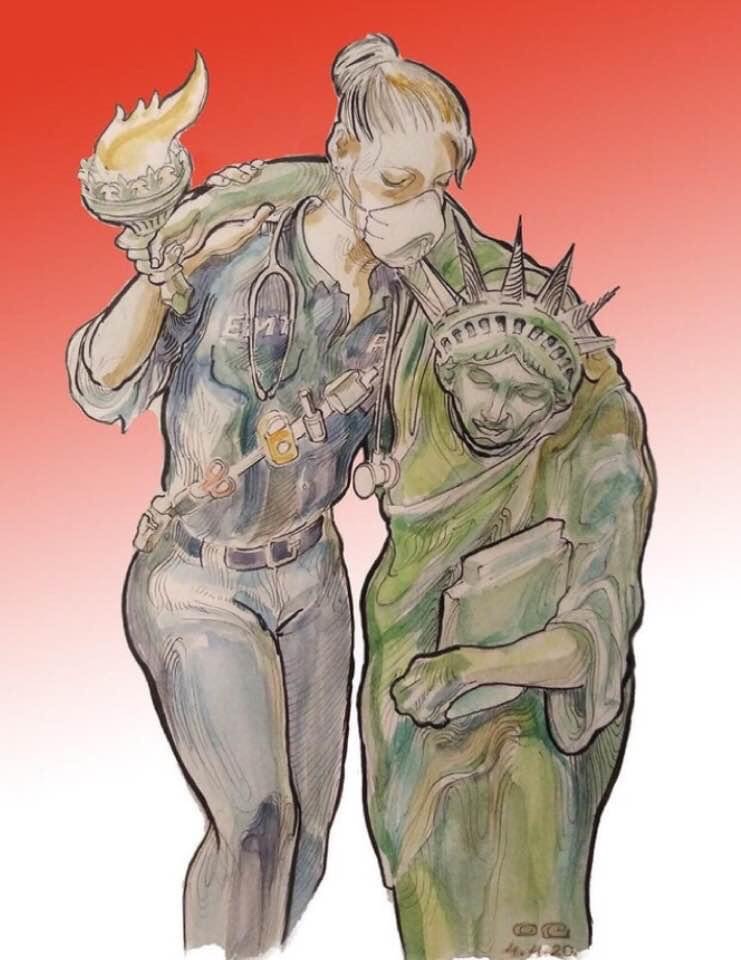



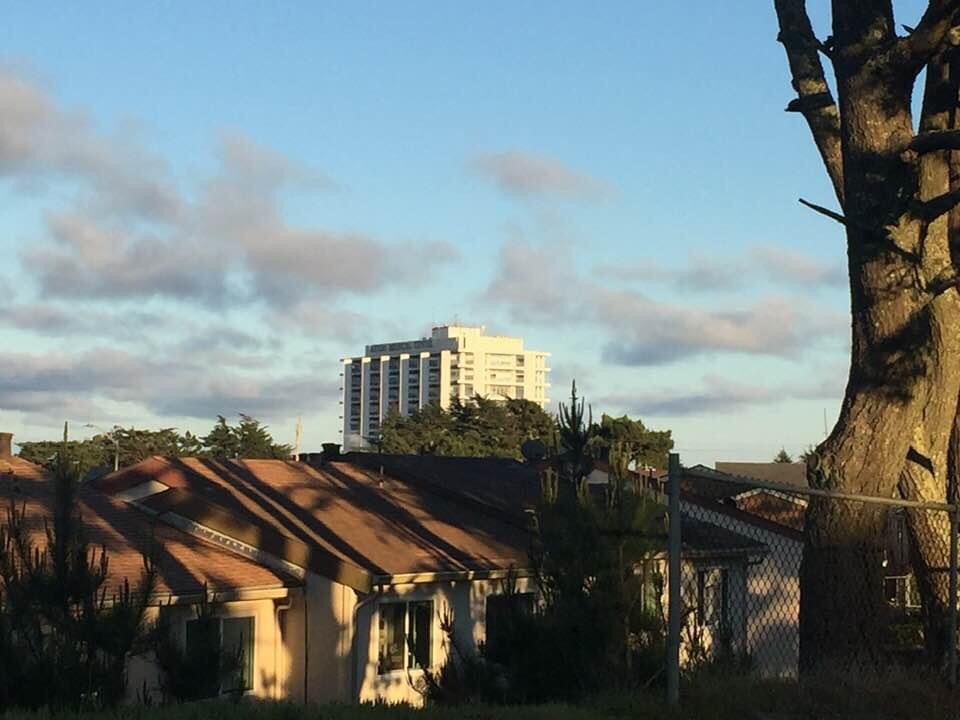

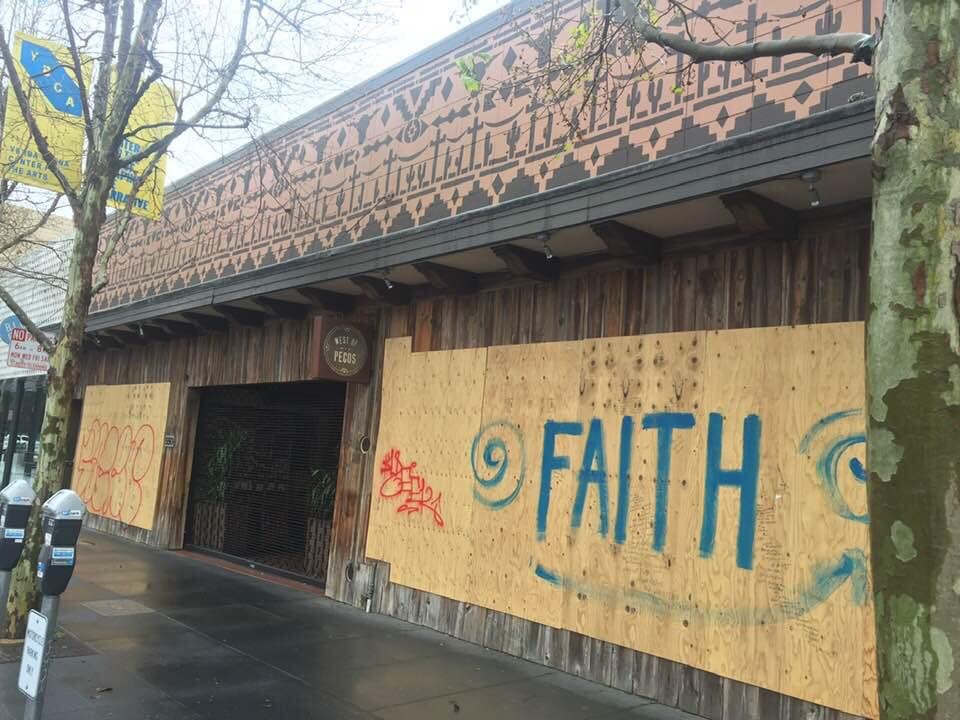
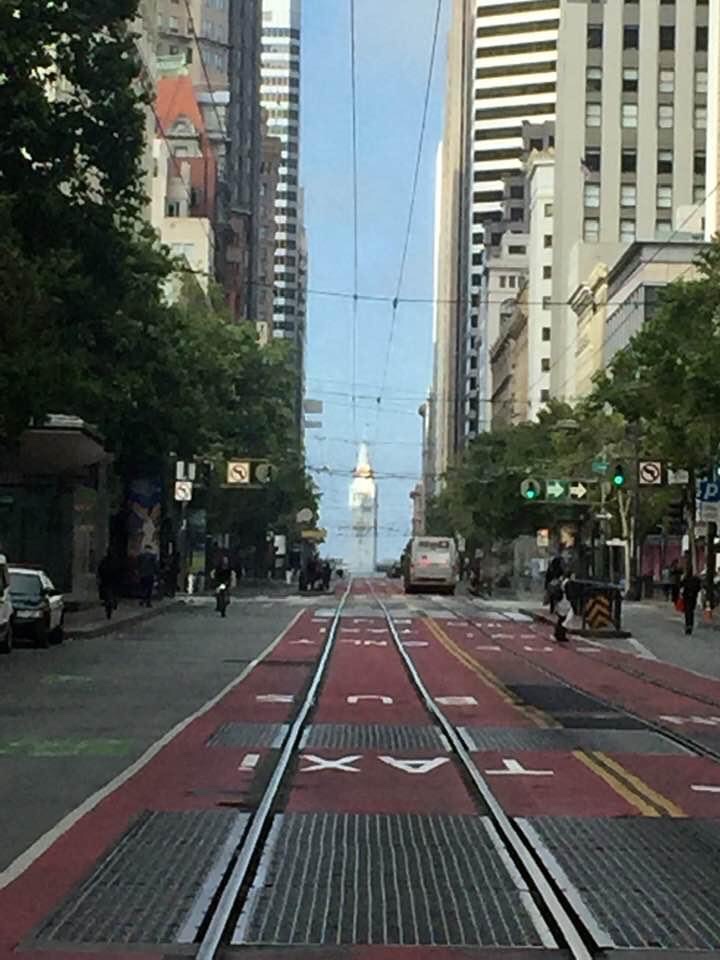
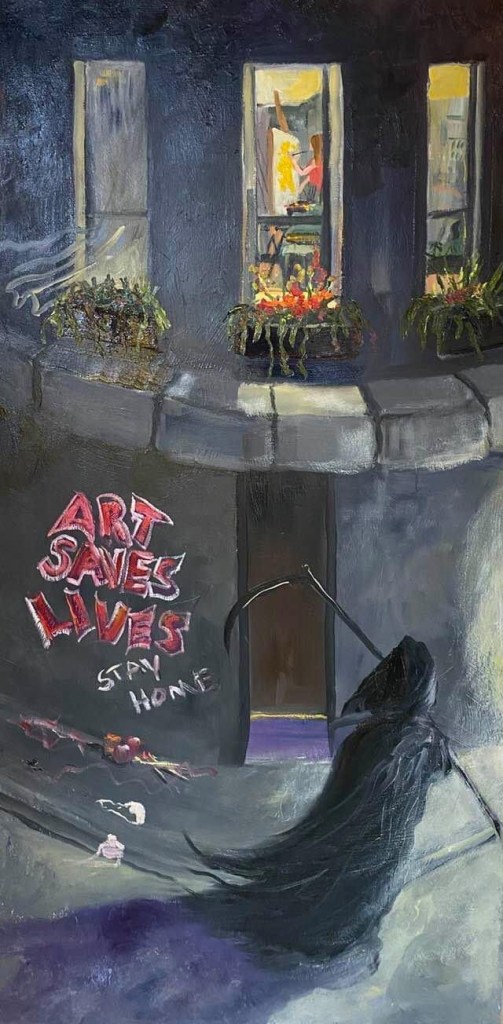


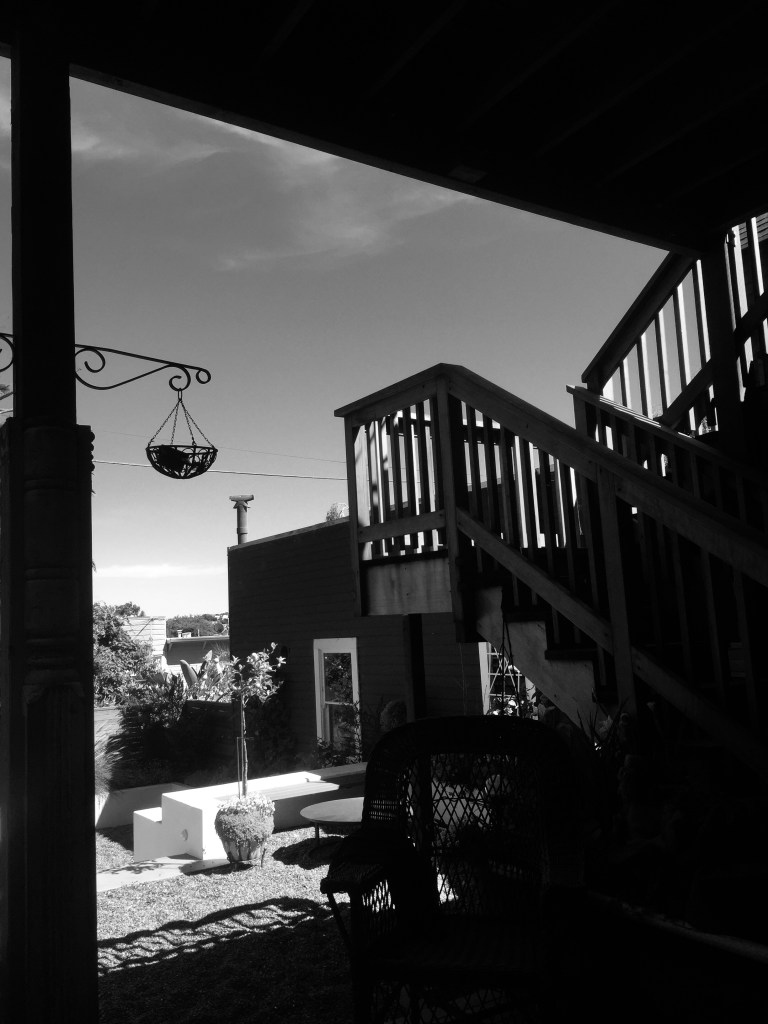



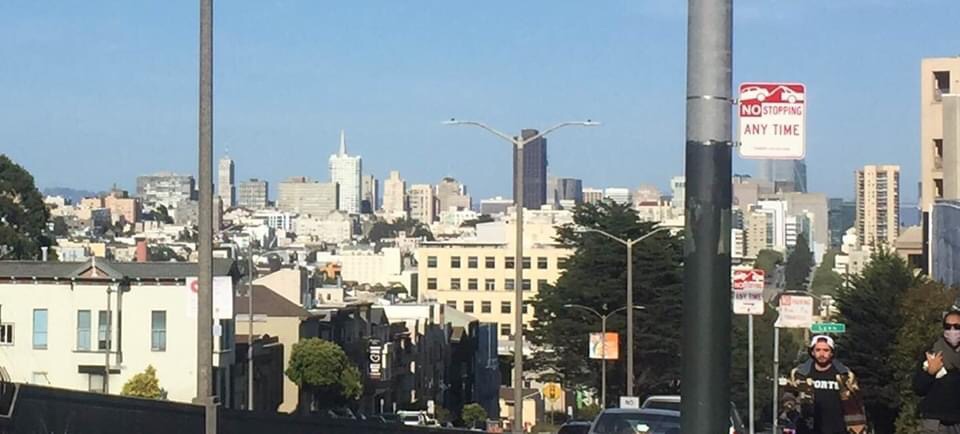
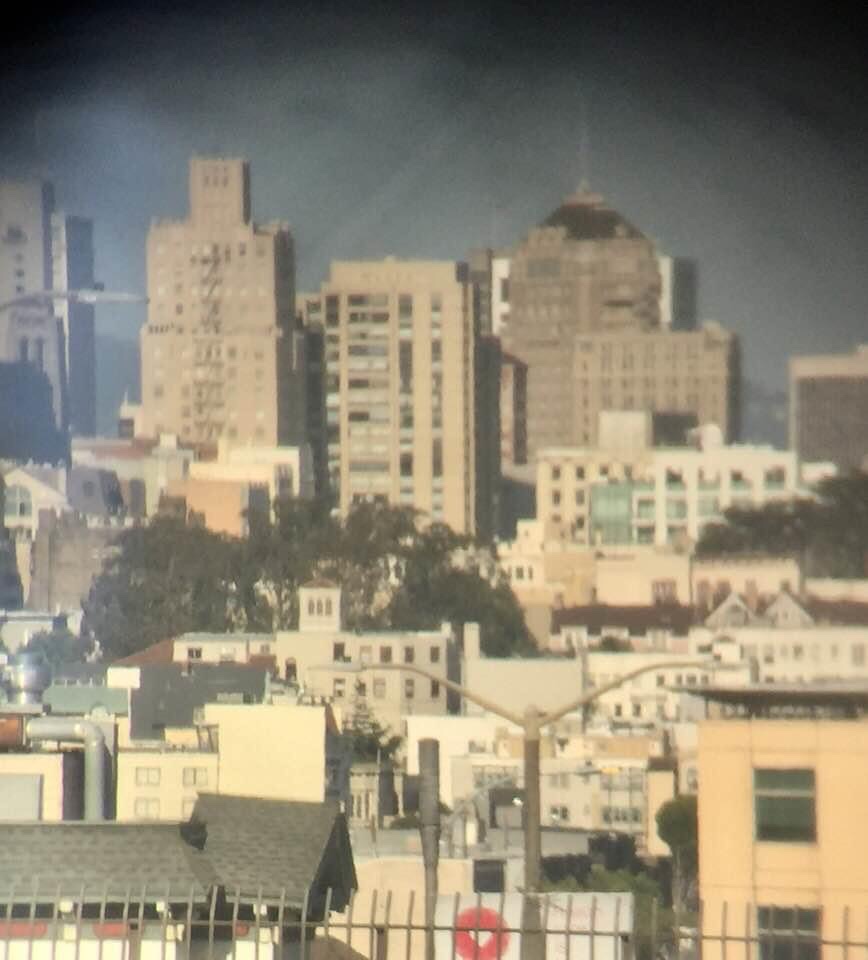

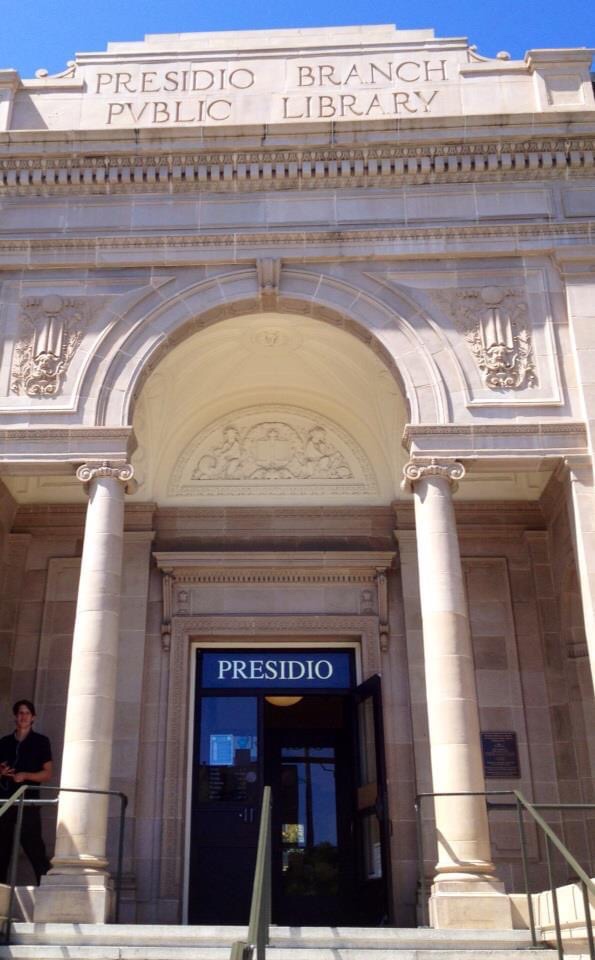

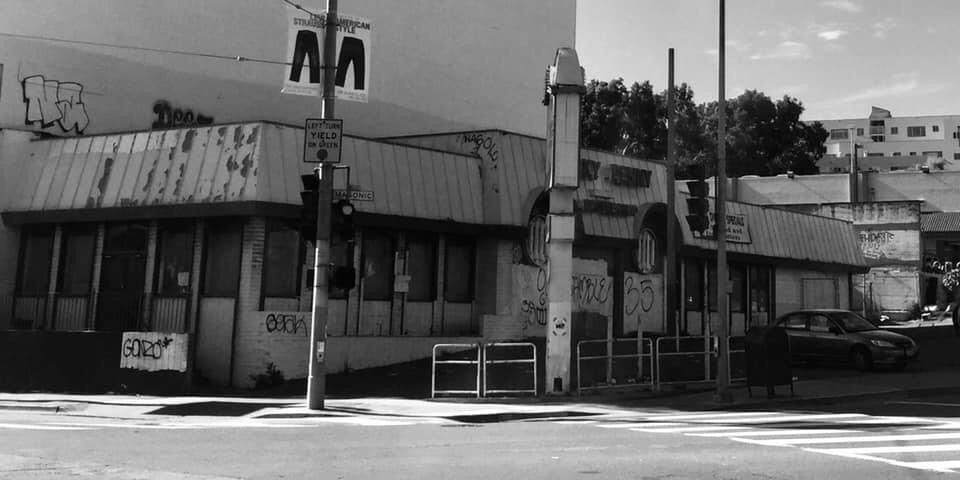

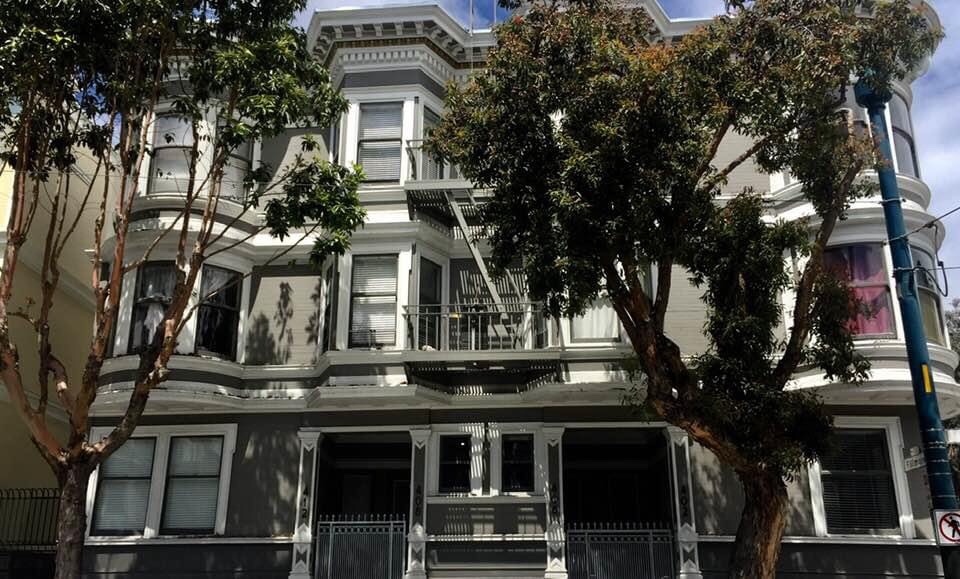
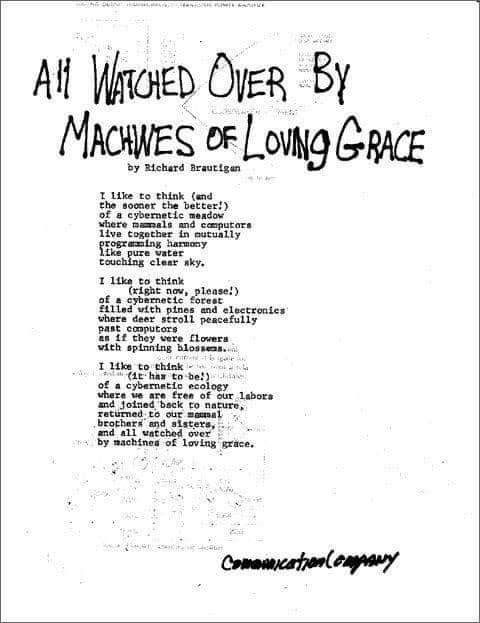
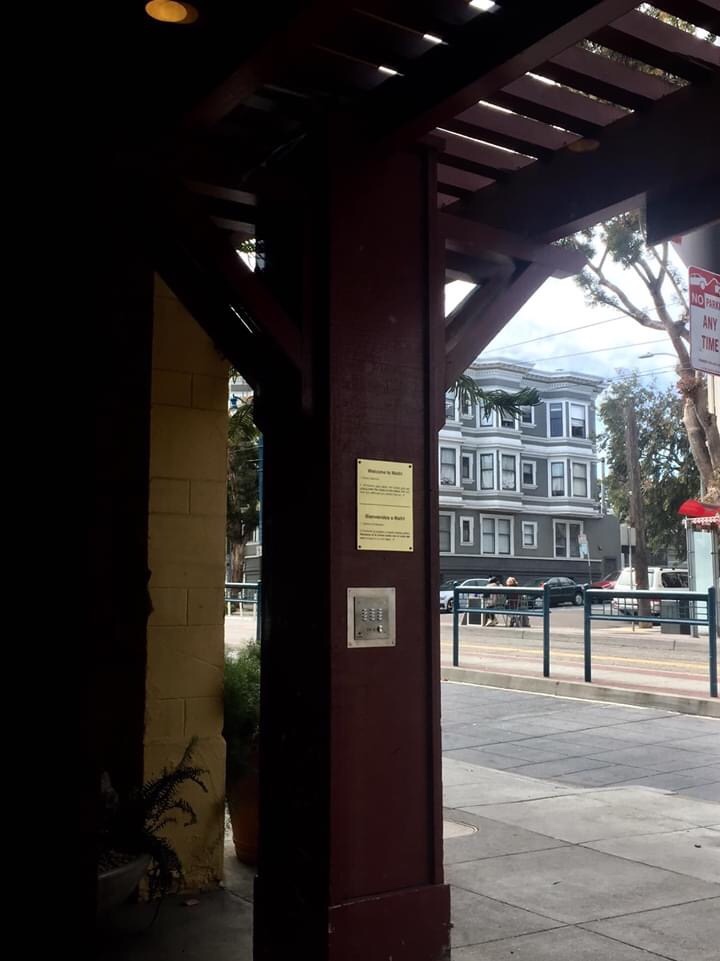
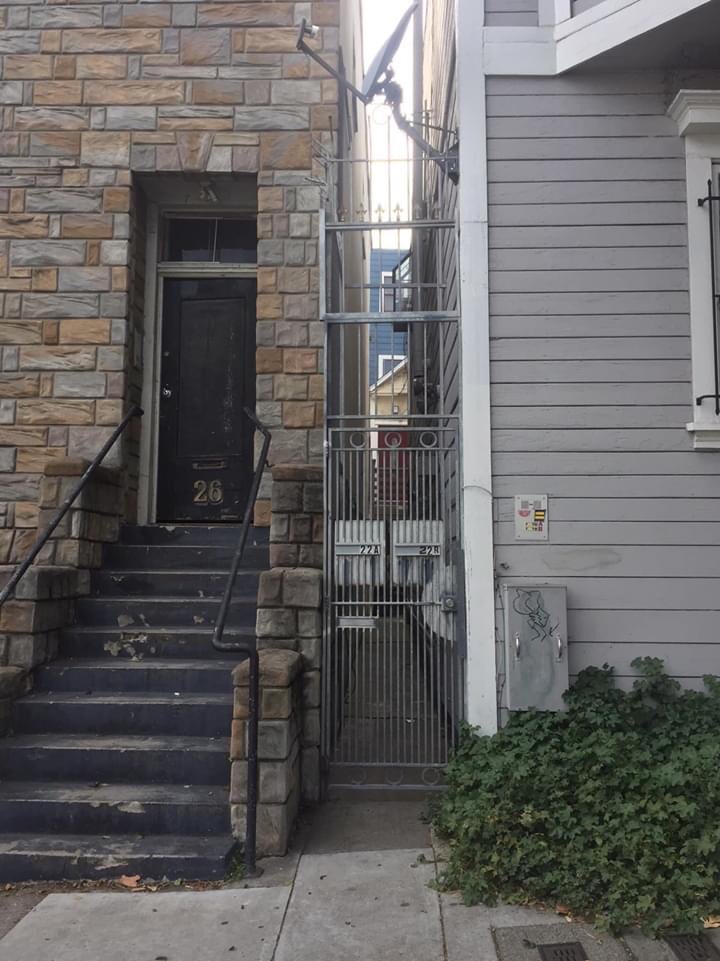

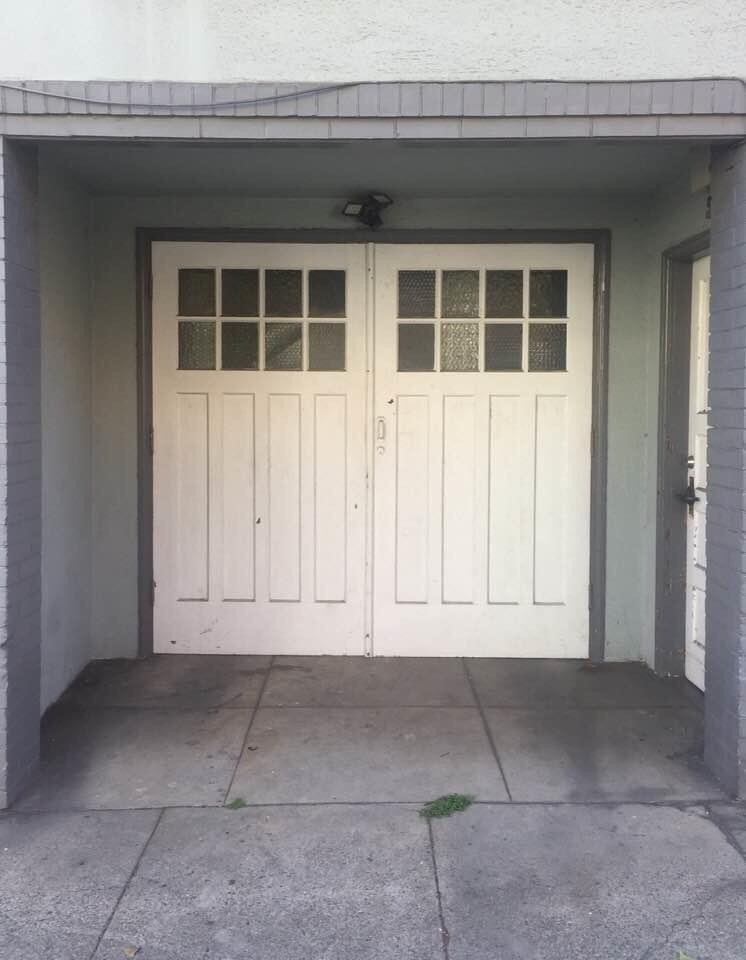
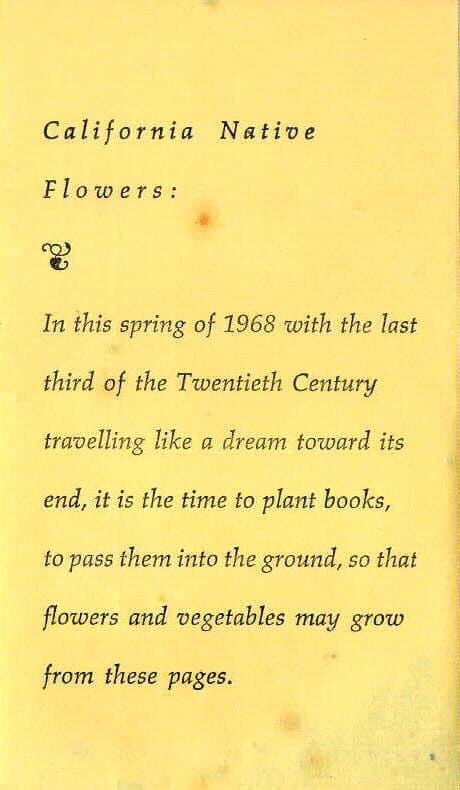

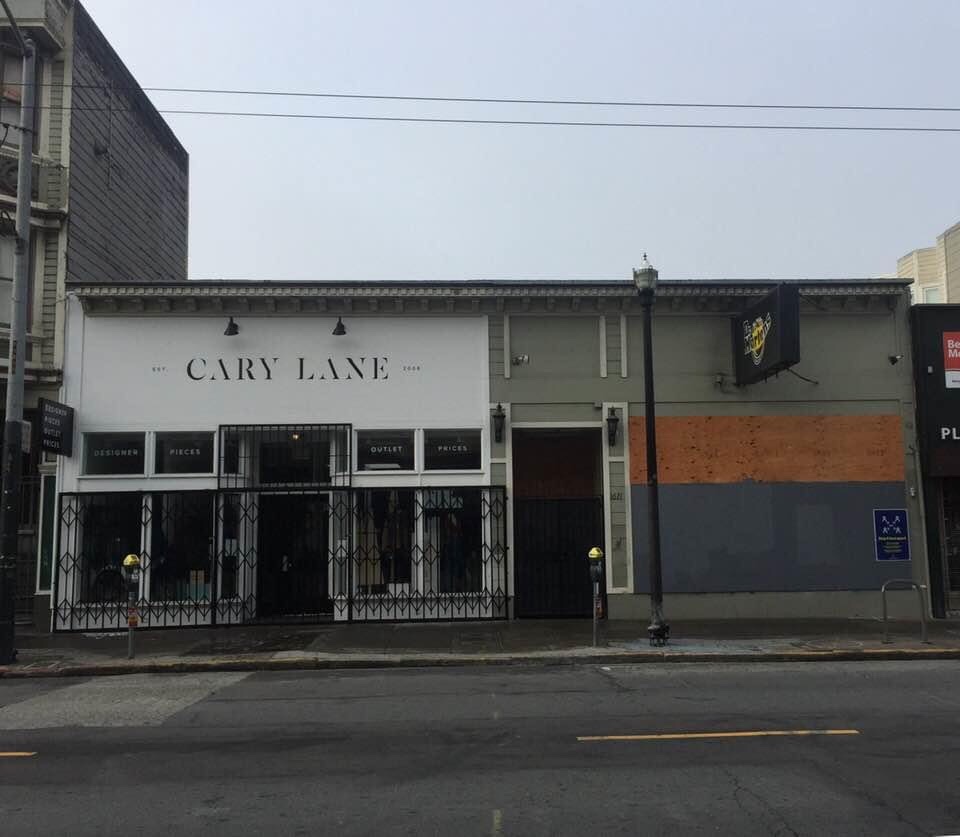


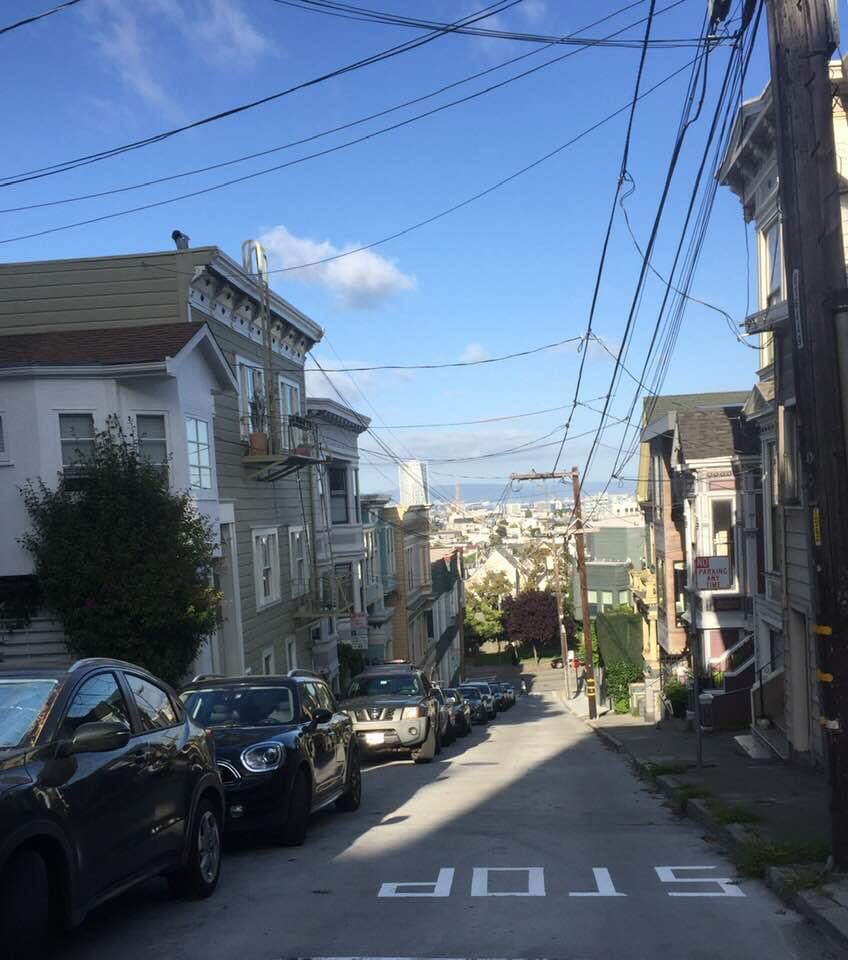

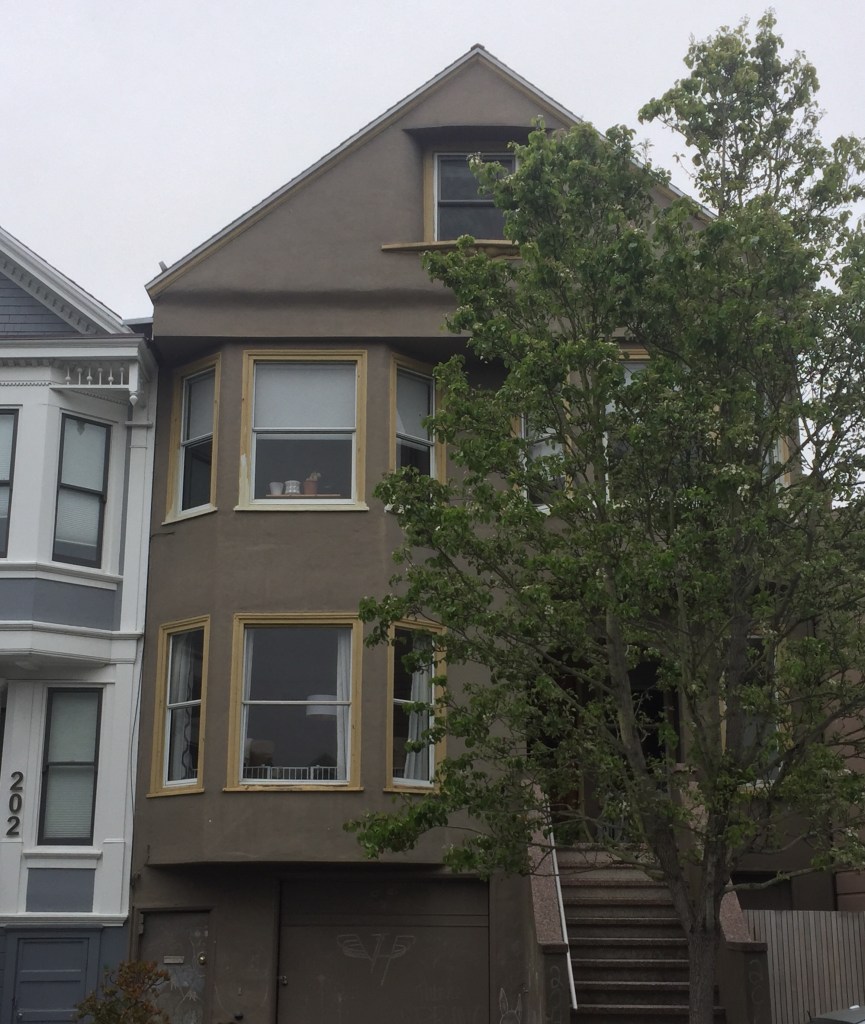
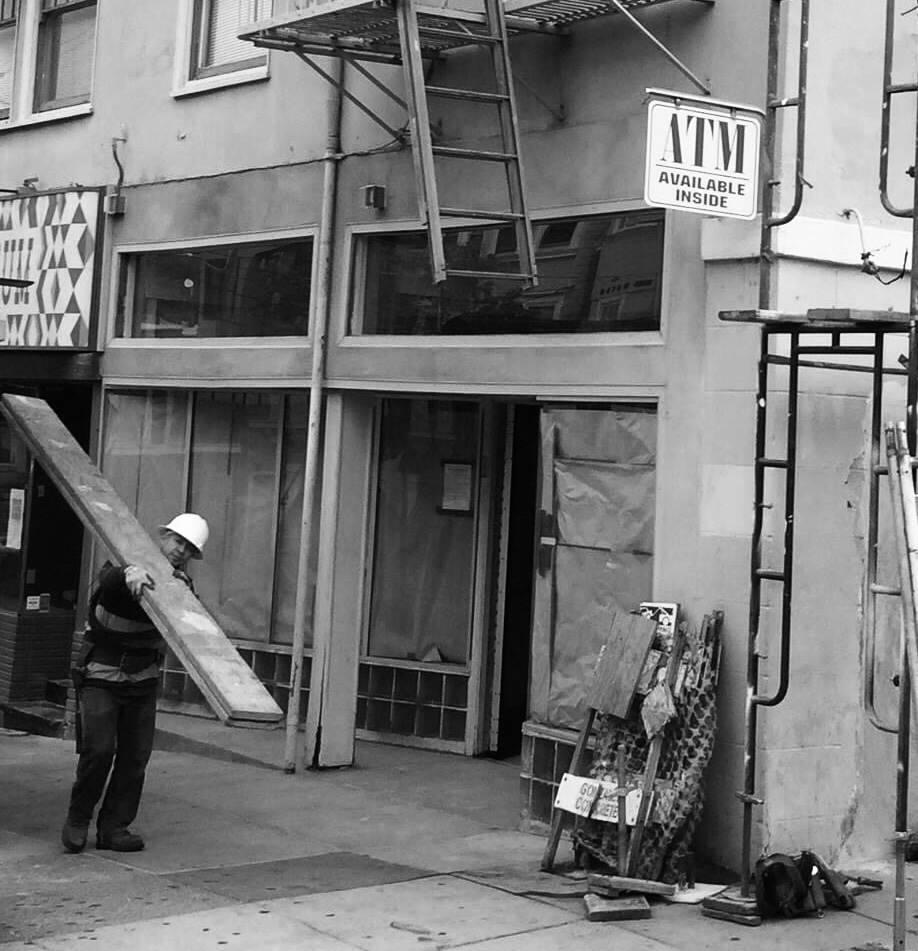
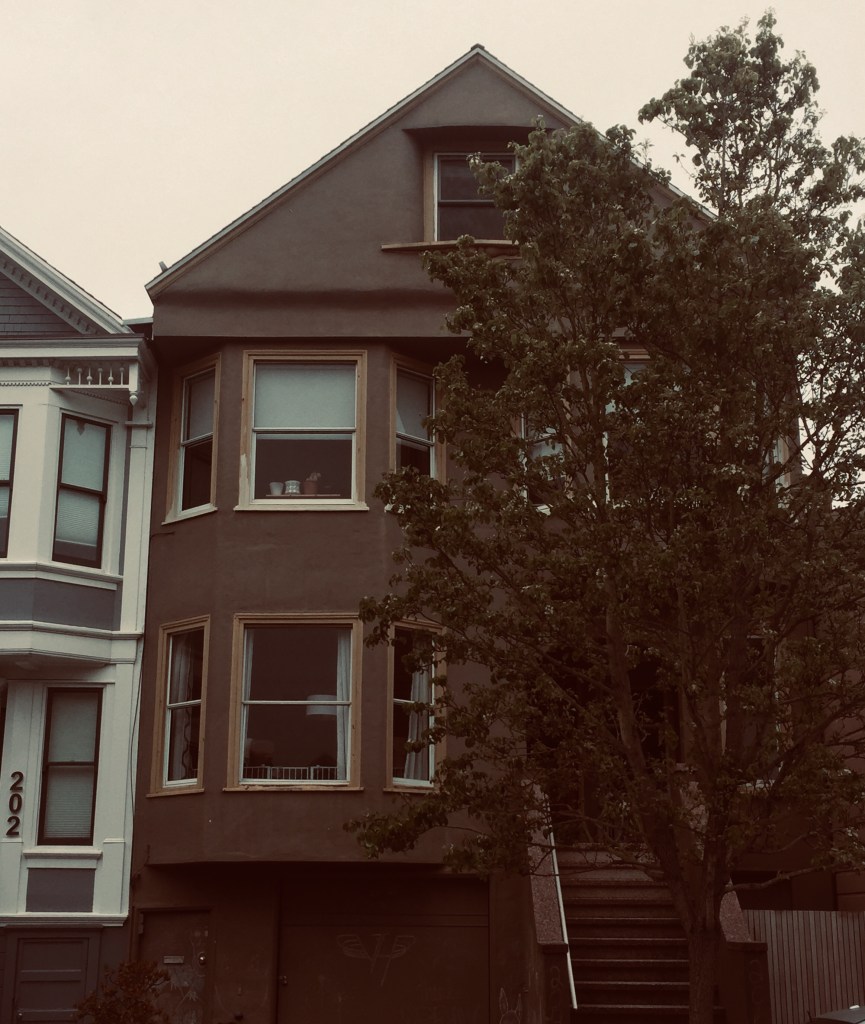
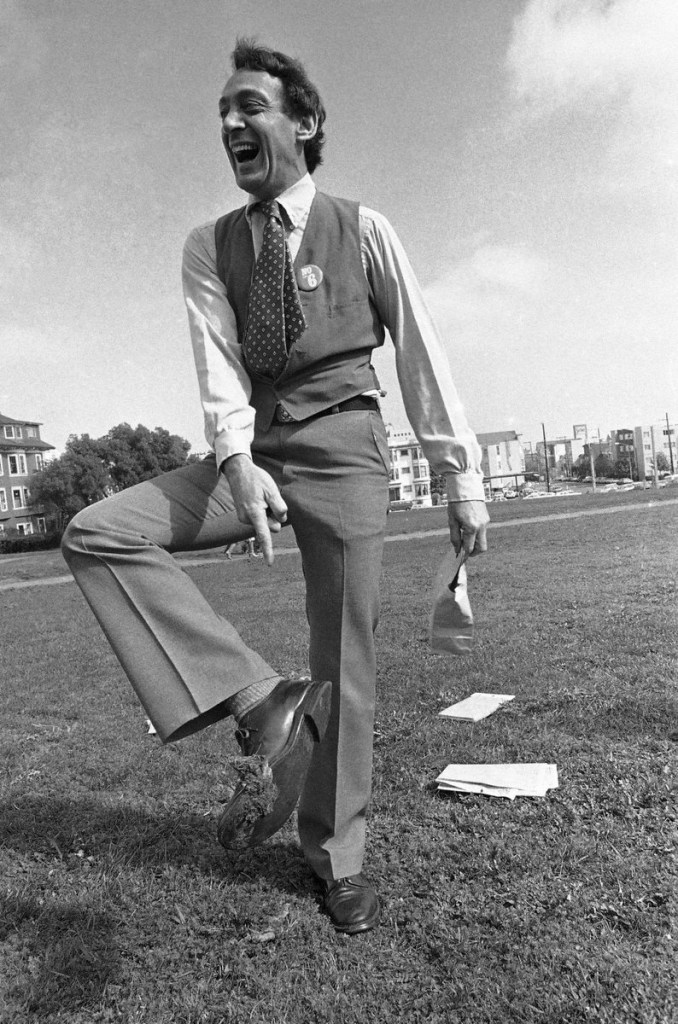
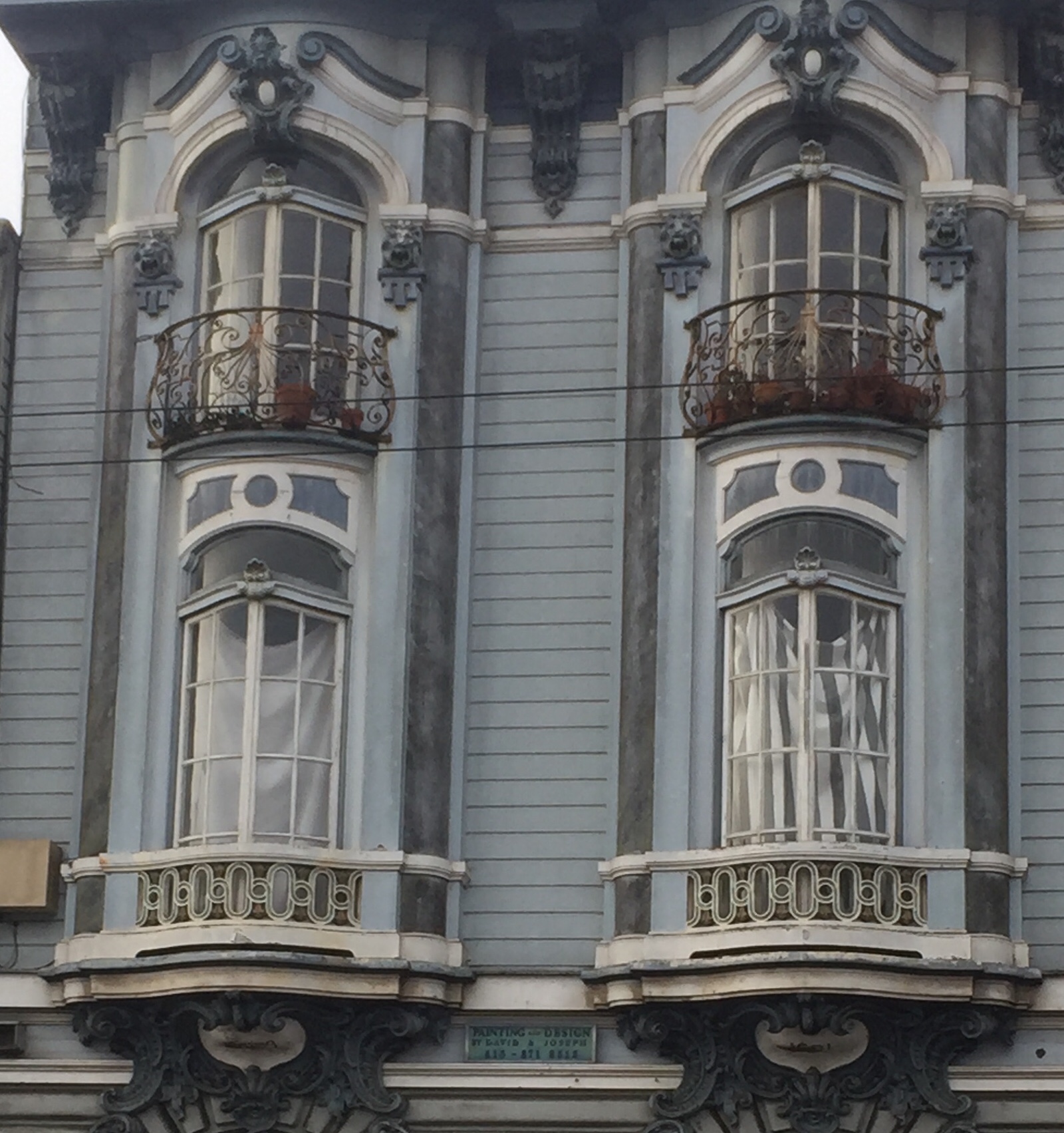

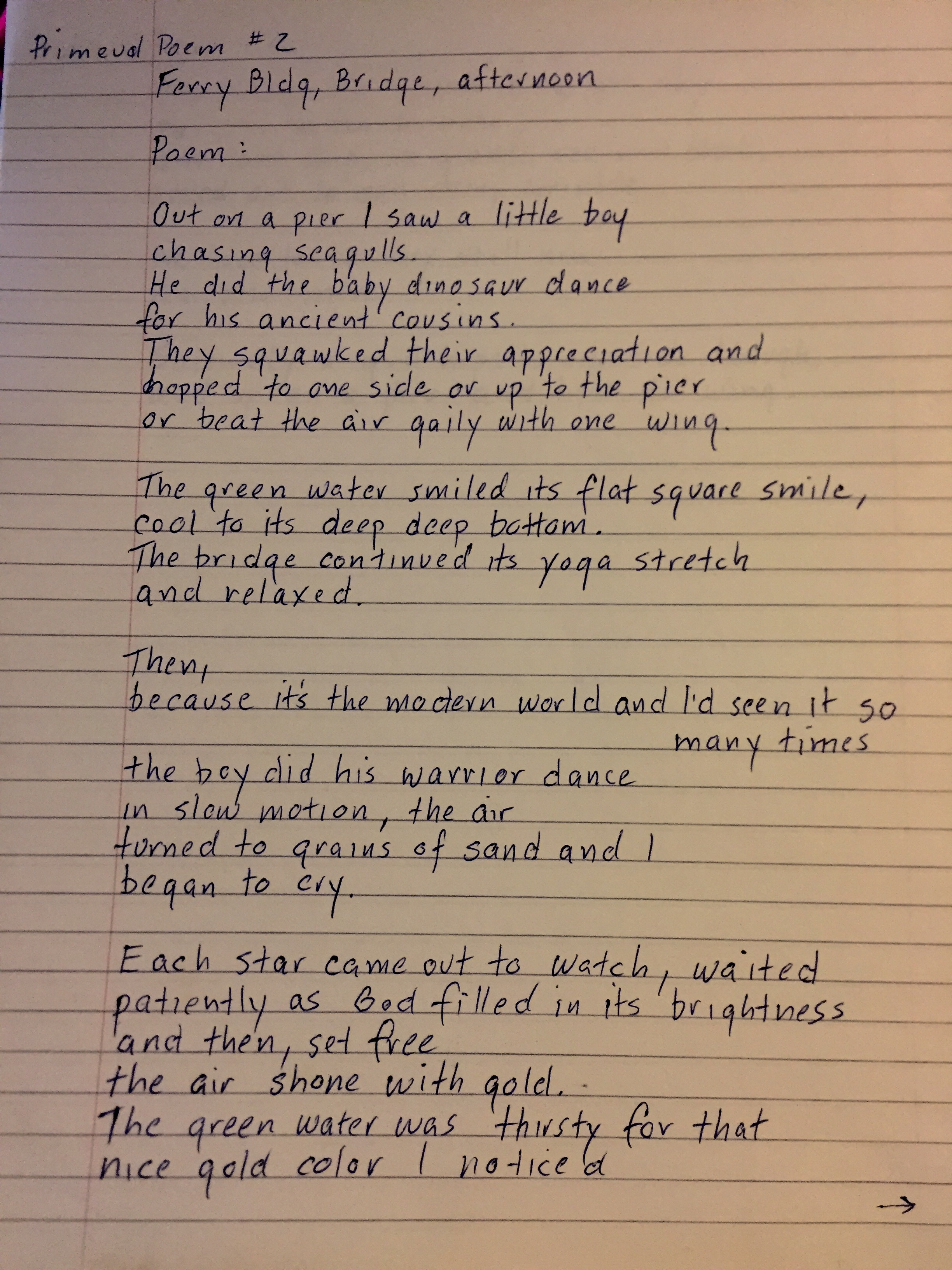

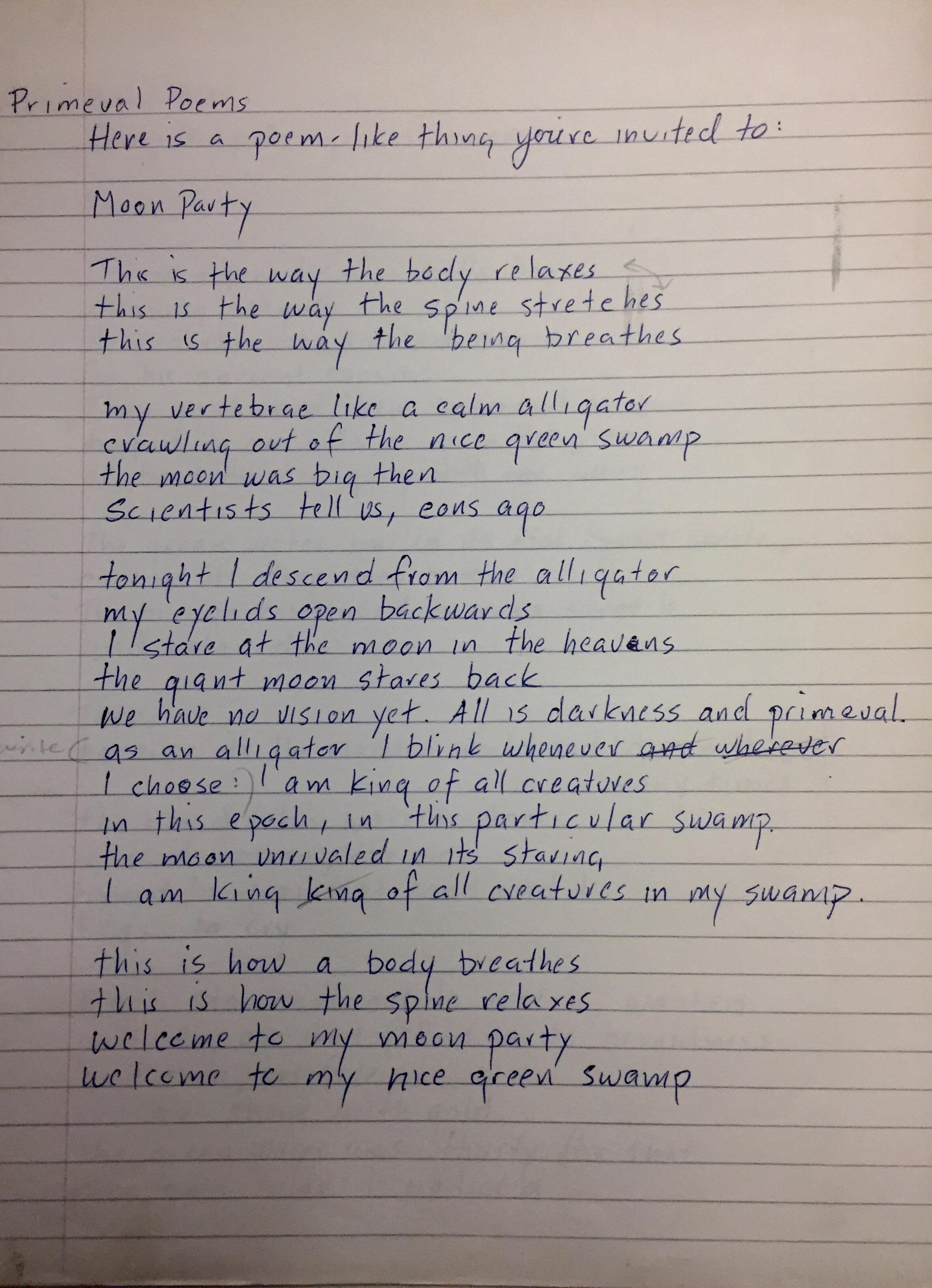
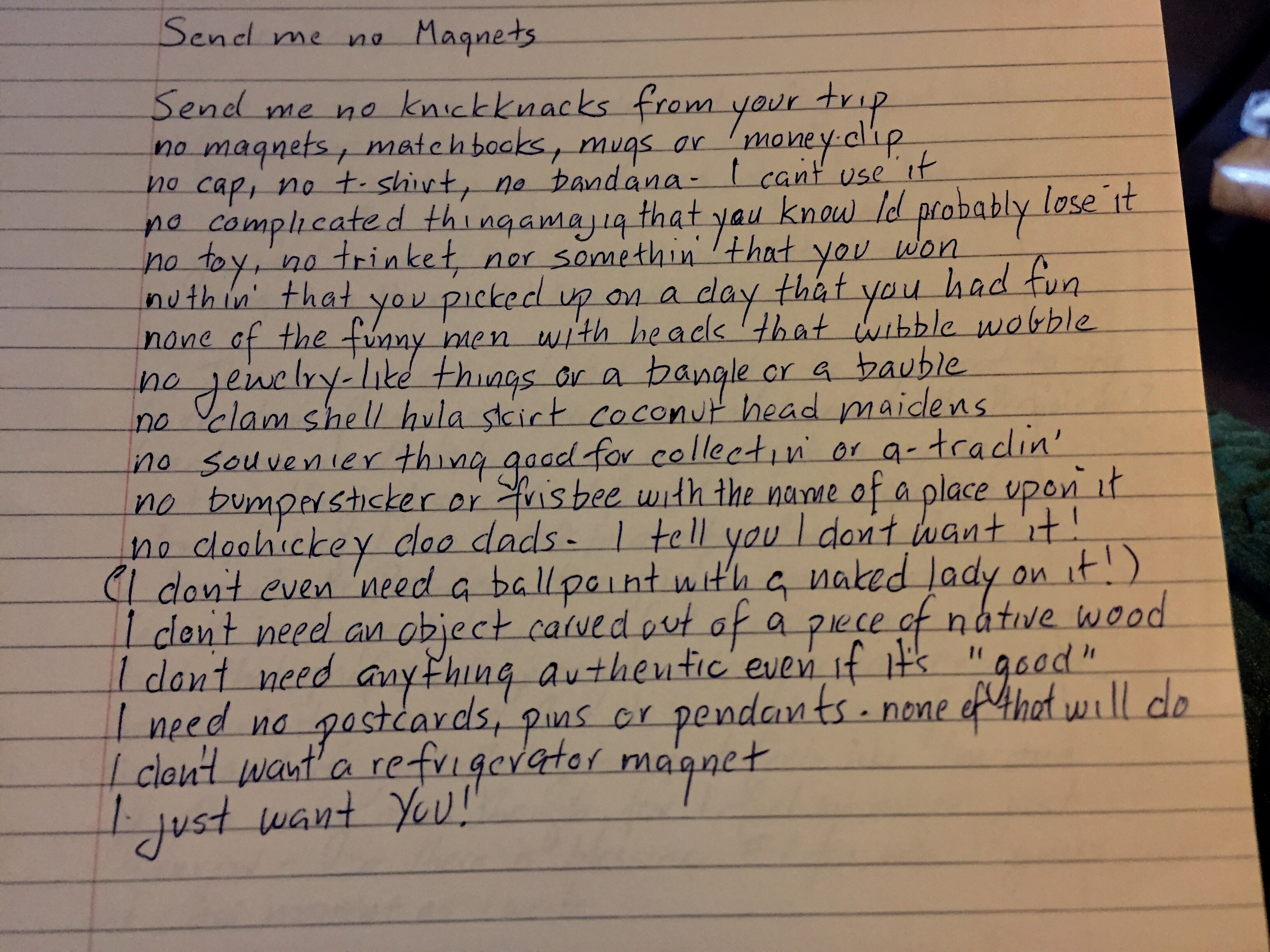
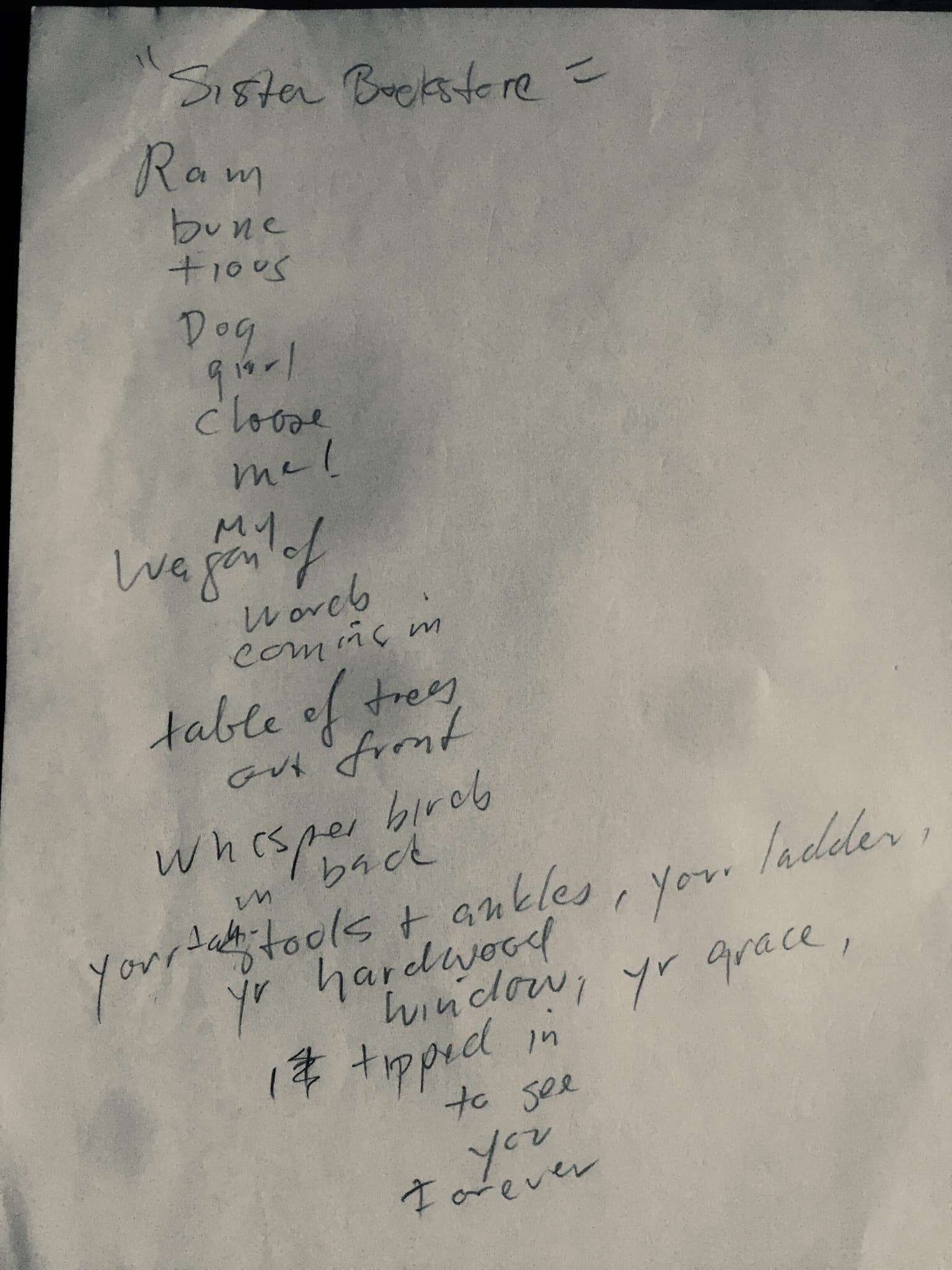
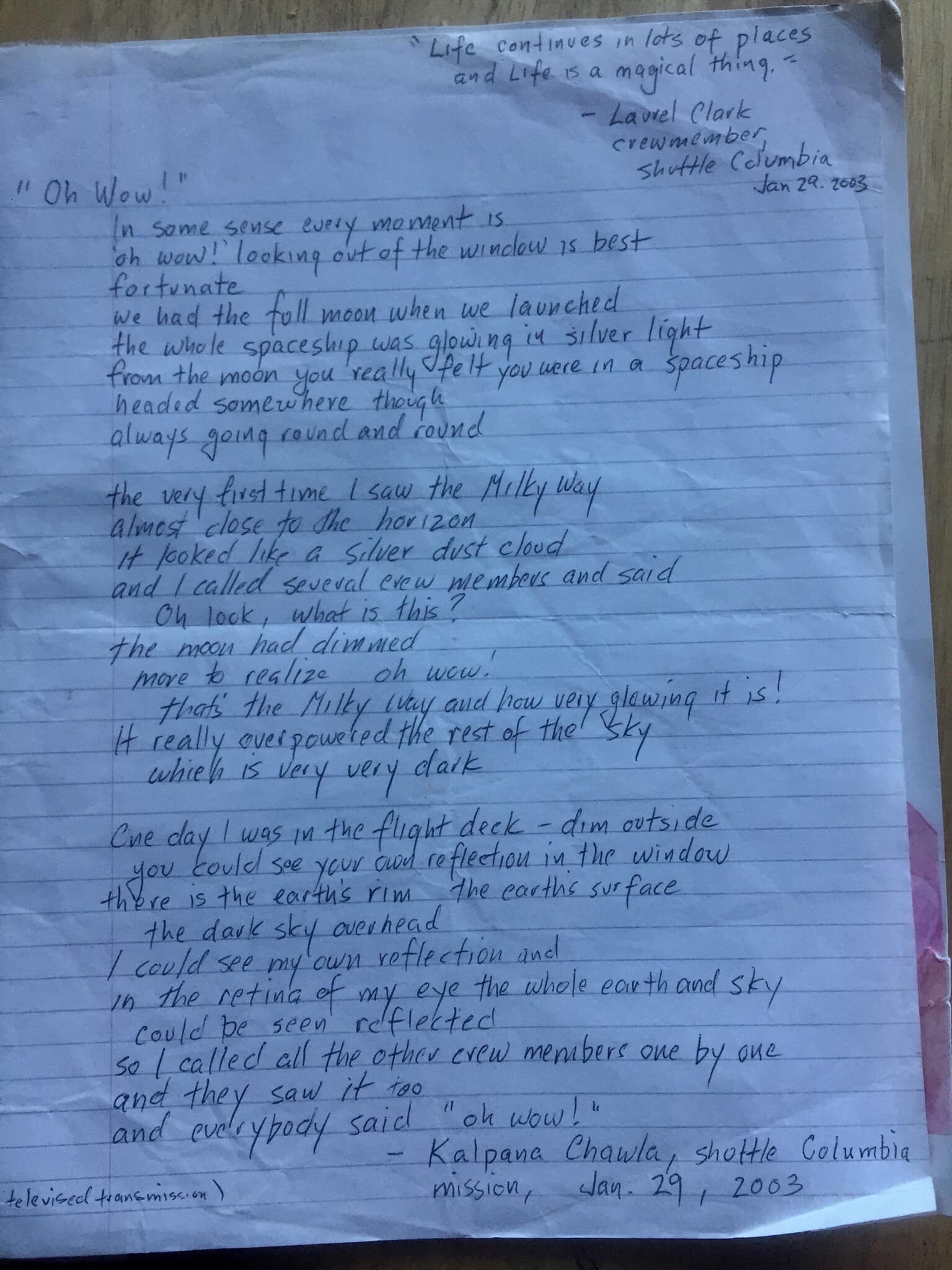


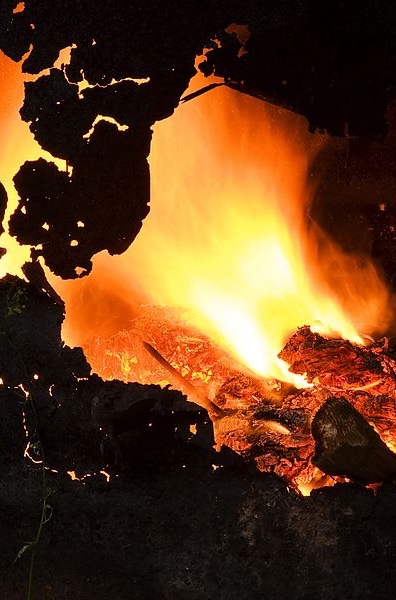

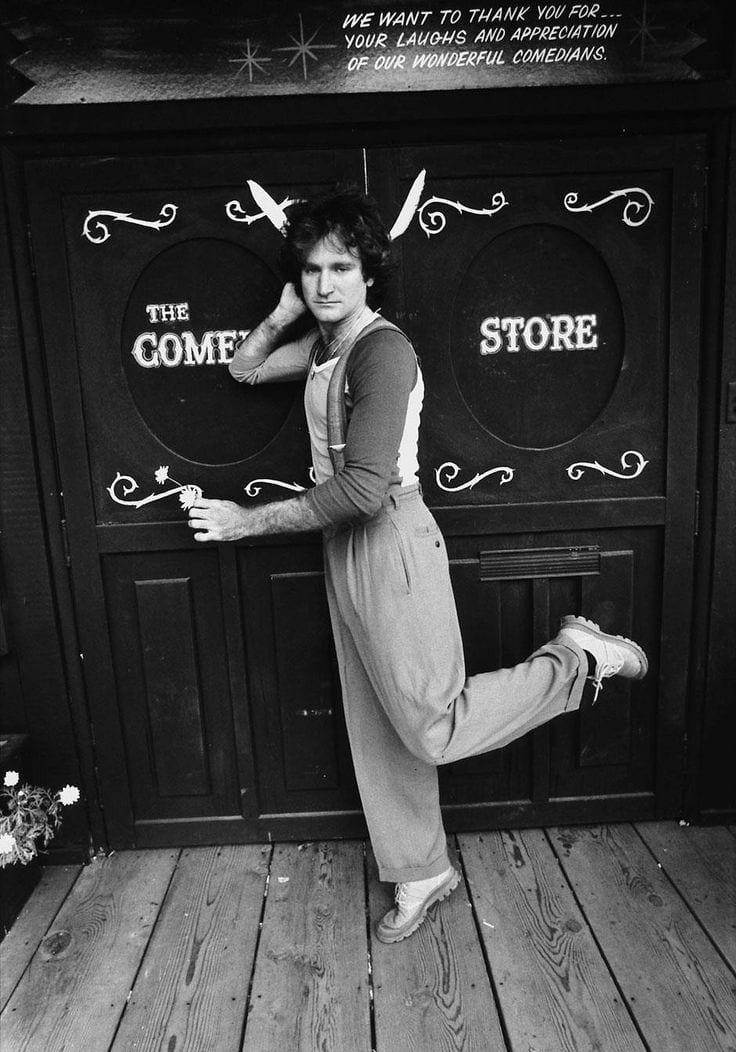
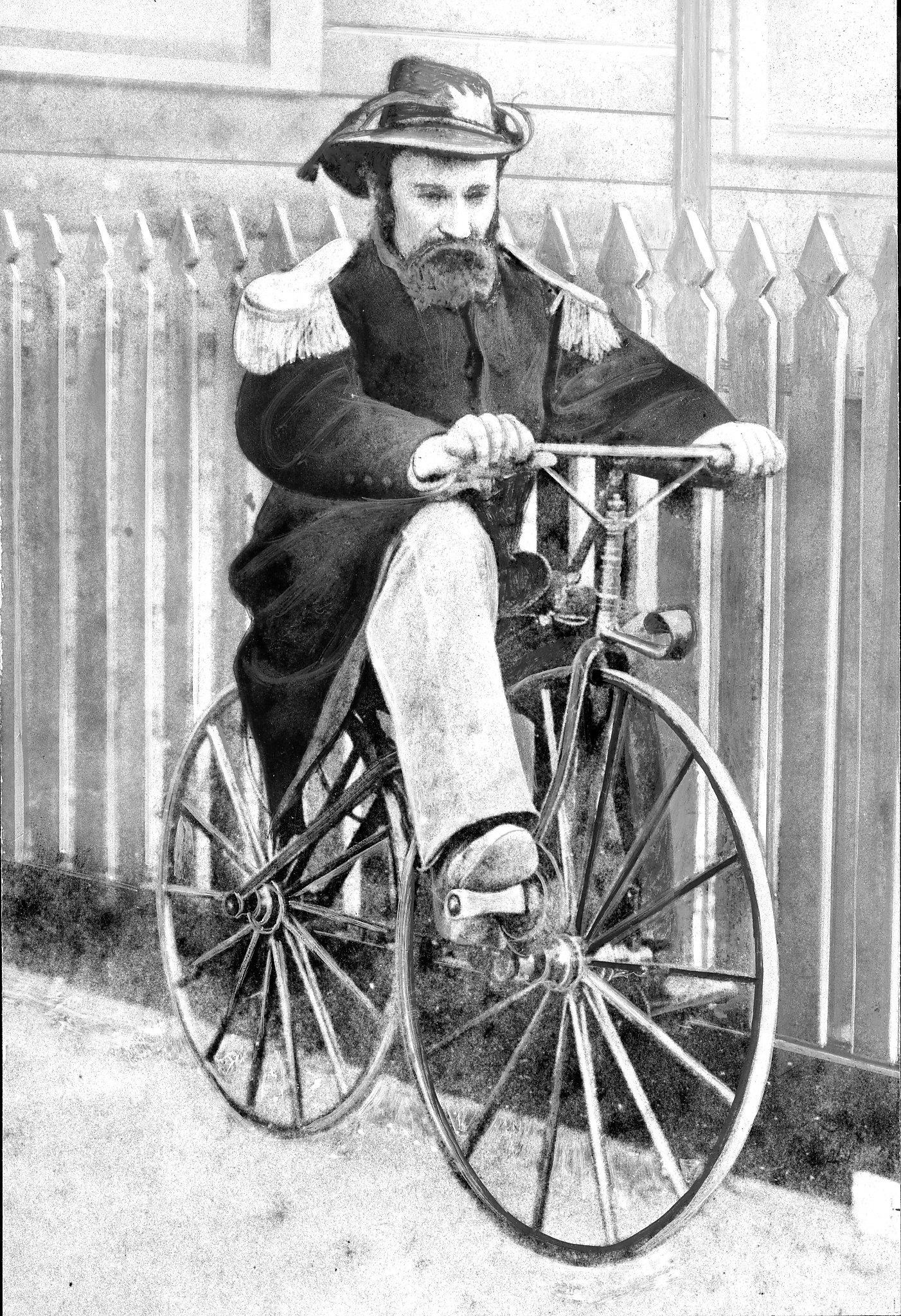
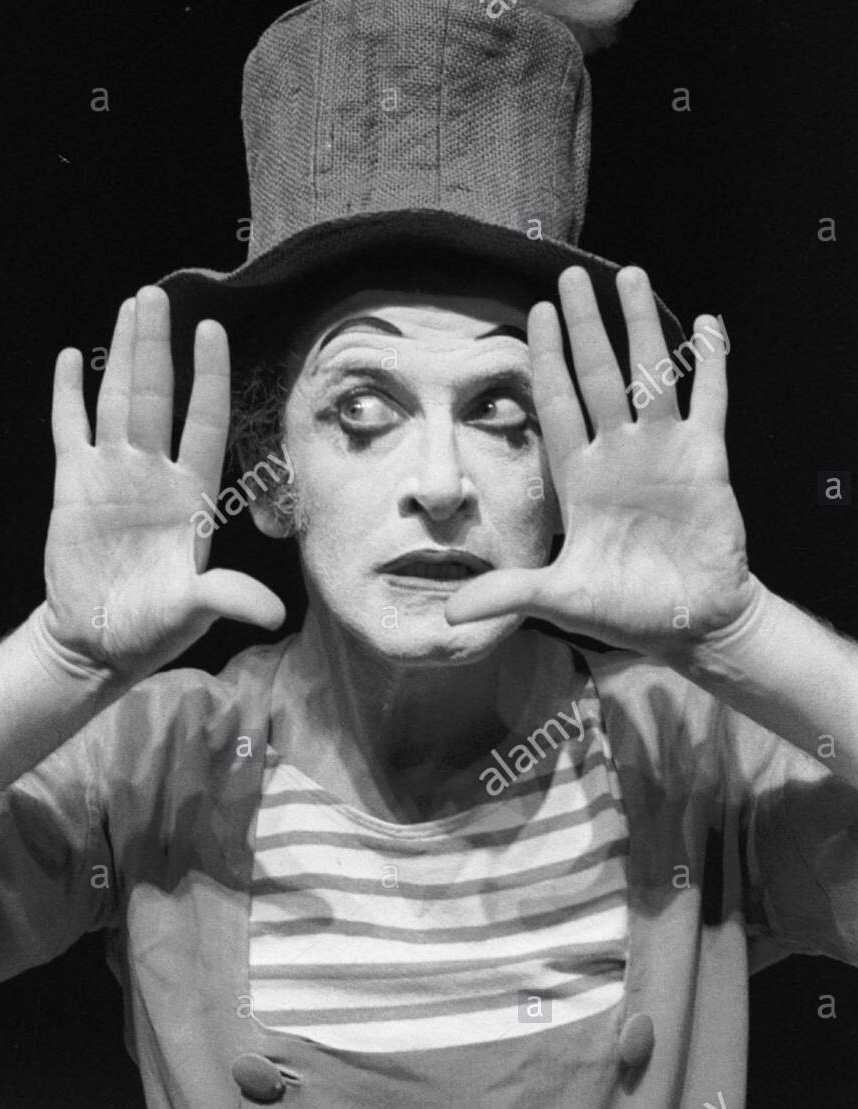 *
*